
What this guide answers
- Should alumni membership be free or paid?
Both, in layers. Make the base tier free so everyone who graduated stays contactable and stays invited — a large reachable list is the asset that makes everything else possible, and charging for the privilege of…
- Can our school or university just give us its alumni list?
Usually not, and the reason is legal rather than political. The institution collected those details for its own purposes, under its own notices, and passing them to a separate body is a disclosure it needs a basis for.
- How far ahead should we plan a milestone reunion?
Twelve to eighteen months for a 25-year or 50-year reunion, and six to nine months for a ten-year one.
- Why do our younger alumni ignore us?
Usually because the first thing you ever sent them was an appeal, and the second was an invitation to a $120 dinner.
- What should we do when a member dies?
Have a written process before you need one, because it will happen several times a year.
Canada edition. This guide is written for volunteer-run clubs in Canada. Where rules differ — grants, tax, incorporation, safeguarding — follow the Canada-specific pointers below or check with your national body.
An alumni association is usually nine volunteers, a contact file with 4,200 names in it, and roughly 2,600 email addresses that still work. Nobody knows which 1,600 have died quietly, because nobody checks — until the invitation for the milestone reunion goes out, a third of it bounces, and you find out six weeks before a dinner you have already paid a deposit on.
That is the defining problem of alumni work, and it is not the problem other clubs have. A sports club sees its members every Saturday; a student society sees its members in a lecture theatre. Your members left. They left at 18 or at 22, they moved cities, changed employer four times, sometimes changed name, and the only thread between them and you is a record in a database and whatever you choose to put in front of them. When the record goes stale, the member is gone — and unlike a lapsed subscription, nothing tells you it happened.
This guide is about the work that keeps that from happening: deciding what the association is actually for, holding contact records against constant decay, offering a membership someone will pay for, running reunions people cross a country to attend, building chapters and year groups that do not need you, and raising money in a way that leaves people feeling asked rather than farmed. It assumes a volunteer committee, no paid staff, and a bank balance that would embarrass a professional fundraiser.
Decide what the association is for before anything else
Most alumni associations do three jobs, and most of their arguments come from never having ranked them.
Connection is members to each other: the reunions, the city chapters, the annual dinner, the informal network that quietly gets people jobs. Service is what you give back to the institution and its current students: mentoring, prizes, careers evenings, a bursary or scholarship fund, a judging panel. Memory is stewardship: the archive, the honour boards, the history, the obituaries that nobody else will write.
Fundraising is not a fourth job. It is how you pay for the first three, and the moment it becomes the point, your members begin reading every message as an invoice. An association that raises money in service of connection stays healthy for decades; one that exists to raise money is competing with a professional fundraising office it cannot beat.
The second decision is who counts as a member, and it is worth settling in writing because it determines your AGM quorum, your voting rights and who receives the appeal. The model that works almost everywhere is two-tier: everyone who graduated is an alumnus — contactable, entitled to news and invitations, no fee, no vote — and a member is someone who has opted in, usually by paying. Whether you call yourselves an alumni association, an old scholars association, an old students' union or a graduates' club, that distinction stops half your governance problems before they start.
Write both in one page. Put the purpose in the objects clause of your constitution and the membership classes in the clause below it; our club constitution guide walks through the wording, and the professional and learned society guide covers the same structures at a larger scale.
Your contact list decays about 20% a year
Institutional email addresses are commonly deactivated six to twelve months after graduation, which quietly deletes an entire graduating cohort from your reach in the first year you have them. Personal addresses are stickier, but people change providers, abandon an address after a spam flood, and change name at marriage. Postal addresses churn hardest between 22 and 35, when a lot of people move every eighteen months. Add it up and an untended alumni file loses roughly a fifth of its reachable contacts a year. After five years, half of it is fiction.
| What you hold | How fast it goes stale | The counter-move |
|---|---|---|
| Institutional email | Dead 6–12 months after graduation | Capture a personal address before they leave, not after |
| Personal email | 15–20% a year | A self-service update link in the footer of every message |
| Postal address | Fastest between ages 22 and 35 | Only post to people who ask for post; treat it as opt-in |
| Phone number | Fast, and rarely worth chasing | Let year reps hold these informally instead of centralising them |
| Employer and role | About 20% a year | Ask once a year in a short survey; never make it a required field |
| Deceased flag | Only ever wrong in one direction | One named committee member owns it and checks before every send |
Four practices do most of the work.
Catch people before they leave. A sign-up table at the graduation ceremony, or a link in the final-year mailing, converts somewhere between 40% and 60% of a cohort. Chasing the same cohort three years later converts about 5%. Ask for one thing at that table — a personal email address — and get consent to contact them at the same moment.
Make updating self-service. Put an "update your details" link in the footer of every message and a page for it on your own site. People will fix their own record if it takes forty seconds. They will not email the secretary, and the secretary will not retype 300 changes a year.
Process bounces the day they arrive. A hard bounce flags the record; three soft bounces flag it too. Never delete — a deleted record gets re-added from an old spreadsheet next year and starts bouncing again. A list that has never had its bounces cleaned will fire 30% of every send into the void, which drags your sending reputation down and lands the rest in spam. The mechanics are in why club emails go to spam.
Recruit a rep per year group. A volunteer who can phone twenty former classmates is worth more than any database, because they know which people moved, who is unwell and who would come if asked personally. Give each rep the list for their year only — never the whole file.
Then there is the error that does more damage than all the others combined: sending "we've missed you — come back and see us" to somebody who died eighteen months ago. Their family will read it. One committee member owns the in-memoriam list, records the date and the source, marks the record before the next send, and never deletes it. That single discipline is the difference between an association people trust with their address and one they quietly unsubscribe from.
Alumni records sit under PIPEDA and your province's privacy legislation — Quebec's Law 25 is the strictest, with its own notice, consent and privacy-officer requirements. The sharper edge for a volunteer committee is CASL, which governs commercial electronic messages: you need express or implied consent, clear identification of who is sending, and an unsubscribe honoured within ten business days, with real penalties attached. Implied consent arising from an existing relationship expires — commonly after two years — so an inherited list that has never been re-permissioned is a liability rather than an asset, and the sensible fix is a re-consent campaign before it lapses rather than after. Beyond that: collect only what you use, say at sign-up what it is for, honour access and correction requests, keep a retention rule, and report a breach that creates a real risk of significant harm to the Office of the Privacy Commissioner. Name one executive member as accountable for the register and keep it in a system with per-person logins. This is general information rather than legal advice.
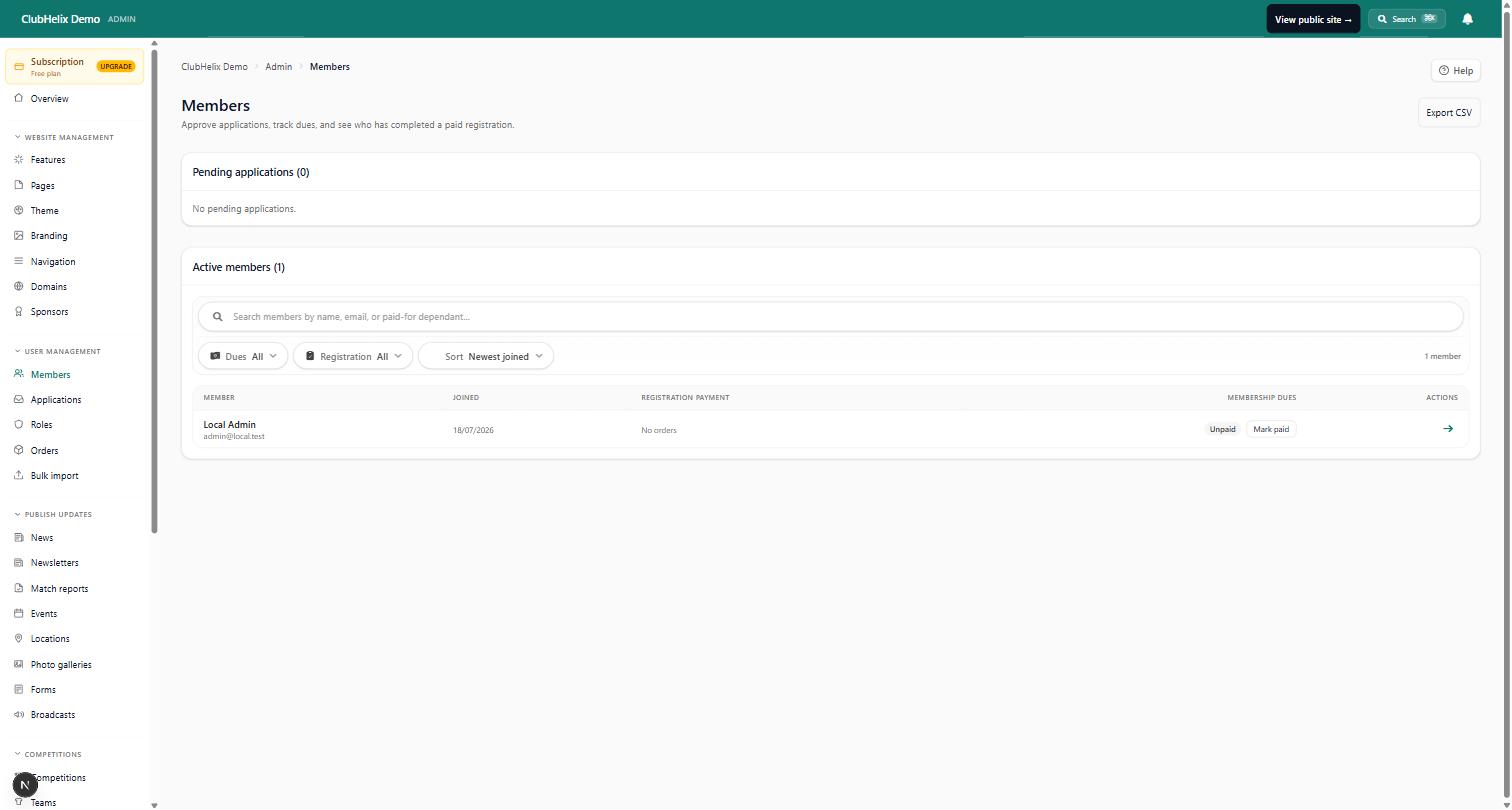
The reason to hold all of this in a proper register rather than a spreadsheet is not tidiness. A spreadsheet leaves with the secretary who built it, and takes with it the consent flags that make your next send lawful. A member register with self-serve sign-up and payment stays with the association, and the incoming committee inherits a working list on day one. The deeper treatment is in our member records and privacy guide.
Membership someone will actually pay for
If everyone is a member automatically, "membership" means nothing and you have no idea who is engaged. If membership is the only way to hear from you, your list shrinks to the loyal few and the association slowly becomes a dinner club for one cohort. The layered model avoids both.
| Tier | Typical price | Who it is for | What it must include |
|---|---|---|---|
| Affiliate | Free | Everyone with a working email address | News, event invitations, the update-your-details link |
| Recent graduate | Free or half price, 3 years | 0–3 years out, no money and no habit yet | Everything a member gets, so the habit forms before the bill does |
| Annual member | $45–$70 | The engaged core | AGM vote, member rate on events, the printed edition |
| Life member | 12–15× annual ($600–$1,000) | 45+, or final-year students at a discount | Everything, permanently, plus a named place in the records |
| Honorary | Nil | Long-service volunteers, retiring staff | Everything, awarded by the committee under written criteria |
Two traps sit inside that table.
The first is that a paid tier must buy something a member would notice losing. A real price gap on the annual dinner — $25, not $5 — plus the printed edition, priority in the reunion booking window and a vote at the AGM is enough. If your members cannot say what membership buys, renewals collapse in year three and you will not know why.
The second is the life-membership trap, and it has ended associations. A life subscription is not income; it is a forty-year obligation paid up front. Take $800 today, spend it this year on a shortfall, and you have handed a future committee a member with costs and no revenue. Put around 70% of every life subscription into a reserve and release a twentieth of it into operating income each year. Set the criteria before you start selling them — our life membership guide covers what earns it and what it should cost.
Finally, pick one renewal month for everybody. Anniversary-based renewals mean chasing somebody every week of the year; a single renewal window with a reminder at day ten and a final notice at day twenty-one is one evening of work. Pricing logic is in how much club membership should cost.
Reunions people will travel for
Reunions are the one thing an alumni association does that nothing else can replace, and their economics are counter-intuitive.
| Reunion | Realistic attendance | Lead time |
|---|---|---|
| 10 years out | 8–12% of the cohort | 6–9 months |
| 25 years out | 15–20% of the cohort | 12 months |
| 40 or 50 years out | 25–35% of those you can still contact | 12–18 months |
The ten-year group is the hardest, every time. They are at peak career load with small children and no spare weekend, and the shared memory is recent enough not to feel precious. The fifty-year group has time, money and a reason that gets stronger every year. Plan accordingly: keep the ten-year event cheap and low-effort, and put your real work into the milestone years.
The lever that actually moves attendance is not the venue. It is one classmate ringing twenty people. A year group with an active rep runs at two to three times the attendance of a year group that only received the email, and it costs you nothing but a briefing and a list.
Do the money before you book anything. If the venue minimum is $6,400 and you are charging $95 a head, you need 68 paid tickets before the association is risking its own money. If 68 is more than 60% of the number who came last time, choose a cheaper venue rather than hoping. Deposits are almost always due before ticket sales open — that gap is exactly what the reserve exists for. Sell in one window with a member rate, an early-bird close and a hard cut-off for catering numbers seven to ten days out, and never panic-discount in the final fortnight: the people who paid full price six weeks earlier will remember.
Older cohorts change the run sheet. Step-free access and a working sound system matter more than the room's charm. A seated meal beats a standing reception. A two o'clock start with an optional campus tour outperforms an eight o'clock dinner. Seat people by year group and faculty or house rather than alphabetically, and put the graduation-year photograph on the name badge — that one detail generates more goodwill than the centrepieces. Somewhere in the evening, read the names of those from the cohort who have died since the last reunion. Check the list twice and get the spelling right.

Then capture the data while people are standing in front of you. A tablet at the door or a short link on the table card, asking for a current email and permission to use it, will repair more of your file in one night than six months of admin. Our promoting a club event guide covers the sell, and the presentation night guide covers running a formal evening that does not overrun.
Chapters and year groups
A chapter is viable when there are around 40 contactable alumni in one city, one named convenor who wants the job, and one anchor event a year on a date that does not move. Below that number, do not create a chapter — run an informal meet-up hosted by whoever happens to be in town, and keep the structure for when it earns it.
Give every chapter the same one-page charter: its name, its geography, its convenor, the term the convenor serves, and a plain statement of what a chapter may and may not do. Chapters may organise events and charge for them. Chapters may not sign contracts in the association's name, approach sponsors independently, or hold money outside the association's accounts without written approval. Those three lines prevent the two failure modes — a chapter that quietly builds a rival bank balance, and a chapter that commits the association to a $9,000 venue nobody approved.
Overseas chapters need autonomy more than oversight. Time zones make a monthly committee call impossible, so give them a small annual float — $300 to $500 is usually enough to seed a drinks night — and an annual report rather than a seat at every meeting.
Year groups scale differently from chapters, and more cheaply. A year rep needs no budget, no charter and no bank account: just the list for their year, a message template, and a nudge from you four times a year. Ten reps covering ten cohorts will out-recruit any campaign you run centrally.
Structurally, the association sits above its chapters: one member register, one set of records, but each chapter with its own page, its own events and its own contact. ClubHelix supports exactly that shape, with a parent organisation above child groups that each run their own site while the register stays in one place.
Communications that are not only an ask
Alumni lists open extraordinarily well when they are treated properly — 38% to 50% is normal, far above a consumer list — because people genuinely want to know what happened to everyone. Squander that by sending nothing but appeals and you will be at 12% within three years, and you will not get it back.
Use a three-to-one rule: three pieces of genuine value for every ask. A workable annual rhythm is a quarterly newsletter, an event sequence at six weeks, two weeks and three days before each event, one appeal a year, and in-memoriam notices as they arise. That is roughly fourteen sends a year — enough to stay real, few enough that people do not filter you.
What gets read is names. The appointment, the marriage, the book, the award, the death, the "where are they now" piece about the person everyone remembers. News about the institution comes a distant third, and the committee's own procedural updates come last — put those in the annual report where they belong. Our club newsletter guide covers structure, and the communication plan guide covers who hears what and when.
Print is not dead for this audience. A single printed edition a year, at roughly $3 to $6 a copy including postage, is often the only thing that reaches your oldest cohort and the members who never read email. Make it opt-in, and let the request sit on the same self-service page that updates an address.
Send from the association's own domain, with a real reply address that a committee member reads. Sending 3,000 messages from one volunteer's personal account is how an association gets its mail classified as spam and its volunteer's inbox suspended. A proper broadcast tool gives you unsubscribe handling, bounce processing and a send log — which is also the evidence that your AGM notice actually went out.
Money, giving and the line with the institution
Alumni income comes from five places, in descending order of reliability: subscriptions (small but predictable), events (self-funding at best), donations and appeals (lumpy), merchandise (rarely worth the effort unless you sell regalia — ties, scarves, cufflinks and blazers sell for decades), and bequests (transformative, and impossible to plan around).
The relationship that decides how well this goes is not with your members. It is with the institution's own fundraising office — called development, advancement or the foundation depending on where you are — which has professional staff, a larger database and a legitimate claim on the same 200 generous people you were about to write to. Get the arrangement in writing, one page, reviewed annually:
- who holds which data, on what basis, and what may pass in each direction;
- who may solicit whom, and in which months, so the same alumnus is not asked twice in a fortnight;
- whether the association's appeal is separate from the institution's, or a named fund within it;
- what the association receives in return — venue access, archive help, a staff liaison, a data feed;
- who controls the name, crest and marks, and what the association may put on merchandise.
Two rules keep that relationship healthy. Never appeal in the same month, and always report what the money did. An association that raises $18,000 for a named bursary and publishes the recipient's letter the following year will raise it again comfortably. One that raises money "for the association" will not, because nobody can picture the outcome.
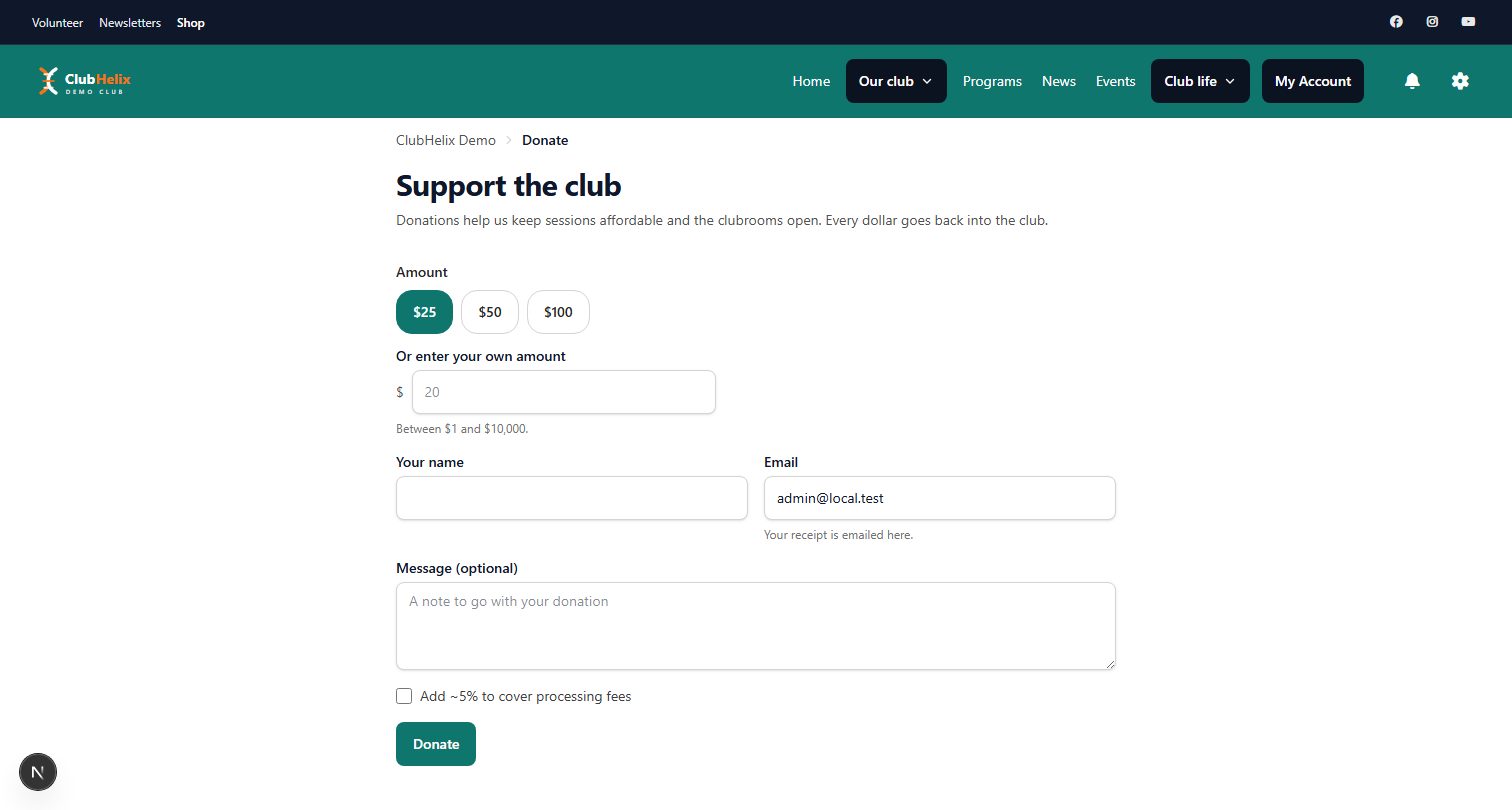
Keep restricted and unrestricted funds on separate ledger lines from the first dollar. Money given for a scholarship is not money for the dinner, and quietly mixing the two is the fastest route to a treasurer's resignation and a very awkward AGM. Our club budget template sets up that separation, and donations with a visible total makes an appeal far easier to run than a bank account number in a newsletter.
Registered charity status with the Canada Revenue Agency is the thing that matters, because it is what lets you issue official donation receipts — and without a receipt, most planned giving simply does not happen. Two rules follow immediately. Split receipting: a $150 dinner ticket where the meal is worth $95 generates a receipt for $55, not $150, and getting this wrong is the most common alumni-association error. And the annual T3010 information return has to be filed on time, alongside meeting the disbursement quota on your accumulated funds. If you are not registered, either route gifts through the institution's own charitable arm under a written agreement that they are applied to your named fund, or state plainly on the appeal that no receipt will be issued. Raffles need a provincial or territorial gaming licence — every raffle, including small ones at a dinner, and the licence must be in hand before tickets are sold. The GST/HST registration threshold for a public service body is higher than for a business, but a large ticketed event plus subscriptions can still approach it, so confirm before pricing. This is general information, not tax advice.
If you want a fundraiser that does not need any of the above, our raffle guide covers the mechanics, and the fundraising ideas guide ranks options by what they actually return per volunteer hour.
Governance and a committee that changes
Student societies fail because the committee graduates. Alumni associations fail the opposite way: the same nine people serve for fifteen years, the average age of the committee climbs by one year every year, and by the time anybody notices, the association has no living connection to anyone who left in the last two decades.
Four countermeasures work.
Terms with an end date. Three-year terms, maximum two consecutive, then a year out. Write it into the constitution so it is a rule rather than an insult.
A reserved seat. One committee position held for someone within five years of graduating, elected by nobody's polite reluctance. They will tell you things the rest of the committee cannot know.
Co-option with a job attached. Bring two people a year onto the committee with a defined task — the newsletter, the 25-year reunion, the chapter charters — rather than a vague "general committee" seat that teaches them nothing.
Meetings that respect a working life. Ninety minutes, quarterly, hybrid by default, agenda circulated a week ahead, minutes out within three days. An association whose members have jobs and families cannot run on monthly evening meetings, and pretending otherwise is how you select for retirees only.
Your AGM needs a quorum you can actually reach with a dispersed membership. Setting it at 40 people in a room is how associations end up inquorate for three years running and technically unable to elect anybody; set a realistic number and allow proxies and online attendance in the constitution. Our AGM guide covers notice and process, succession planning covers finding the next chair before you need one, and the handover checklist covers the fortnight after.
Most alumni associations start unincorporated and outgrow it once they hold real money — a bursary fund, a legacy, ticket income for a 400-person dinner. Incorporating provincially or federally as a not-for-profit corporation gives the body legal identity that survives every committee, limits directors' liability, and gives a will something to name; annual returns and director duties come with it. If the purposes are charitable — scholarships, bursaries, advancing education — registration as a charity with the Canada Revenue Agency is the step that unlocks receipting, and it brings the T3010 return and the disbursement quota. Many associations instead operate inside the institution's own advancement structure, which is administratively simpler but means the institution controls the money, the data and often the calendar. Whichever model applies, put the relationship in a written agreement covering who holds which data and on what basis, who may solicit whom and in which months, what the association receives in return — venue access, the archive, a staff liaison — and who controls the name and marks. Review it annually, because the people who signed it will move on. This is general information, not legal advice.
The twelve-month rhythm
Alumni work is seasonal in a way that is easy to miss when nothing is compulsory. Here is a rhythm that a volunteer committee can genuinely hold, written against the association's own year rather than the academic calendar.
| When | What has to happen |
|---|---|
| 12 weeks before the AGM | Call for nominations, commission the annual report, book the venue, confirm proxy arrangements |
| AGM month | AGM and elections, annual report, financial statements, subscription rates set for the year |
| Within 2 weeks of the AGM | Handover: bank signatories, system access removed and reissued, records folder walked through |
| Renewal month (fixed, same every year) | Renewal notice, reminder at day 10, final notice at day 21, lapsed list reviewed at day 45 |
| Each quarter | Newsletter, committee meeting, bounce sweep, record clean, chapter check-in |
| Graduation season | Final-year sign-up drive: personal email and consent captured before addresses are deactivated |
| 12–18 months before a milestone reunion | Appoint year reps, hold the date, get three venue quotes, confirm the break-even ticket count |
| 6 months before the reunion | Bookings open, price published, reps briefed with their own year's list |
| 6 weeks before the reunion | Reminder push, reps chase personally, access and dietary needs collected |
| 10 days before the reunion | Final catering numbers, table plan by year group, badges printed with graduation photos |
| 2 weeks after the reunion | Thank-yous out, photos published, updated contact details entered, surplus banked, debrief written |
| Once a year | One appeal, the bursary report showing what last year's money did, the in-memoriam list reconciled |
| Once a year | Review the written agreement with the institution and re-sign it |
Print that table, put it in the records folder, and hand it to the next committee with the logins. Measuring whether any of it is working is easier if you pick three or four numbers and track them every year — reachable contacts, paid members, event attendance and total giving will tell you nearly everything. Our club KPIs guide covers how to choose them, and a short member survey every second year will tell you why the numbers moved.
Frequently asked questions
Should alumni membership be free or paid?
Both, in layers. Make the base tier free so everyone who graduated stays contactable and stays invited — a large reachable list is the asset that makes everything else possible, and charging for the privilege of hearing from you shrinks it every year. Then offer a paid tier that buys something specific: a real discount on the annual dinner, the printed edition, a vote at the AGM and priority in the reunion booking window. If the paid tier cannot be described in one sentence, it will not renew.
Can our school or university just give us its alumni list?
Usually not, and the reason is legal rather than political. The institution collected those details for its own purposes, under its own notices, and passing them to a separate body is a disclosure it needs a basis for. The arrangement that does work almost everywhere is a "send on our behalf" message: the institution emails its alumni with your invitation and a sign-up link, and the people who click come onto your register with their own consent attached. That builds a list you own, one honest record at a time.
Under PIPEDA and provincial law the institution needs consent for the disclosure, and CASL means you separately need consent before you email. A transferred list therefore fails twice. Ask for a send-on-your-behalf message with an opt-in link, and record the express consent on your own form so it does not expire.
How far ahead should we plan a milestone reunion?
Twelve to eighteen months for a 25-year or 50-year reunion, and six to nine months for a ten-year one. The long lead is not about the venue — it is about finding people. Appointing year reps and letting them work through a cohort by phone and message takes months, and the people you most want there are the ones whose details are most out of date. Hold the date early, publish it early, and let people book flights.
Why do our younger alumni ignore us?
Usually because the first thing you ever sent them was an appeal, and the second was an invitation to a $120 dinner. The 25-to-40 cohort has the least money and the least free time of any group on your list, and they left recently enough that nostalgia has not started working yet. Give them free membership for the first three years, one cheap and casual event a year in the city where most of them live, and something genuinely useful — a mentoring connection, a careers evening, an introduction. Ask them for money later, when it is worth their giving.
What should we do when a member dies?
Have a written process before you need one, because it will happen several times a year. One committee member owns the in-memoriam list, records the date and where the information came from, marks the record so no automated message can reach the household, and never deletes the record — deleting it is how someone re-imports the name from an old file next year. Write to the family, publish a notice with their agreement, and read the names at the next reunion. Handled well, this is the thing families remember about your association for a generation.
Where ClubHelix fits
Almost everything that makes an alumni association fragile is administrative: the register in a former secretary's spreadsheet, the consent flags nobody recorded, the reunion sold through an outside ticketing site whose payouts land in a personal account, the appeal that went out from a volunteer's own inbox. ClubHelix puts the association's website, member register with custom fields, self-serve paid membership, events and ticketing, donation appeals and email broadcasts in one place that belongs to the association rather than to whoever set it up — and because a parent organisation can sit above child groups, your city chapters can each run their own page while the register stays in one place.
If your immediate problem is the list rather than the website, the registrar's view of ClubHelix is the place to start, and you can browse the ready-made site templates before committing to anything. Pricing, including a free tier for building the site and trying it out, with taking payments online and being found in search on the paid plans, is on the pricing page.
ClubHelix gives your association one home for member sign-ups and paid membership, donation appeals with a visible total and email to the whole list. Start free before the next reunion invitation goes out.


