
What this guide answers
- Do most clubs need a custom-built website?
No. Most community clubs need to publish news, events and fixtures and take registrations and payments, and a club platform does all of that out of the box.
- Can we have a studio-built website and still use ClubHelix?
Yes. A common split is a studio-built public site for visitors and ClubHelix for members, registrations, payments, fixtures and email.
- What is the difference between a done-for-you build and a studio build?
A done-for-you build sets up your ClubHelix site for you, using ClubHelix themes and pages, and bundles a year on the Standard plan.
- How much does a studio-built club website cost?
It depends on the number of pages, integrations and any migration from an old site.
South Africa edition. This guide is written for volunteer-run clubs in South Africa. Where rules differ — grants, tax, incorporation, safeguarding — follow the South Africa-specific pointers below or check with your national body.
Sooner or later, every committee asks the same question: should we keep building the club website ourselves, or pay someone to do it properly? The answer depends less on how good the site looks today and more on what your club actually is. A Saturday-morning junior netball club and a licensed club with a bistro, a function room and a car park full of visitors have very different websites to run, even if both say "club" on the sign.
This guide sets out the three routes we see clubs take: running a club platform yourselves, having a platform set up for you, and commissioning a studio-built site. It explains who each one suits and how they can work together.
A quick disclosure before we start. ClubHelix is designed, built and run by Tideframe Digital, a web studio. So we are the team behind two of the three routes in this guide. We will be as plain as we can about where each one fits, including the honest answer that most clubs do not need a studio at all.
The three routes, in one paragraph each
Route 1: run a club platform yourselves. You sign up to software built for clubs, choose a theme, add your colours and logo, and publish news, events and fixtures from the same admin you use for members and payments. On ClubHelix you can start on the free plan with a real club website, news and events, and switch on a free trial of the paid features from your Billing page when you are ready. The work is done by a volunteer, but the platform does the heavy lifting: hosting, security, updates, mobile layouts and forms are already handled.
Route 2: have the platform set up for you. Same platform, but someone else does the first build. ClubHelix's done-for-you builds are fixed packages: our team builds the site for you, branded and populated with your content, and each package bundles a full year on the Standard plan with the build on top. After launch, your volunteers edit it exactly as they would in Route 1.
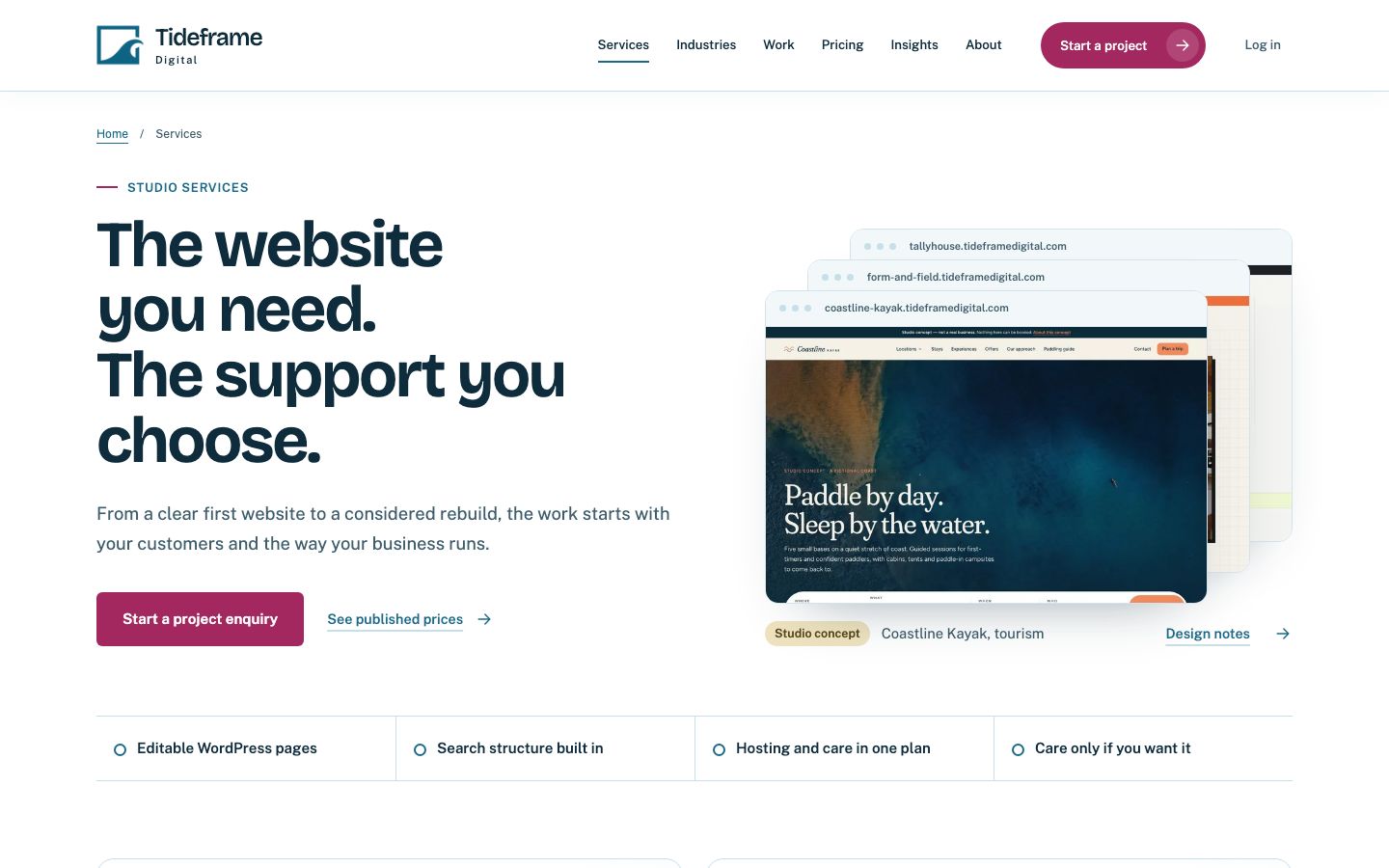
Route 3: commission a studio-built site. A web studio plans, designs and builds a website around your club's audiences, pages and enquiry journeys, usually on a content management system your staff can edit. This is the route for clubs that are, in practice, businesses as well as clubs. Tideframe Digital is one such studio, and the rest of this guide explains when it makes sense.
Why most clubs should start with a platform
It is worth saying clearly: for the large majority of community clubs, a platform is the right answer, and a custom build would be money spent on the wrong problem.
A typical club website has a small, predictable set of jobs. It tells people when and where you train and play. It publishes news and results. It takes registrations and payments. It lists sponsors, committee contacts and policies. Those jobs are the same at almost every club, which is exactly why software built for clubs exists. The pages, forms and member records are already connected, so a membership renewal on the website updates the register the committee reads.
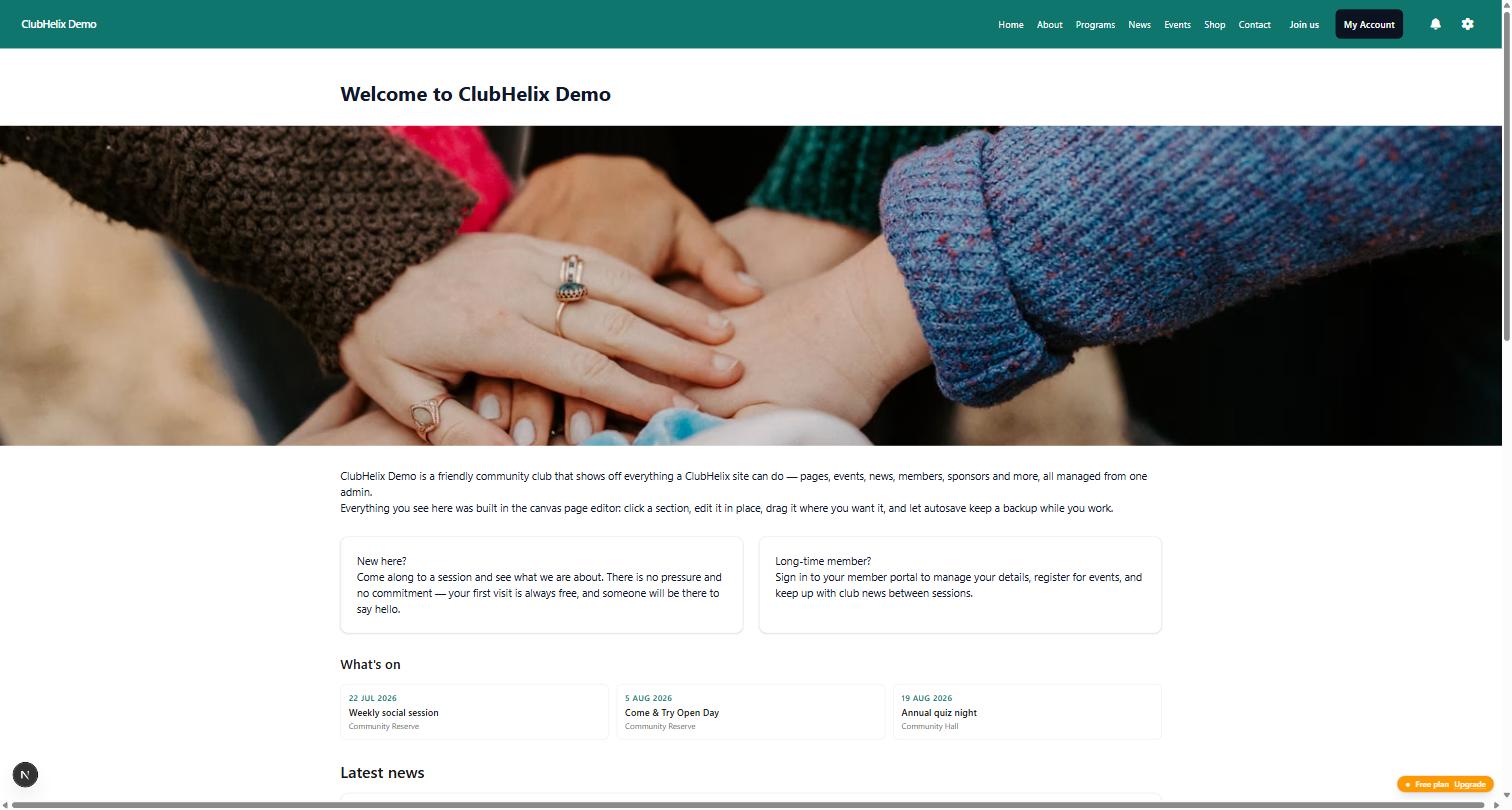
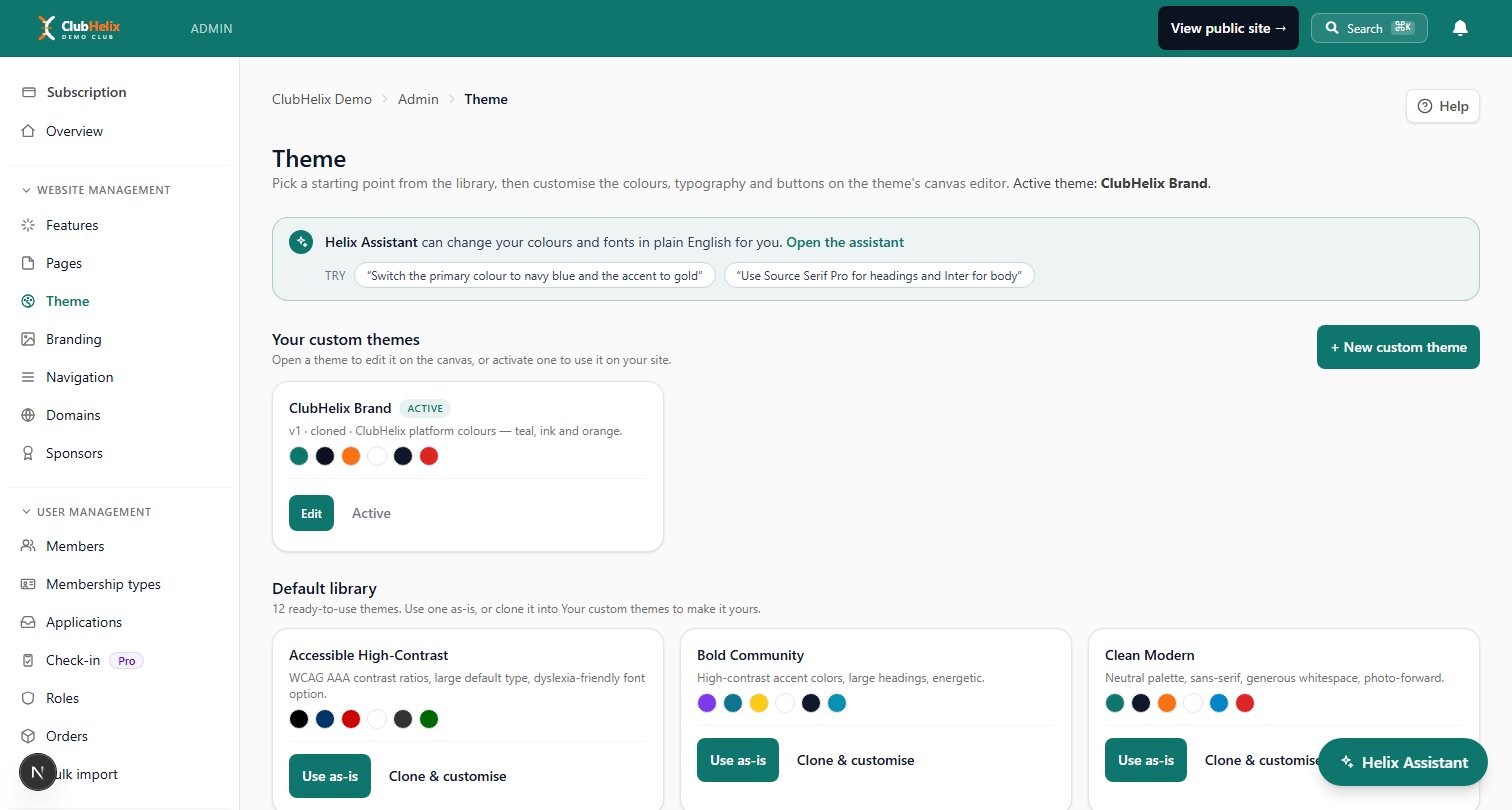
A platform also solves the problem that sinks most volunteer-built sites: handover. When the person who built the site steps off the committee, the next volunteer inherits a familiar admin, not a mystery. Themes and branding are settings, not code, so a new club secretary can update the colours or the home page without calling anyone. You can see what that looks like on our themes and branding page and in the page editor.
If your club fits that picture, our guide on how to build a sports club website walks through the whole job, and you can start on the free plan today. If the committee has no spare evenings, Route 2 gets you the same result without the build work.
When a club is really a business too
Some clubs outgrow the "small, predictable set of jobs" description. They are still clubs, with members and committees, but the website is also how they trade with the public. These are the signs we look for:
- You run a licensed venue. A bistro with a menu that changes, a function room you hire out for weddings and wakes, live entertainment, and opening hours that matter to people who will never become members.
- Your facility is the product. Courts, greens, a pool or a gym that the public books, with pages written for visitors and search engines rather than members.
- Visitors outnumber members. Tournaments that draw interstate or overseas entrants, a regatta or carnival with accommodation and travel information, or a club in a tourist area that sells experiences to holidaymakers.
- You publish like a newsroom. Governing bodies and associations with policy libraries, coaching resources, many audiences and a steady flow of announcements that need careful structure.
- Enquiries are revenue. Corporate bookings, sponsorship packages and hire enquiries arrive through the website, and each one is worth tracking from first click to signed deal.
If two or more of those sound like your club, the public-facing website is doing a business's work. It needs its own plan: who visits, what they search for, which pages answer them, and how an enquiry reaches the right person. That is studio work.
What a studio-built site involves
A studio project looks different from setting up a platform. At Tideframe Digital every project follows the same plain sequence:
- Plan. Agree the audience, pages, search intent and enquiry journey before any design work.
- Build. Review a private preview of editable pages as they take shape.
- Launch. Test the agreed pages and forms, and prepare a recovery point before release.
- Hand over. Receive records of accounts, licences, renewals and editing guidance.
Most of the studio's sites are built on an established open-source content management system the business can edit itself. It takes on React and Next.js work where an interaction, an integration or a publishing requirement justifies the extra build and upkeep. If your club already has a site with years of pages behind it, a rebuild starts with a review of the current site and a URL and redirect plan, so useful pages are not casually lost.
The bigger decision is who looks after the site afterwards. The studio offers three ways to own it, and the build is the same in each: the studio hosts the site and looks after the agreed maintenance; you keep a compatible hosting account you own and add studio care for the work you want help with; or the studio builds the site and hands it over to you completely.
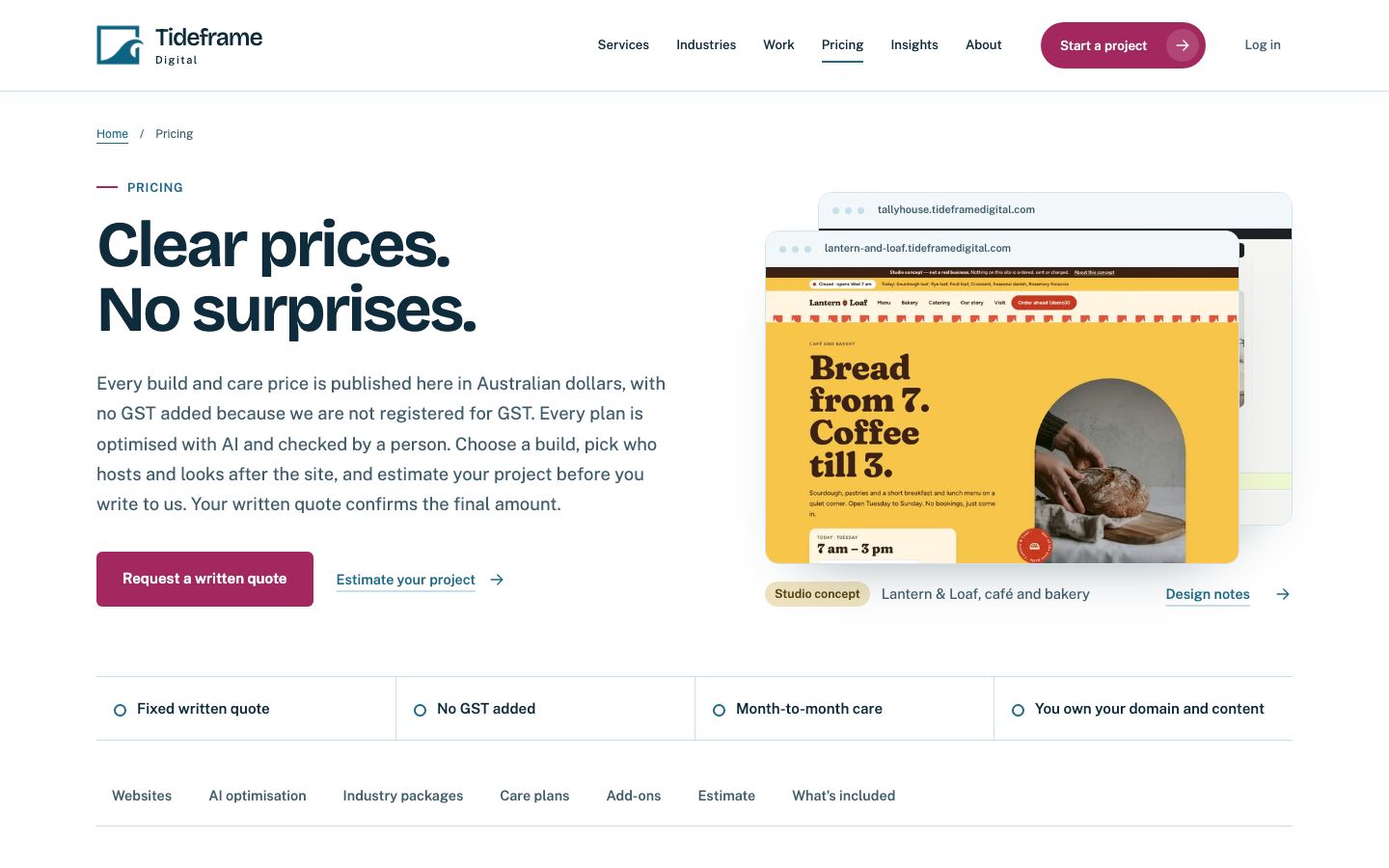
Tideframe publishes its build and care prices on its pricing page, and your written quote confirms the final amount. Read that page alongside your budget before you write to anyone, so the conversation starts from real numbers.
A studio site and a club platform can work together
Choosing a studio for the public website does not mean giving up club software. In fact, the split often works best. The studio-built site handles the public: the bistro menu, the function room, the visitor information, the sponsorship packages. The club platform handles the members: registrations, renewals, payments, teams, fixtures, rosters and email.
In practice that means the public site links to your ClubHelix pages for joining and paying, and your committee keeps one member register rather than two. A studio should design that hand-off deliberately, so a visitor who decides to join lands somewhere that looks and feels like the same club. Because Tideframe Digital builds ClubHelix, that join between the two is something the same team understands from both sides.
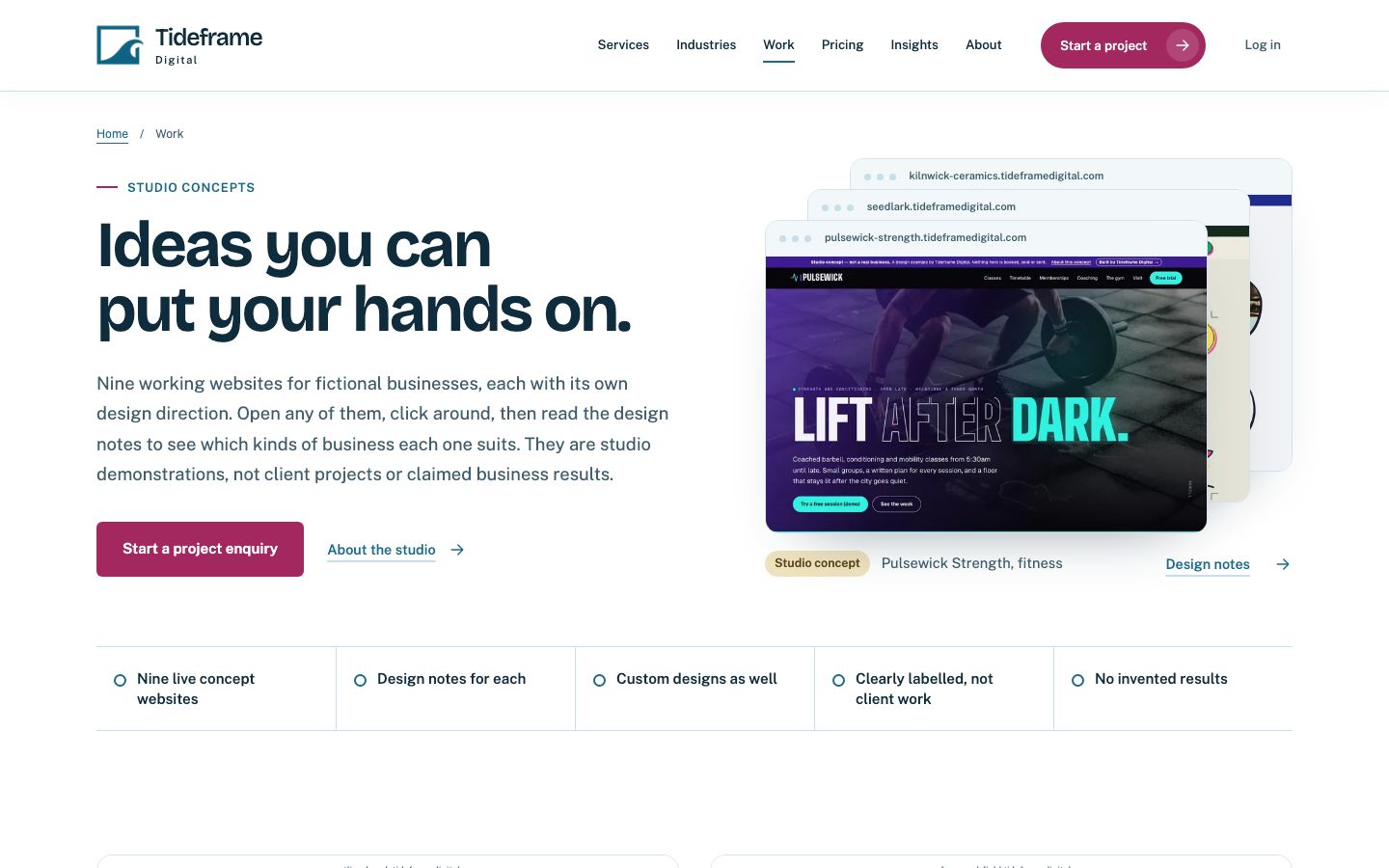
The concept sites on the studio's work page are labelled as concepts for a reason: they show the design approach, not results for real organisations. Ask any studio you talk to the same question: which examples are client work, and which are concepts?
Side by side
| Run a platform yourselves | Done-for-you platform build | Studio-built site | |
|---|---|---|---|
| Best for | Most community clubs | Clubs with no volunteer time for the first build | Clubs that also trade with the public |
| Who builds it | A volunteer | The ClubHelix team | A web studio |
| Who edits it after launch | Volunteers, in the club admin | Volunteers, in the club admin | Staff or volunteers, in the site's own editor |
| Members, payments and fixtures | Built in | Built in | Through club software alongside the site |
| Design freedom | Themes, colours, fonts and page layouts | The same, set up for you | Designed around your club from scratch |
| Search planning | Good defaults for every page | Good defaults for every page | Planned page by page for your audiences |
| Cost shape | Free plan to start, paid plans for more features | A fixed package that includes a year on Standard | A quoted build, plus care if you choose it |
| Time to launch | An afternoon to a few weekends | Handled by the team | Weeks, depending on scope |
A decision checklist for the committee
Work through these questions at your next meeting. Write the answers down; they become your brief whichever route you choose.
- Who is the website for? List your top three audiences. If they are all members and families, a platform is almost certainly enough.
- What do visitors need to do? Join, pay, check a fixture, book a court, enquire about a function. Circle anything that is not a member task.
- Who will maintain it in two years? Name a role, not a person. If the answer is "whichever volunteer we can find", favour a platform.
- What is the website worth? If enquiries through it bring in real revenue, the cost of a studio is measured against that, not against a free plan.
- What must not be lost? If you have an old site with pages people still find in search, plan the redirects before anything else.
- Who owns the accounts? Domain, hosting, email and analytics should be in the club's name. Our guide on who pays for a club website covers budgets, and custom domains explains connecting your own address.
- Is it accessible? Whatever you choose, check it against the basics in our accessible club website guide.
If the checklist points to a platform, compare the plans and start there. If it points to a studio, read about Tideframe Digital and its approach, then send a brief through tideframedigital.com.
Frequently asked questions
Do most clubs need a custom-built website?
No. Most community clubs need to publish news, events and fixtures and take registrations and payments, and a club platform does all of that out of the box. A custom build makes sense when the club also trades with the public, for example through a licensed venue, function hire, public facility bookings or events that draw visitors.
Can we have a studio-built website and still use ClubHelix?
Yes. A common split is a studio-built public site for visitors and ClubHelix for members, registrations, payments, fixtures and email. The public site links to your ClubHelix join and payment pages, so the committee keeps a single member register.
What is the difference between a done-for-you build and a studio build?
A done-for-you build sets up your ClubHelix site for you, using ClubHelix themes and pages, and bundles a year on the Standard plan. A studio build is a website designed and built around your club from scratch, usually on its own content management system, with its own hosting and care arrangement.
How much does a studio-built club website cost?
It depends on the number of pages, integrations and any migration from an old site. Tideframe Digital publishes its build and care prices on its pricing page, and a written quote confirms the final amount for your scope.

