
What this guide answers
- What does a wrestling club need to get started?
A mat, a venue that will store it, an accredited and screened coach, insurance and affiliation, and a first group of athletes.
- How do you find training space for a wrestling club?
Look at sports halls and leisure centres for quality and storage, schools for cost and partnership potential, community and youth centres for cultural fit, and grappling clubs for a shared slot that costs a fraction of…
- How should a club handle weigh-ins and weight classes?
Use one set of calibrated scales every time, weigh with two officials present and never one adult alone with a junior, do it privately, record it on the spot and enter it the same day, and never announce anyone's weight.
- How do clubs build a school partnership?
Lead with the school's needs rather than the sport's. Offer a four to six week block that fits an existing curriculum strand, bring a screened and accredited coach plus your risk assessment and insurance certificate…
- Does a small wrestling club need a website?
Yes — it is where a parent checks that the club is real, finds the training times, sees that your coaches are qualified, and joins without waiting for someone to reply.
South Africa edition. This guide is written for volunteer-run clubs in South Africa. Where rules differ — grants, tax, incorporation, safeguarding — follow the South Africa-specific pointers below or check with your national body.
Ask a wrestling coach what the hardest part of the job is and almost nobody says coaching. They say the mat. A full training surface costs more than every other item the club owns put together, weighs enough that moving it is a five-person job, and — in most community clubs — lives rolled on a trolley in a store cupboard belonging to somebody else, behind a door that a caretaker unlocks when they feel like it. Two-thirds of the sport's administrative pain traces back to that single object.
Everything else follows from it. You train where the mat can live, so your venue choice is made for you. You train for as long as the booking allows minus the twenty minutes at each end that setting up and packing down eats. You cannot casually add a second session, because that means a second venue or a second mat. And you cannot grow past the size of the room, no matter how good the recruitment is.
This guide is built around that constraint. It covers finding, sharing and keeping mat space; running weigh-ins and thinking about weight sensibly, particularly with juniors; and the school partnership that is, for most community wrestling clubs, the only recruitment channel that reliably works. It assumes a volunteer-run club rather than a school or college program with a budget.
The mat decides everything
Before you sign anything, be clear about what you are actually placing in a venue. A club-standard training surface is a large square of interlocking or roll-out foam with a competition circle marked inside it — the exact dimensions are set by the international federation and are revised from time to time, so check the current rulebook before ordering rather than copying a photo. Whatever the size, three practical facts hold.
It is a capital item, not an expense. Mats last many years if they are cleaned, stored flat or properly rolled, and never dragged across a rough floor. They fail early if they are folded wet, stored against a heater, or left down under a badminton net for a fortnight. Treat the purchase like a facility decision, not a shopping trip.
It has to be stored where it is used. A mat that must be transported to and from a venue will effectively kill the club within a year, because you will lose the volunteers who lift it. Storage adjacent to the training space, on a trolley, with your own access, is worth paying more for than an extra hour of hall time.
Setup and pack-down are part of the session, so design them. Number the panels or sections and mark the layout on the floor with a small permanent reference, so the same jigsaw goes down the same way every time. Assign the job by roster rather than by whoever is standing near it, and teach the seniors to run it so the coach is free. A club that gets a full mat down in eight minutes has bought itself an extra half-hour of training every week compared with one that improvises for twenty.
Where clubs actually find space
- A sports hall or leisure centre. Good floors, real storage, and the highest hourly rate. Best chance of a permanent storage arrangement if you can commit to a regular slot.
- A school gym. Often the cheapest route and the natural partner for the schools work below, but exam periods, holidays and event bookings will displace you.
- A community or church hall. Cheap and friendly, but check the floor for slope and the ceiling for height before you commit, and confirm nothing heavy gets wheeled across the space.
- A youth or community centre. Frequently the best cultural fit for a club running junior programs, and often willing to talk about a long-term storage arrangement.
- Sharing with a grappling club. A judo or jiu-jitsu club already has mats down and a room booked. Their surface is not identical to a wrestling mat and the taping is different, but a shared slot is far cheaper than a venue of your own — and it opens a two-way flow of members. Our guide on running a Brazilian jiu-jitsu club is a useful read before you make the approach.
Most community clubs in South Africa end up using a school hall, a municipal recreation facility or a community centre, and school partnerships are frequently the most practical route to both space and storage. Confirm who is responsible for security of the mats when the club is not there, and what happens during school holidays — a venue that is locked for six weeks over the long break needs a plan, not an assumption.
A venue-sharing agreement checklist
Whether it is a formal lease or a friendly arrangement with a school, get these written down. Every one of them has ended a club somewhere.
- Exact days, times and dates, including which weeks you do not have (holidays, exams, elections, the annual concert)
- Whether the slot is exclusive, and what notice either side must give to cancel a session or the whole arrangement
- Where the mats are stored, who has access, and who is permitted to move them
- Whether anyone else may use the mats, and on what terms
- Who is responsible for damage, and what the process is when something is damaged
- Insurance and indemnity — what each side carries, and evidence of it
- Access arrangements: keys, codes, alarm, and what happens when the usual key-holder is away
- The rate, when it is reviewed, and how much notice you get of an increase
- A clean-up standard, so "you left the hall in a state" never becomes a surprise
Once you have the slot, publish it and manage it properly. A club that books its own sessions, tracks who is coming and caps numbers when the mat is full runs calmer than one where thirty people turn up to a room that comfortably fits eighteen — facility and session booking handles that without a spreadsheet.

Weight classes, weigh-ins and getting juniors right
Wrestling is organised by weight, which means the club has to be competent and careful about a subject most sports never touch. Two things are true at once: weight categories exist to make competition fair and safe, and weight is the single area where a badly run club can do real harm to a young athlete.
Running a weigh-in that nobody argues about
Whether you are weighing for a club competition, a squad selection or an entry submission, run it the same way every time.
| Element | The standard to hold |
|---|---|
| Scales | One set, calibrated, used for every weigh-in; note the make and keep it consistent |
| People | Two officials present, one weighing and one recording; never a single adult alone with a junior |
| Privacy | A screened area or a separate room; never in front of the group |
| Clothing | Whatever the competition rules specify, applied identically to everyone |
| Recording | Written down at the moment, initialled by both officials, entered into the club record the same day |
| Announcing | Never publicly. A wrestler's weight is their information |
| Skin and nails | Check at the same time, as most competitions require; anyone with a suspicious lesion sits out and sees a doctor |
Keep the record. When an entry is queried, a dated weigh-in sheet with two initials on it settles the conversation instantly.
Juniors and weight — the club's actual job
Be plain with parents and athletes from day one: this club does not cut weight. Growing bodies need food, and a junior athlete who learns to manage weight by restriction is being set up for problems that outlast their wrestling career.
Your governing body sets the rules that matter here — minimum weights, permitted descent between weigh-ins, age-band categories and any medical certification required — and those rules exist precisely because the sport has thought hard about this. Follow them, and do not invent local variations. Where a family raises weight management, the right answer is a referral to a doctor or an accredited dietitian, not coaching advice.
What the club can do well is structural: wrestle athletes up a category in training rather than down, select on skill and readiness rather than on the category that looks winnable, talk about strength and conditioning rather than about weight, and write a short, published policy so a new parent can read your position rather than infer it. Our sports club risk management guide covers how to turn that into a document your committee can stand behind. Treat all of the above as general information and check the specifics with your federation and a medical professional.
Season shape matters too. The competition calendar generally builds through the cooler months towards national events, with the long summer break as the quiet period — which is also when school halls are hardest to book and families disappear for weeks. Plan a light holiday timetable and use that window for coach education, mat maintenance and grant applications rather than trying to hold full training.
The school partnership that actually feeds the club
Almost no community wrestling club recruits successfully from a shopfront, because almost nobody wakes up and decides to find a wrestling club. They try it because it turned up in front of them. Schools are where it turns up.
What a school actually wants
Coaches approach schools with an offer built around wrestling. Schools say yes to offers built around their problems. Lead with theirs.
- A qualified, screened coach who turns up on time, every time
- Something that fits an existing curriculum strand — combat, gymnastics-adjacent movement, physical literacy, or a health and fitness unit
- Equipment brought in and taken away, or stored without cluttering the hall
- A written risk assessment and evidence of insurance, provided before anyone asks
- An activity that includes the students who are not naturally good at the school's main sports — this is genuinely wrestling's strongest argument
- A clear finish, and a pathway for the handful who want more
A delivery model that works
The shape most clubs settle on is a short block rather than a one-off visit. A single taster session is fun and converts almost nobody; a four to six week block builds enough competence that a student can imagine continuing.
- Introductory meeting with the head of physical education. Bring the risk assessment, the insurance certificate, the coach's accreditation and screening, and a one-page outline of the block.
- Deliver the block during class time, with mats you bring or the school's own soft flooring where it is suitable. Learn names. Teach the teacher enough to run parts of it themselves.
- Run a lunchtime or after-school club for the interested students immediately after the block ends, while the enthusiasm is still live.
- Invite them to the club with a specific date, a free first session, and something for parents in writing — not a flyer that goes into the bottom of a bag.
- Host an inter-school event once you have two or three schools running. This is what turns a program into a scene, and it is the point at which schools start ringing you.
Screening, insurance and the paperwork schools will ask for
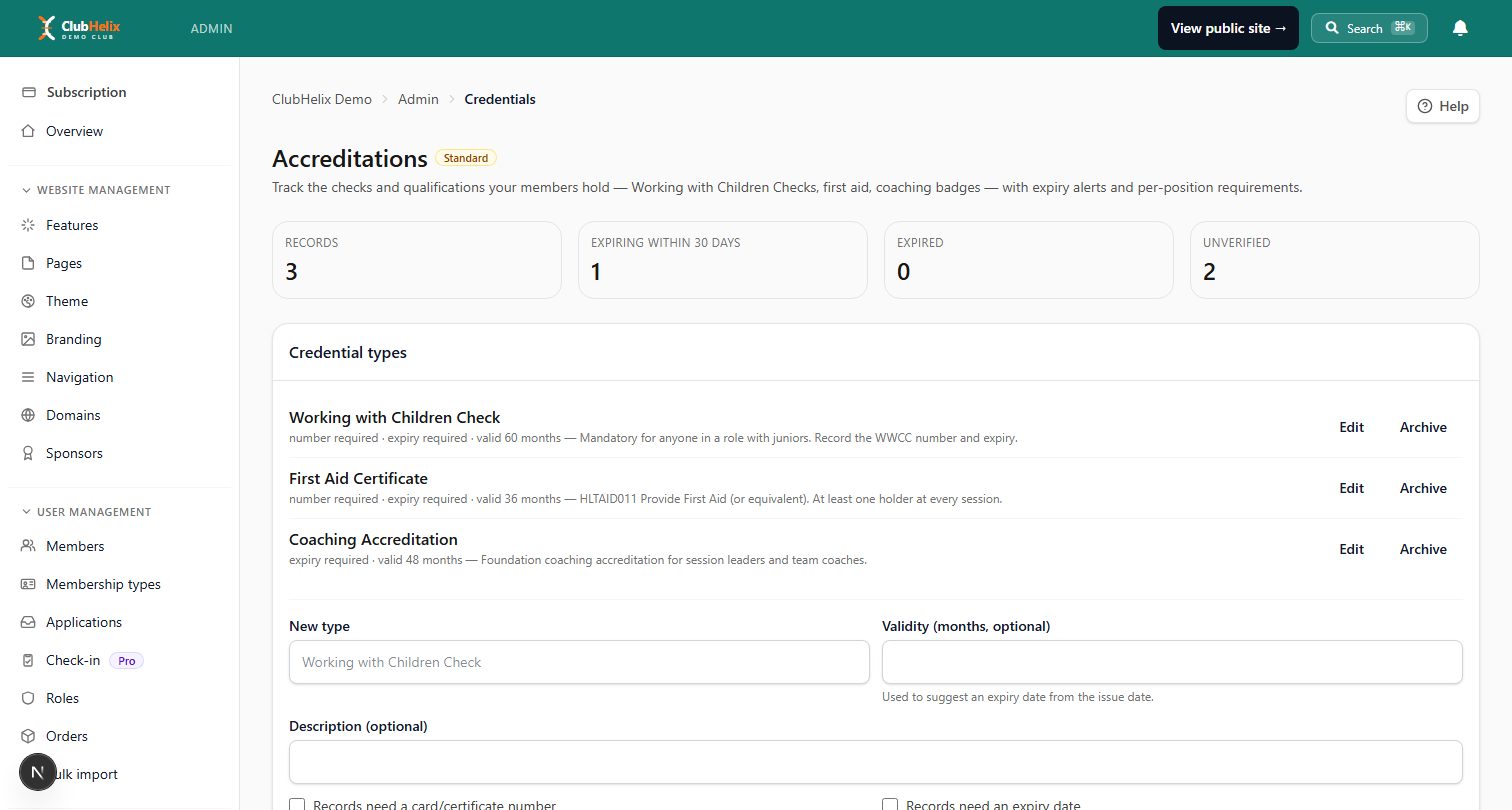
Every adult you send into a school needs the background screening required where you operate, current coaching accreditation, and first aid. The school will ask for evidence, and the club that produces it in an email within an hour looks entirely different from the one that says it will dig it out. Keep every coach's certifications in one register with expiry dates and reminders — accreditation tracking exists for exactly this, and it means a lapsed check never quietly walks into a classroom.
Coaches working in schools in South Africa should hold the clearances required under national child-protection legislation, and schools will generally want proof of insurance and a written risk assessment. School sport structures vary widely between provinces and between schools, so build the relationship with the individual school rather than expecting a single provincial process to open doors. Treat this as general information rather than advice.
Turning a taster into a member
The gap between "that was fun in PE" and "I am a member of a wrestling club" is where most programs quietly fail. Treat it as a funnel with measurable steps, and fix the worst step rather than doing more of everything.
| Step | What it looks like | What to measure | Typical fix when it leaks |
|---|---|---|---|
| Exposure | A school block or a come-and-try session | How many students took part | Add a second school rather than repeating the same one |
| Interest | Lunchtime or after-school club | How many returned a second week | Make it social, not a trial; friends come with friends |
| Trial | First club session, free | How many attended after being invited | A named person greets them at the door; the coach uses their name |
| Intro block | A short paid beginners' course | How many completed it | Fixed dates and a cap, not open enrolment |
| Member | Junior membership | How many joined within two weeks of finishing | Ask on the last night, with the form open on a phone |
| Competitor | First event | How many entered within a season | Take a group, not an individual; make the first one low-stakes |
The conversion moment is the last night of the intro block, and it works best when joining takes ninety seconds on a phone rather than a form to print and return. Online registration with payment attached removes the two-week gap where enthusiasm evaporates, and our guide on running a come and try day covers the mechanics of the earlier steps.
Coaches, officials and the money
Wrestling clubs are usually small enough that the coaching bench and the committee are the same three people, which is a risk in itself. Two habits reduce it: recruit a second coach before you need one, and push your senior wrestlers towards coaching and officiating accreditation while they are still competing. Officials are scarce in every wrestling region, and a club that produces them earns goodwill it can spend later.
On money, the shape of a wrestling club budget is unusual — a very large capital item, a dominant fixed operating cost, and modest everything else.
- Capital. Mats, a trolley, mat tape and cleaning gear, singlets, headgear, a scoreboard or clock. This is where grants belong.
- Fixed operating. Venue hire, insurance and affiliation. Between them these are most of your annual spend, and they are due whether eight or twenty-eight people turn up.
- Variable. Competition entries, travel, coach education, first aid courses.
- Income. Membership, school program fees, competition levies, and a small amount from events or sponsorship.
Build a real budget for it rather than a running total in a notebook — the club budget template is a reasonable starting point, and knowing your fixed cost per session is what tells you the minimum membership the club needs to survive.
Mats are the classic capital-grant item, and also the hardest to fund, so build the case carefully. Municipal community grants, national lottery distribution funding and corporate social investment budgets in South Africa are the usual routes, and the last responds best to a short proposal with a quote, a participation number and a school partnership attached. Read how to write a grant application before you start.
Replacing the clipboard and the group text
A wrestling club's admin is small in volume and awkward in shape: session bookings against a shared venue, a school program's forms and consents, weigh-in and competition records, coach accreditations with expiry dates, and a membership that arrives in a lump every time a school block finishes. ClubHelix puts all of it on your own club website — session and facility booking so your mat time is visible and capped, online registration so a taster converts on the night, forms with payment for competition entries and consents, and accreditation tracking so no coach walks into a school with a lapsed check. The wrestling club management software page shows how those pieces fit for a club like yours.
You can build the whole thing on the free tier and decide later. The pricing is on the page rather than behind a sales call, and a coach with a spare evening can have a site with a timetable, a join form and a school-program page live before the next session — create your club site and give your school contacts something to look at.
Frequently asked questions
What does a wrestling club need to get started?
A mat, a venue that will store it, an accredited and screened coach, insurance and affiliation, and a first group of athletes. The mat and the storage arrangement are the hard part — everything else is solvable. Before buying, secure the venue and get the storage written into the hire agreement, because a mat with nowhere to live is a club with a very short future.
How do you find training space for a wrestling club?
Look at sports halls and leisure centres for quality and storage, schools for cost and partnership potential, community and youth centres for cultural fit, and grappling clubs for a shared slot that costs a fraction of your own venue. Judge every option on storage first and hourly rate second, and get the arrangement in writing.
How should a club handle weigh-ins and weight classes?
Use one set of calibrated scales every time, weigh with two officials present and never one adult alone with a junior, do it privately, record it on the spot and enter it the same day, and never announce anyone's weight. Follow the weight categories and descent rules your governing body publishes rather than local variations. For juniors, the club's position should be that it does not cut weight, and any weight question goes to a doctor or accredited dietitian.
How do clubs build a school partnership?
Lead with the school's needs rather than the sport's. Offer a four to six week block that fits an existing curriculum strand, bring a screened and accredited coach plus your risk assessment and insurance certificate, and finish with an after-school club and a specific invitation to the club with a date on it. One school delivered properly beats five one-off taster visits.
Does a small wrestling club need a website?
Yes — it is where a parent checks that the club is real, finds the training times, sees that your coaches are qualified, and joins without waiting for someone to reply. It is also what you send a school when they ask who you are. A single page with a timetable, a coach profile, a school-program outline and a join button does more recruiting work than any amount of posting.
Keep reading — how to increase junior participation goes deeper on the recruitment funnel, and how to run a come and try day covers the session that starts it.


