
What this guide answers
- How long should a working bee run?
Two to three hours, with a hard finish time you honour. Short, well-planned working bees with visible results get repeat volunteers; open-ended ones burn out your best people.
- How do we get people to actually show up?
Specific asks beat general pleas: publish a job list, ask individuals to lead crews, let members sign up to jobs in advance, and send a reminder the day before.
- Are volunteers covered by insurance at a working bee?
Usually a club's public liability and volunteer accident cover extends to organised working bees, but conditions vary between policies — some expect sign-in records and supervision of power tools.
- Should kids come to a working bee?
Yes — a family working bee builds the club and models volunteering.
South Africa edition. This guide is written for volunteer-run clubs in South Africa. Where rules differ — grants, tax, incorporation, safeguarding — follow the South Africa-specific pointers below or check with your national body.
Every club has the list: the sightscreen that needs painting, the gear shed nobody can walk into, the garden beds gone feral, the clubroom windows that haven't seen a squeegee since the last team photo was taken. Paying contractors for all of it would empty the account.
That's why clubs run working bees — volunteer work days, if the term is new to you: everyone turns up for a morning, the jobs get done, everyone eats. The good ones get a season's worth of maintenance done before lunch.
But everyone has also been to the other kind: six people show up, nobody knows what the jobs are, there are two rakes for the lot of them, and the same faithful few quietly resolve never to come again. The difference between the two isn't luck. A volunteer working bee is an event, and it succeeds or fails on the same things every event does — a clear plan, a real invitation, and people being looked after on the day.
Decide the scope before the date
A working bee needs one clear goal, not "fix everything". Walk the grounds with a notepad (or your phone camera) a few weeks out and write down every job you can see. Then be ruthless:
- Pick jobs that fit the window. Two to three hours is the honest maximum for volunteer energy — plan what a crew can genuinely finish in that time, because finishing matters. People come back to working bees where they saw the result.
- Time it with purpose. Pre-season is the classic slot — grounds and clubrooms ready for round one — and it pairs naturally with your pre-season checklist. A smaller mid-season tidy and an end-of-season pack-down round out the year.
- Have a weather plan. Nominate a rain date when you announce the original, so a washout is a postponement rather than a cancellation.
Build the job list before you build the crew
The single biggest upgrade to any working bee is a written job list with names against it. It turns "come help out Sunday" into "we need two people on the line marker" — and specific asks get yes far more often than vague ones. A simple club working bee checklist looks like this:
| Job | People | Tools needed | Skill level |
|---|---|---|---|
| Weed and mulch garden beds | 3–4 | Gloves, hand tools, wheelbarrow | Anyone |
| Paint sightscreen / rails | 2 | Paint, rollers, drop sheets | Anyone careful |
| Clean gutters and downpipes | 2 | Ladder, gloves, bucket | Confident adults |
| Sort and cull the gear shed | 2–3 | Bins, labels, muscle | Someone who knows the gear |
| Deep-clean canteen and fridges | 2 | Cleaning supplies, hot water | Anyone |
| Mow, trim the edges, line-mark | 2 | Club mower, fuel, marker | Trained on the gear |
Against each job, note what the club must supply versus what volunteers can bring ("bring your own gloves and wheelbarrows" saves real money). Buy consumables — paint, mulch, bin bags, the food for afterwards — the week before, and ask a local hardware store or sponsor about donating supplies; many will for a community club that asks nicely.

Recruit the crew (the real work)
Nobody comes to a working bee because of a poster. They come because someone asked them, the ask was small and specific, and it was easy to say yes:
- Announce it two to three weeks out with the date, times, the job list and the finish-line promise: "Done by midday, lunch on the barbecue to follow."
- Ask people for jobs, not attendance. "Steve, can you run the painting crew?" recruits Steve and makes him a recruiter. Our guide on how to recruit club volunteers covers why named, bounded asks work so well.
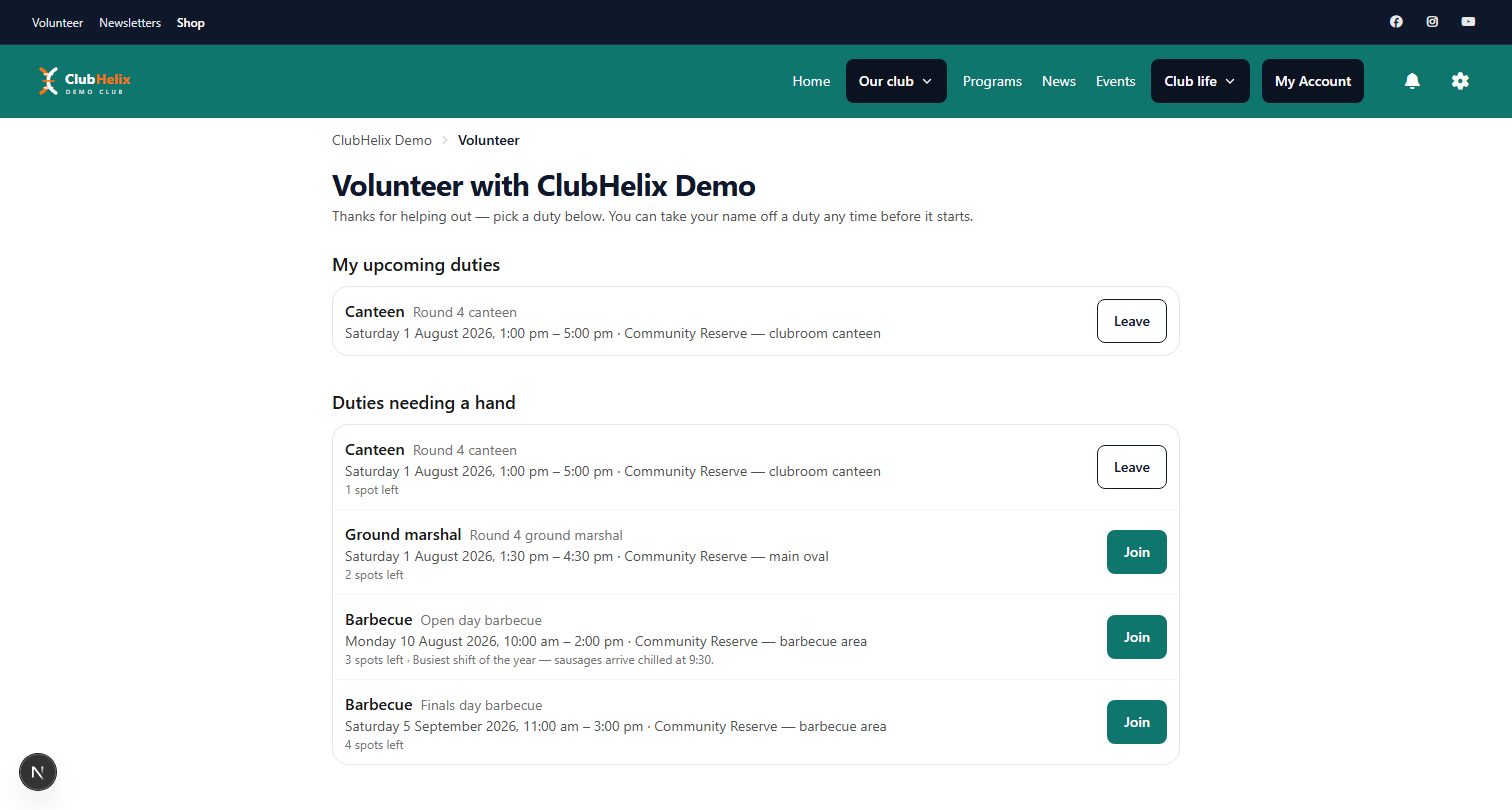
- Let people sign up to a job in advance. With volunteer rostering, each working-bee job becomes a slot members claim online — you can see the gutter crew is empty on Wednesday and fix it, instead of discovering it at 8am Sunday. Automatic reminders the day before deal with the forgetting problem.
- Chase the quiet majority. An email broadcast to all members, a follow-up to those who haven't responded, and a morning-of text does more than ten social posts. Team group chats are where the last few yeses come from.
Run the day safely
A working bee is still a club activity, and a few minutes of structure keeps it safe and keeps you covered:
- Sign everyone in. A sign-in sheet (or digital attendance record) tells you who was on site — which matters for insurance and for thank-yous.
- Brief the crew at the start. Five minutes: the jobs, who's leading each one, where first aid and toilets are, and the rules — power tools and ladders for competent adults only, kids on kid-safe jobs (weeding, painting low rails, running drinks), sun protection and water for everyone.
- Match jobs to people. Don't put the retiree on the roof or the eight-year-old on the line trimmer. Every job on your list already has a skill level — use it.
- Check your insurance beforehand. Confirm that your public liability and any volunteer personal-accident cover extends to working bees, and note any conditions (some policies expect a sign-in record and supervised power-tool use). This is general information, not legal or insurance advice — check the details of your policy with your insurer or broker.
Many clubs hold public liability cover through their governing body's affiliation package or a club policy — check whether volunteer work days at the grounds fall inside it, and whether ladders or power tools carry conditions, before the day rather than after.
Feed people and finish on time
The braai at the end of a work day is not optional — it's the payroll.
Put someone on the food for the last half-hour so it's ready the moment tools go down, and finish with a walkaround: show everyone what got done. Volunteers who see the finished job — painted, mulched, gleaming — feel the morning was worth it, and that feeling is what fills the next roster.
Then stop on time. Ending at midday as promised is what makes people trust the next invitation. Anything unfinished goes on the list for next time, not onto the last three loyal people standing.
Afterwards: thank, show, repeat
The working bee isn't over when the barbecue's cleaned:
- Send a thank-you the same week — a short broadcast naming the crews and what they got done. Small gestures compound; our volunteer appreciation ideas has plenty more.
- Publish before-and-after photos on the club's news page and socials. It celebrates the workers and quietly shames next time's fence-sitters in the friendliest possible way.
- Log what got done and what's left. Ten minutes updating the maintenance list while it's fresh makes the next working bee's job list trivial.
- Book the next one. Clubs that run two or three predictable working bees a year get better turnouts than clubs that call one in a panic.
Working bees run on the same machinery as everything else at a well-run club: an invitation everyone actually receives, jobs people can put their name against, and a thank-you that lands. ClubHelix gives your club broadcasts, volunteer rostering with reminders, and attendance tracking in one place — there's a free tier, so you can set up your club before the next one.
Frequently asked questions
How long should a working bee run?
Two to three hours, with a hard finish time you honour. Short, well-planned working bees with visible results get repeat volunteers; open-ended ones burn out your best people.
How do we get people to actually show up?
Specific asks beat general pleas: publish a job list, ask individuals to lead crews, let members sign up to jobs in advance, and send a reminder the day before. Then feed everyone and finish on time so next time's invitation is easy.
Are volunteers covered by insurance at a working bee?
Usually a club's public liability and volunteer accident cover extends to organised working bees, but conditions vary between policies — some expect sign-in records and supervision of power tools. Confirm with your insurer before the day; this is general information, not insurance advice.
Should kids come to a working bee?
Yes — a family working bee builds the club and models volunteering. Just plan kid-safe jobs (weeding, painting low rails, running drinks), keep them away from power tools and ladders, and make sure every child has a responsible adult on site.

