
What this guide answers
- When should a sports club start pre-season planning?
Four months before round one is the comfortable runway: it gives you a month for decisions, a month for recruitment, a month for teams and fixtures, and a month for operations.
- What should be in a season planning template?
Four columns: when (measured as a countdown to round one, not calendar dates, so the template is reusable every season), the job, a single named owner, and a done checkbox.
- When should we open registrations?
As early as your fees and categories are confirmed — ideally four months out, and never later than your grading date.
- What's the most commonly forgotten pre-season job?
Volunteer screening and accreditation lead times. Working-with-children checks and coaching credentials can take weeks to process, and a coach who can't legally take the field in round one is a genuine crisis with no…
Every club knows the feeling: it's two weeks before round one, the registrar is chasing forty unpaid registrations, nobody has confirmed the canteen roster, and the new jerseys are somewhere between the supplier and the clubhouse. Pre-season chaos isn't a personality trait of community sport — it's what happens when a hundred small jobs all get left until they're urgent.
The fix is a countdown. Work backwards from round one, put every job in the month it must start (not the month it's due), and share the list so the whole committee can see who owns what. This guide gives you that countdown as a season planning template you can copy straight into your club's next committee agenda.
A note on timing: we've written this as a four-month countdown because that's the realistic runway for most community clubs. If your governing body releases fixtures late or your season creeps up faster, compress the early months — but keep the order, because the order is the point. Registrations before grading, grading before fixtures, fixtures before rosters.
Four months out: decisions and money
This is the month of committee decisions. Everything later in the countdown depends on choices made here, which is why leaving them until pre-season "really starts" causes the last-minute scramble.
- Confirm the committee and key roles. After the AGM, make sure every portfolio — registrar, treasurer, coaching coordinator, canteen, grounds — has a name against it. A role without an owner is a job the secretary does the week before round one.
- Set fees and membership categories. Seniors, juniors, family caps, social members, early-bird discounts. Get the treasurer to model last season's numbers against the new fees so there are no surprises. Publish fees the moment they're set — parents budget early, and hidden pricing costs you sign-ups.
- Review last season's wrap-up. If you wrote an end-of-season report, this is where it pays off: every "next season we should…" line becomes a checklist item now.
- Book venues and training grounds. Councils and school facilities book out months ahead. Confirm training nights, match-day grounds and any indoor wet-weather options in writing.
- Renew insurance and affiliation. Governing-body affiliation, public liability, player accident cover. Diarise the renewal dates so this is never discovered lapsed in week one.
- Open registrations. The single biggest lever for a calm pre-season is opening registration early with online payment. A proper self-registration flow collects the form, the fee, medical details and consents in one pass — so your registrar's job becomes monitoring a dashboard, not typing up paper forms.
Three months out: people and pipeline
With decisions locked, this month is about filling the club: players, coaches, volunteers and sponsors.
-
Appoint coaches and team managers. Confirm returning coaches first, then advertise gaps. Check accreditation and screening requirements (working-with-children checks and coaching credentials) now, because processing takes weeks.
-
Launch the recruitment push. Update the website with fees, training times and a big obvious "register" button, then push it everywhere: social posts, school newsletters, flyers at the local shops, and a personal message to every player who didn't re-register from last season. A short "we'd love to have you back" note from a coach converts better than any poster.
-
Plan your registration day. A well-run sign-on day is your biggest single recruitment event — station layout, staffing, EFTPOS, sausage sizzle. We've written a full playbook in our registration day guide; book the date and venue this month so you can promote it for four weeks.
-
Chase sponsors while budgets are open. Local businesses set marketing budgets early in the year. A one-page proposal with your member numbers, website traffic and package tiers (jersey, ground signage, website logo) does the job. Invoice signed sponsors immediately.
-
Order playing kit and equipment. Jerseys, balls, first-aid restock, field equipment. Suppliers quote six-to-eight-week turnarounds in pre-season and then blow through them, so order with buffer. Number allocations can follow once teams firm up.
Two months out: teams and fixtures
The registrations you opened two months ago now drive everything in this month.
- Run grading and team formation. Use live registration numbers, not guesswork. Decide your grading approach (see our guide to fixtures and draws for how grading feeds the draw) and communicate it to parents before trials, not after — most grading complaints are really communication complaints.
- Nominate teams to your association. Hit the nomination deadline with accurate team counts. Under-nominating leaves paid-up players without a team; over-nominating leaves you scrambling for players and paying fees for a team you fold.
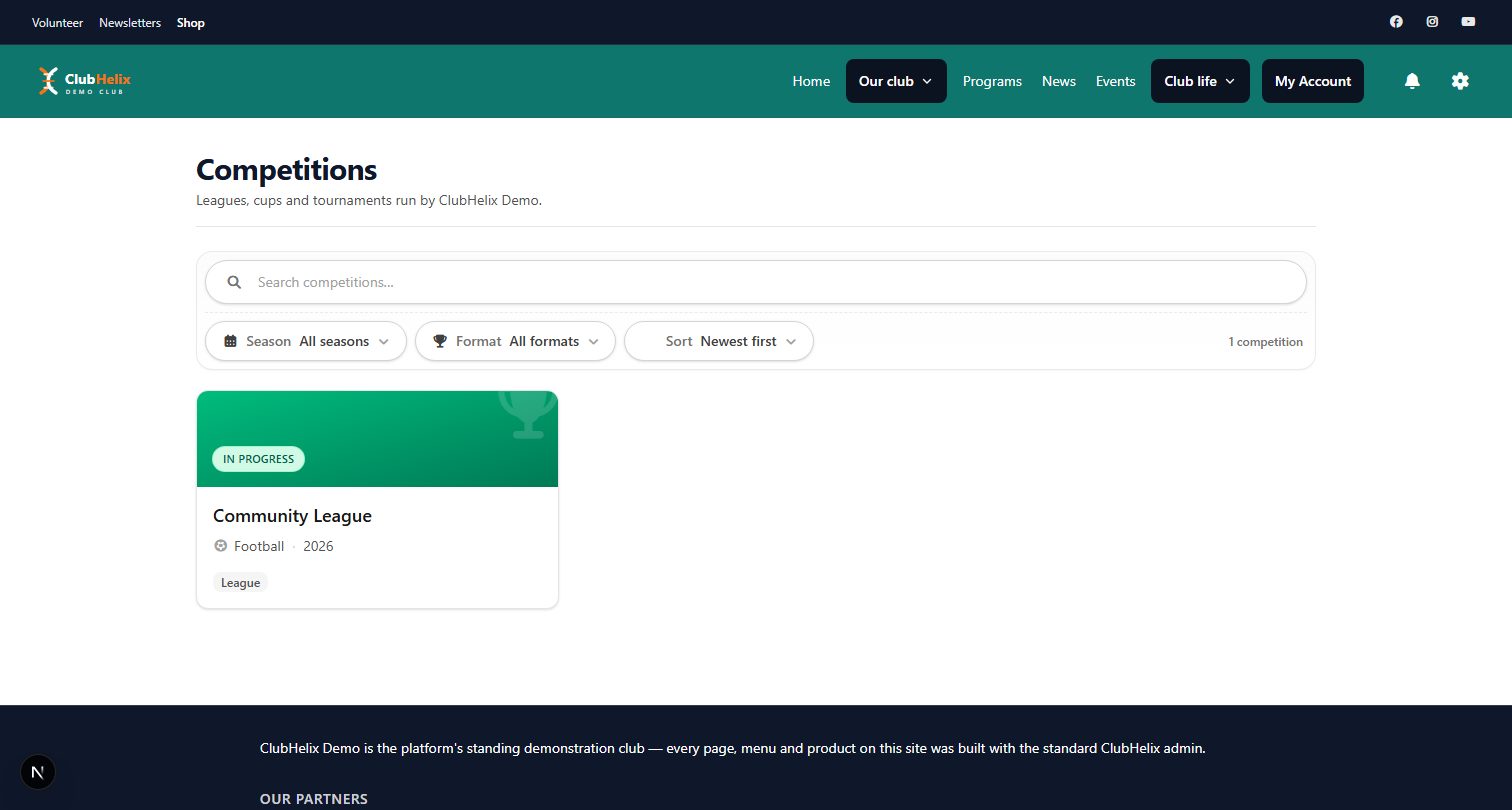
- Build the internal fixture and training schedule. Once the association publishes the draw — or you build your own for internal competitions — get it online where members will actually look. Running your draw through a competitions module means fixtures, results and ladders publish themselves to your website instead of living in a spreadsheet someone has to re-export weekly.
- Chase the stragglers. Every club has a cohort who "are definitely playing" but haven't registered. Send a firm, friendly deadline: unregistered players can't be graded, insured or selected. Online registration makes the chase easy — one link, two minutes, done.
- Schedule the season's events. Season launch, registration day (if not already run), first home-game family day, mid-season fundraiser, presentation night. Creating them all now in your events system with RSVP means every later promotion is just sharing a link.
One month out: operations and comms
The final month is about making round one boring — in the best possible way.
- Publish the season information pack. One page (or one email) with everything: training times, ground addresses, uniform requirements, fees status, key contacts, wet-weather policy. Every question answered here is a message your volunteers don't field in week one.
- Lock in match-day rosters. Canteen, BBQ, ground setup, first aid, scoring. Rostering people to specific dates in writing beats a sign-up sheet on the clubhouse wall. Confirm who holds keys, who opens the gates, and who knows how the scoreboard works.
- Run a pre-season working bee. Grounds, clubrooms, canteen deep-clean, line marking, net repairs. Feed the volunteers — a working bee with a barbecue at the end gets triple the turnout.

- Verify compliance is complete. Every coach and required volunteer screened, first-aid kits stocked, defibrillator checked, incident-reporting process known to team managers.
- Test your communication channels. Send a "welcome to the season" message to all registered members and watch the delivery numbers. Broken email lists and dead group chats should be discovered now, not during your first washout.
- Brief the coaches and managers together. One meeting: season logistics, codes of conduct, how selections are communicated, who to call when something goes wrong. Handing every manager the same one-page cheat sheet prevents ninety per cent of week-one confusion.
Week of round one
- Confirm ground bookings and referee/umpire appointments.
- Publish round-one details prominently — website banner, email, app notification.
- Do a final gear check: match balls, first-aid kit, bibs, scorebooks or scoring app logins.
- Check the weather and be ready to run your wet-weather comms if needed.
- Thank your volunteers publicly before the season starts, not just after it ends.
The season planning template
Copy this table into your committee minutes and assign an owner to every row — it's deliberately terse so it survives contact with a real committee meeting.
| When | Job | Owner | Done |
|---|---|---|---|
| 4 months out | Committee roles confirmed | President | ☐ |
| 4 months out | Fees set and published | Treasurer | ☐ |
| 4 months out | Venues booked, insurance renewed | Secretary | ☐ |
| 4 months out | Online registrations open | Registrar | ☐ |
| 3 months out | Coaches appointed, screening started | Coaching coordinator | ☐ |
| 3 months out | Recruitment push live; registration day booked | Committee | ☐ |
| 3 months out | Sponsor proposals sent | Sponsorship lead | ☐ |
| 3 months out | Kit and equipment ordered | Gear steward | ☐ |
| 2 months out | Grading run; teams nominated | Registrar + coaches | ☐ |
| 2 months out | Fixtures and training schedule published | Secretary | ☐ |
| 2 months out | Season events created with RSVP | Events lead | ☐ |
| 1 month out | Info pack sent; rosters locked | Secretary | ☐ |
| 1 month out | Working bee held; compliance verified | Grounds + safety | ☐ |
| 1 month out | Comms channels tested; managers briefed | Secretary | ☐ |
| Round 1 week | Final checks, round-one promotion | Everyone | ☐ |
Two habits make this template actually work. First, review it at every committee meeting through pre-season — five minutes, read the rows due this month, ask what's blocked. Second, keep it somewhere shared and visible rather than in one person's inbox. Clubs that run their pre-season from a shared checklist don't finish more jobs than clubs that don't; they finish the same jobs earlier, which is the entire difference between a calm final month before round one and a chaotic one.
Why the order matters more than the dates
If you take one thing from this guide, make it the dependency chain: registrations → grading → nominations → fixtures → rosters → comms. Every pre-season disaster story is a link in that chain attempted out of order — teams nominated before registrations were real, rosters built before fixtures existed, a season launch promoted before fees were set.
That's also the honest argument for putting your club admin on one integrated system rather than a folder of spreadsheets: when registration data flows straight into team lists, and team lists into fixtures, and fixtures onto the public website, the chain maintains itself. The registrar sees live numbers, the secretary stops re-typing, and the pricing of a club platform is usually less than the cost of the volunteer hours the spreadsheets were quietly burning.
Frequently asked questions
When should a sports club start pre-season planning?
Four months before round one is the comfortable runway: it gives you a month for decisions, a month for recruitment, a month for teams and fixtures, and a month for operations. If your governing body's timelines squeeze you, compress the early phases rather than dropping items — the decisions month can happen in a fortnight if the committee is decisive, but kit orders and volunteer screening genuinely need their lead time.
What should be in a season planning template?
Four columns: when (measured as a countdown to round one, not calendar dates, so the template is reusable every season), the job, a single named owner, and a done checkbox. Group rows by month and review them at each committee meeting. Resist adding detail — the template is a tracking tool, not a procedures manual; link out to fuller documents where a job needs one.
When should we open registrations?
As early as your fees and categories are confirmed — ideally four months out, and never later than your grading date. Early registrations give you real numbers for team nominations and kit orders, spread the treasurer's cash flow, and shrink the last-minute chase. Pair early opening with an early-bird discount and most of your members will register before you'd normally have printed the forms.
What's the most commonly forgotten pre-season job?
Volunteer screening and accreditation lead times. Working-with-children checks and coaching credentials can take weeks to process, and a coach who can't legally take the field in round one is a genuine crisis with no quick fix. Start every screening requirement the week the coach is appointed, three months out.
ClubHelix runs the whole countdown in one place — online registration that fills your member database, events with RSVP for launch day and beyond, and competitions that publish fixtures and ladders to your website automatically. Start free and have registrations open this week.


