
What this guide answers
- What are the main duties of a club treasurer?
Six clusters: preparing the season budget with the committee; managing the club's banking and payments with proper controls; making sure money owed to the club — fees, sponsorships, grants — is invoiced and collected…
- Does a club treasurer need to be an accountant?
No. The role needs organisation, honesty and a monthly rhythm, not a qualification — thousands of clubs are served well by treasurers who'd never call themselves "finance people".
- How much time does the treasurer role take?
For a typical community club: around 15–30 minutes a week plus one to two hours at month-end, with peaks at budget time, registration season and the AGM.
- What happens if our club's finances are a mess when I take over?
Start with a clean line, not archaeology: reconcile the bank account as of your start date, document the position honestly in your first report ("records before June are incomplete; here is verified cash at bank"), and…
South Africa edition. This guide is written for volunteer-run clubs in South Africa. Where rules differ — grants, tax, incorporation, safeguarding — follow the South Africa-specific pointers below or check with your national body.
Nobody joins a club to do bookkeeping — which is exactly why the treasurer might be the most important recruit on your committee. Clubs don't usually fail because the coaching was ordinary. They fail because money got vague: fees uncollected, a grant unacquitted, an insurance invoice missed, or — worst of all — funds that can't be accounted for and a volunteer under a cloud.
This guide explains what a club treasurer actually does, in plain language: the duties, the monthly rhythm, the annual obligations, the controls that protect both the club and the volunteer, and a checklist you can hand to whoever takes the role next. One important note before we start: this is general role guidance, not financial, legal or tax advice — your club's exact obligations depend on its structure, size and state, so verify specifics with your regulator or a professional where it matters.
The role in one paragraph
The treasurer is the custodian of the club's money and the committee's eyes on its financial health. That means keeping accurate records of everything in and out, making sure money owed to the club arrives and money the club owes gets paid, reporting clearly to the committee every month and to members annually, and driving the club's financial obligations — from budget to annual return. The treasurer is not required to be an accountant; they're required to be organised, transparent and regular.
The duties, broken down
1. Budgeting — the season's money plan
Before each season, the treasurer drafts a simple budget with the committee: expected income (fees, canteen, sponsors, grants, fundraising) against expected costs (affiliation and insurance, ground hire, equipment, umpires/officials, events, utilities). It fits on one page. Its job is to answer two questions early: can we afford this season as planned? and what do fees need to be? A budget set well before the season starts prevents the ugly mid-season discovery that the club is trading on hope.
2. Banking and payments
- Club account only. Every dollar in and out moves through the club's bank account — never a volunteer's personal account, however temporarily. "I'll pay it and get reimbursed" is fine; "collect cash into my account and sort it later" is how good people end up in bad situations.
- Two to sign. Two authorised signatories (or dual online approval) on payments above a small threshold. This protects the treasurer more than anyone — it means no one person can be suspected.
- Get off cash where possible. Online fee payment, card at the canteen, digital event tickets. Every cash-free dollar is a dollar that reconciles itself. Where cash is unavoidable (the sausage sizzle float), two people count it and both initial the total.
3. Collecting what the club is owed
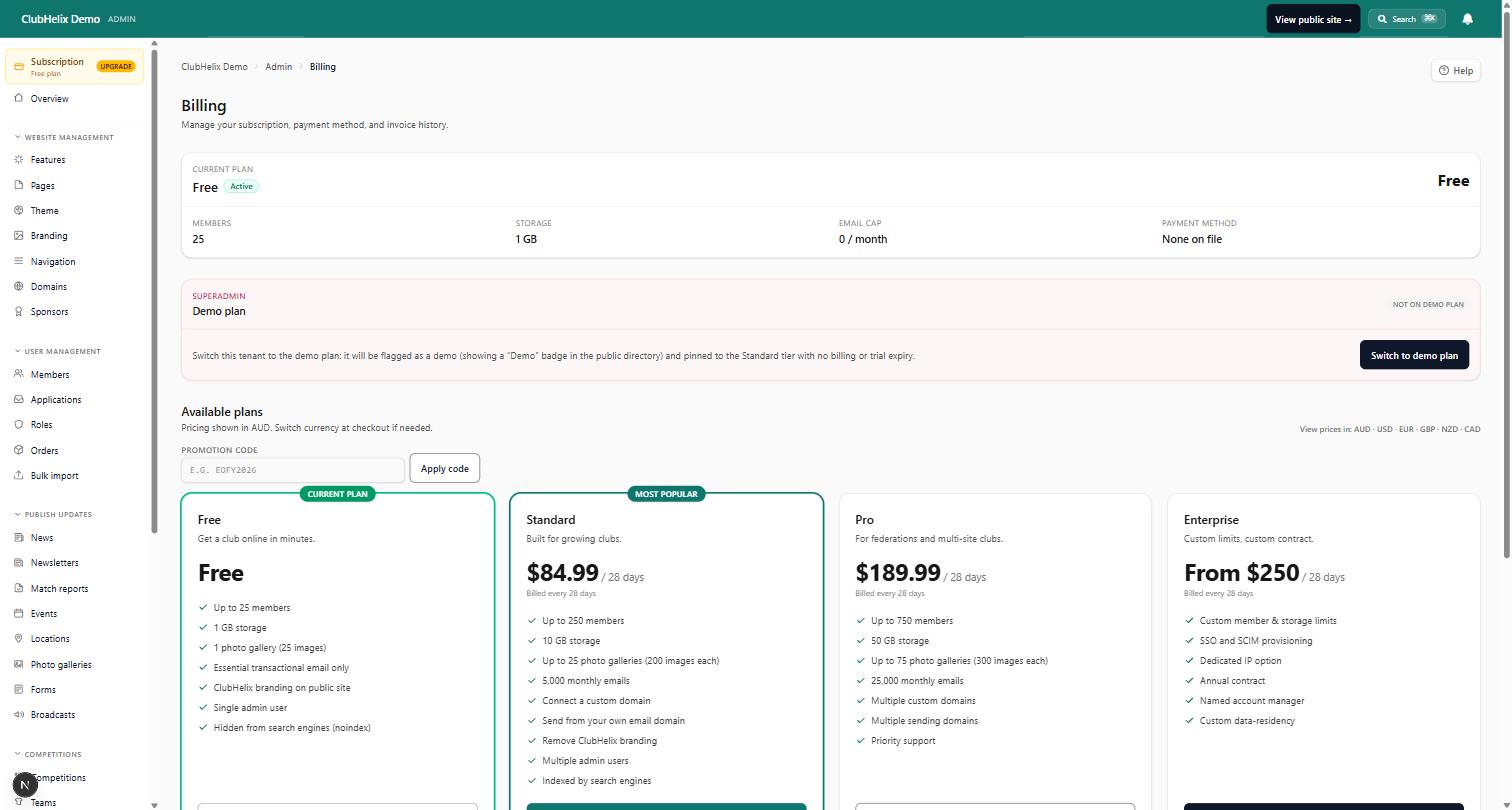
The quiet killer of club finances isn't overspending — it's under-collecting. Membership fees drift, invoices to sponsors go out late, and by August the club is owed thousands nobody wants to chase. The treasurer's fix is systematic, not personal: fees collected online at registration (not promised for later), sponsor invoices issued on a schedule, and a standing monthly report of who owes what so the chasing is policy, not confrontation. Modern club platforms take most of this load — registrations that take payment up front, invoicing for sponsors and billing in one place, and reconciliation reports the treasurer reads instead of builds.
4. Record-keeping
The standard is simple to state: every transaction has a record, and the records would make sense to a stranger. In practice:
- Receipts/invoices kept for every payment (photos of paper ones are fine — stored in club storage, not a personal phone).
- A ledger — accounting software or a well-kept spreadsheet for small clubs — categorising income and spending consistently.
- Monthly bank reconciliation: the ledger agrees with the bank statement, every month, without exception. Reconciliation is the single habit that catches errors, double-payments and problems while they're small.
- Reimbursements paid only against receipts, approved per the club's policy.
If the club uses accounting software, connecting it to your club platform removes the double-entry: payment data flows across instead of being retyped. ClubHelix, for example, offers accounting integrations for exactly this reason.
5. Reporting — monthly to committee, annually to members
The monthly treasurer's report should fit on one page: bank balance(s), money in and out since last meeting by category, who owes the club, upcoming large payments, and budget vs actual. Its purpose is shared awareness — a committee that sees the numbers monthly never gets ambushed.
Annually, the treasurer prepares the financial statements presented at the AGM. Depending on your state and the club's revenue tier, these may need review or audit — see the compliance section below.
6. Compliance and annual obligations
The dated items vary by structure and state, so use official sources rather than folklore:
- Incorporated associations lodge an annual return or summary with the body that registers associations where your club is, typically including financial statements at a level of scrutiny that scales with revenue.
- Clubs registered as charities report to your charity regulator, usually through an annual return or statement.
- Tax: many community sporting clubs are exempt from income tax or can apply to be, but sales tax registration (once turnover crosses the threshold), employee obligations if the club pays anyone, and record-keeping rules still apply — your national tax authority's not-for-profit guidance is the authoritative starting point.
- Grants: every grant has an acquittal — a report proving the money was spent as promised, with evidence. Missed acquittals quietly blacklist clubs from future rounds. The treasurer tracks acquittal dates like invoices.
When in doubt about which obligations apply to your club, ask the regulator or a qualified professional — this guide describes the role, not your club's specific requirements.
The treasurer's rhythm
Weekly (15–30 minutes): process payments due, bank any cash with a second counter, file receipts.
Monthly (1–2 hours): reconcile the bank statement; issue/chase invoices; prepare the one-page report; flag anything drifting from budget.
Season cycle: pre-season budget and fee-setting; registration-period monitoring (is fee income landing as expected?); mid-season budget check; end-of-season wrap.
Annually: financial statements for the AGM; review/audit arranged if required; annual return figures to the secretary for lodgement; grant acquittals; bank signatories updated after the AGM; handover pack refreshed.
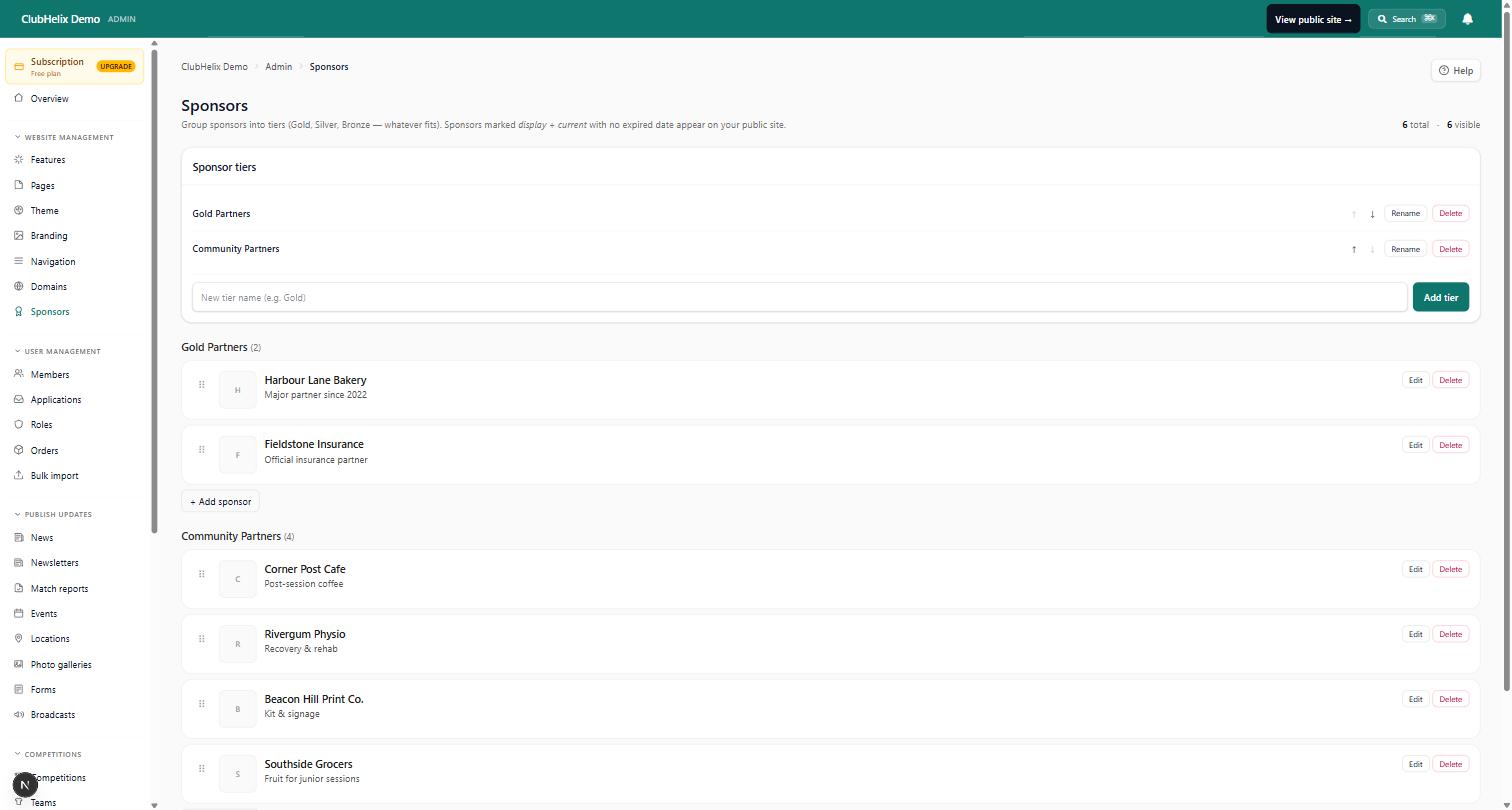
Most of those monthly hours go on two jobs: chasing fees and matching payments to the bank statement. Club software takes a share of both. In ClubHelix, members pay fees online, straight into the club's own account, with instalment plans and automatic reminders doing the chasing, and payment exports give your bookkeeper a CSV that lines up with the statement (reports). The live demo shows a working club's payments and reports, with no account needed.
Controls that protect everyone
Financial controls in a club aren't about distrust — they're about making trust unnecessary, which protects the volunteers most of all:
- Two people on every payment above a threshold, and two on every cash count.
- The treasurer never approves their own reimbursement — the president or secretary signs those.
- Statements visible beyond the treasurer. At least one other office holder has read access to the bank account and receives statements. Sunlight by default.
- Monthly reconciliation reported, not just done. "Reconciled to statement, no variances" is a line in every treasurer's report.
- Role separation where the club is big enough: the person who registers members isn't the only person who sees fee income; the person who runs the canteen isn't the only person who counts its takings.
These five habits cost minutes and have prevented more club scandals — and more unfair suspicion of honest volunteers — than any policy document.
The club treasurer checklist
Print-and-pin version:
Setup: club bank account with two current signatories · online fee collection live · ledger/software set up with agreed categories · receipts storage in club systems · budget adopted by committee.
Monthly: reconcile to bank statement · invoices out and chased · one-page report to committee · receipts filed · budget vs actual glanced.
Annually: AGM financial statements · review/audit if required by your state or your rules · annual return figures delivered · grant acquittals lodged · signatories updated post-AGM · handover pack current.
Never: club money through personal accounts · payments without records · reimbursing yourself on your own approval · leaving the role without a handover.
Frequently asked questions
What are the main duties of a club treasurer?
Six clusters: preparing the season budget with the committee; managing the club's banking and payments with proper controls; making sure money owed to the club — fees, sponsorships, grants — is invoiced and collected; keeping complete records reconciled monthly to the bank statement; reporting monthly to the committee and annually to members; and driving the club's financial compliance calendar, from the annual return to grant acquittals. The consistent theme is regularity: a treasurer who does a little every month is doing the job; one who plans a big catch-up before the AGM is not.
Does a club treasurer need to be an accountant?
No. The role needs organisation, honesty and a monthly rhythm, not a qualification — thousands of clubs are served well by treasurers who'd never call themselves "finance people". Bookkeeping for a community club is simple by professional standards, and modern tooling (online payments, club billing systems, accounting software) has removed most of the manual arithmetic. Where genuine expertise is needed, the treasurer's job is to know to ask a professional, not to be one.
The moments to call one: an audit or independent review requirement, questions about VAT registration or public benefit organisation status and its tax exemptions, or employing staff.
How much time does the treasurer role take?
For a typical community club: around 15–30 minutes a week plus one to two hours at month-end, with peaks at budget time, registration season and the AGM. Tooling is the swing factor — a treasurer whose fees arrive online, whose invoices are system-generated and whose transactions reconcile against clean reports spends half the hours of one processing cash, chasing payments by text and retyping numbers into a spreadsheet.
What happens if our club's finances are a mess when I take over?
Start with a clean line, not archaeology: reconcile the bank account as of your start date, document the position honestly in your first report ("records before June are incomplete; here is verified cash at bank"), and rebuild forward with the monthly rhythm. Tell the committee plainly — inherited mess is common and no reflection on you, but undisclosed mess becomes yours. If you find evidence of genuinely missing funds rather than missing paperwork, raise it with the president immediately and follow your constitution; that's a committee matter, not a treasurer's private burden.
Most of the treasurer's grind is collection and reconciliation — the parts a platform does best. ClubHelix collects fees at registration, handles billing, invoices and sponsor money in one place, and connects to your accounting software. See pricing or start free.


