
What this guide answers
- What does it take to become a patrolling member?
New members complete the movement's entry-level patrol award through their club, covering surf skills, rescue techniques and resuscitation, then requalify each season via a proficiency check.
- How are surf club patrols rostered?
Members are grouped into patrol teams under a patrol captain, and teams are rostered onto set dates across the patrol season.
- What age do kids start nippers?
Most clubs take nippers from around age five, grouped by age with activities matched to confidence and ability, progressing toward junior rescue awards and eventually patrol qualifications in their early teens.
- What should a surf club website include?
Patrol season dates and club contact details for the public, joining information for nippers and new members, carnival dates and results, clubhouse hire details, and a members' area pointing to patrol rosters and…
UK edition. This guide is written for volunteer-run clubs in the UK. Where rules differ — grants, tax, incorporation, safeguarding — follow the UK-specific pointers below or check with your national body.
A surf life saving club is really three organisations wearing one cap: an emergency service that patrols a beach, a junior development movement that runs nippers on Sunday mornings, and a community sporting club that races at carnivals and runs a clubhouse. Each has its own members, its own calendar and its own paperwork — and the committee holds all three together.
That makes surf clubs some of the most rewarding and most administratively demanding clubs anywhere. This guide covers how to run a surf life saving club in practice: patrols and rostering, proficiency and awards, nippers, membership categories, carnivals, the clubhouse, and the online presence that keeps a few hundred members pointed the same way.
How a surf club is organised
The volunteer surf lifesaving movement here is smaller than in its southern-hemisphere heartland, but it is real and growing: clubs affiliate to the national surf life saving body, which sets award standards and competition calendars. Volunteer club patrols usually complement professional beach lifeguard services rather than replace them, so your club's patrol scope flows from its agreement with the beach operator as well as from affiliation.
Membership categories are also more layered than a typical club:
| Category | Who it covers |
|---|---|
| Nippers (junior activity members) | Kids roughly 5–13 learning surf skills on Sundays |
| Cadet / active members | Patrolling members holding the relevant award |
| Award members | Holders of the movement's patrol and rescue awards |
| Associate / social members | Parents, supporters, clubhouse members |
| Long service / life members | Recognition for sustained service |
Each category has different fees, requirements and expectations, so your registration setup needs to handle a family joining across three categories at once — two nippers, one patrolling parent, one social member — in a single transaction. Online registration with family sign-up and payment in one pass saves the registrar hundreds of emails at the start of every season.
Patrols and patrol rostering
Patrols are the core obligation. Every patrolling member is assigned to a patrol team with a patrol captain, and each team is rostered onto set dates across the season. Miss too many patrols and members lose good standing; leave gaps on the roster and the club fails its most basic duty.
Patrol rostering is therefore the single most important administrative system in the club:
- Publish the full season roster early. Members plan holidays around patrol dates. A roster released in dribs and drabs guarantees substitution chaos.
- Make swaps self-serve and visible. The traditional model — ring the patrol captain, who rings around — collapses at the peak of the season. A volunteer and patrol rostering system where members request swaps, see open gaps and get automatic reminders before each duty turns the patrol captain back into a leader instead of a switchboard.
- Track attendance. Patrol hours determine good standing, carnival eligibility and often clubhouse rights. Record them as they happen, not from memory at season's end.
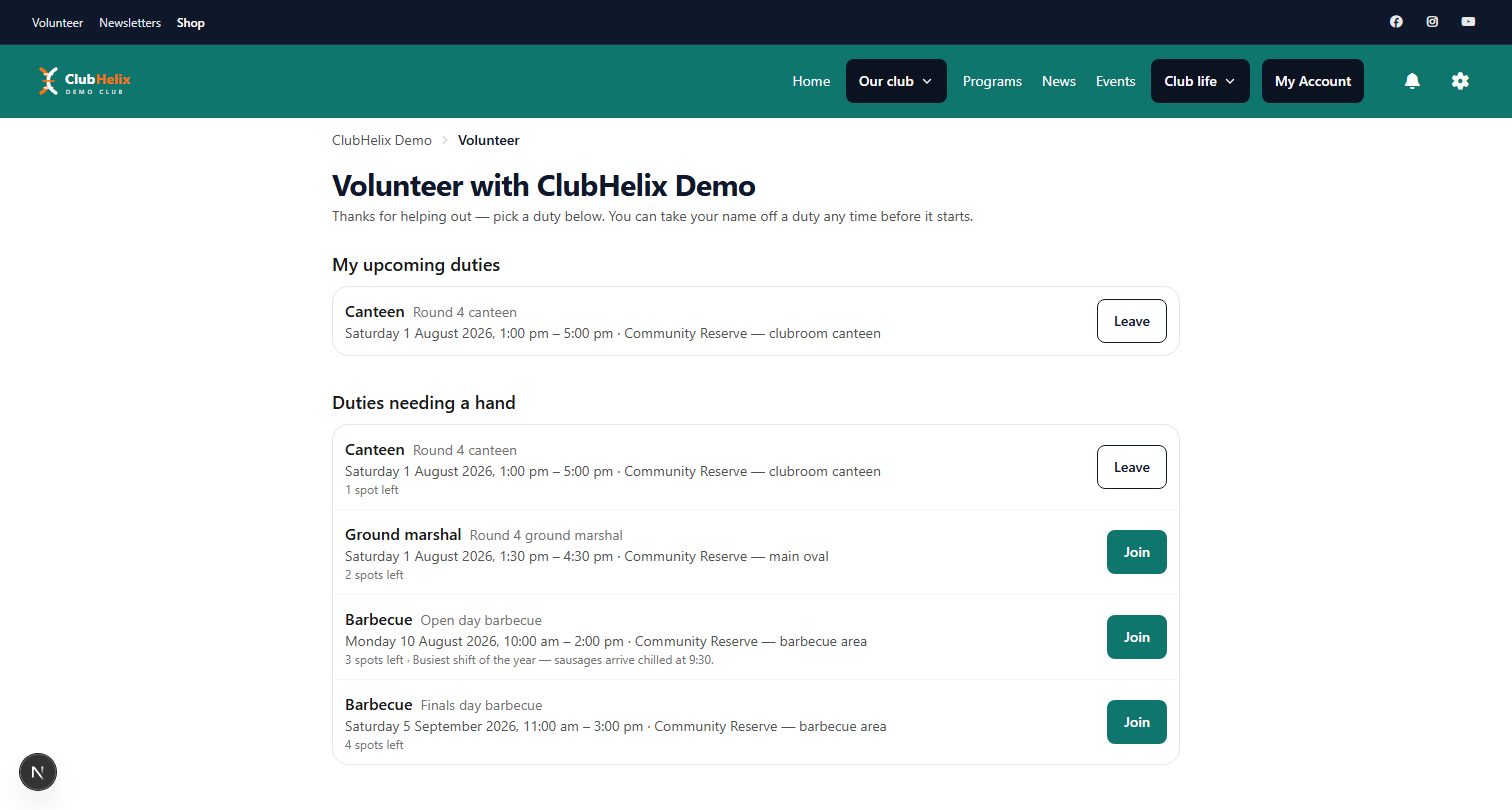
Our volunteer roster template guide covers the general patterns, but patrols add a hard edge: the roster is a safety document, so someone must own it, and the club must always know who is on the beach.
Proficiency, awards and gear
Surf life saving runs on qualifications. An entry-level patrol award is the ticket to patrol, and every award member must requalify each season through a proficiency check — a skills maintenance assessment covering rescue, resuscitation and fitness requirements set by the governing body.
The national body's award ladder runs from beach-based junior awards up to full patrol qualifications, each with its own revalidation cycle — track them the same way.
The administrative burden is real: the club must know, at any moment, which members are proficient, whose awards lapse when, and who is endorsed for specialist gear like the IRB (inflatable rescue boat), first aid or advanced resuscitation. Chasing this through spreadsheets is how members end up rostered while unproficient. Purpose-built accreditation and expiry tracking — every member's awards, proficiency dates and working with children checks, with automatic expiry warnings — is one of the clearest wins club management software offers a surf club.
Gear deserves the same discipline. IRBs, motors, boards, tubes, radios and defibrillators all need logged inspections and maintenance. Assign a gear steward, keep an equipment register, and make the pre-season gear inspection a fixed calendar item.
Nippers: the junior program
Nippers is many families' first contact with the club — a Sunday-morning program teaching beach safety, surf awareness and skills through age-group activities run by age managers. A strong nippers program feeds every other part of the club: future patrolling members, carnival competitors, and parents who become age managers, water safety volunteers and committee members.
Run it like the structured program it is:
- Enrolment per season, by age group. Nippers enrolment maps cleanly onto term and program enrolment — capacity per age group, one payment, and each child's group visible to their age manager.
- Water safety ratios. Every age group in the water needs qualified water safety supervisors at mandated ratios. Roster them like patrols, because that's what they are.
- Parents in, not watching. The clubs that thrive make parent involvement the default: water safety, age managing, barbecue duty. Our guide on increasing junior participation covers the wider playbook.
Everyone working with the junior section needs a current DBS check recorded centrally (gov.uk covers the process).
This is general information, not legal advice — confirm current child-safety requirements with your local regulator and your surf life saving governing body.
Carnivals and surf sports
Carnivals are surf life saving's competition arm — beach sprints, flags, board and ski races, swims, boats and ironperson events, from local nipper carnivals through to regional and national championships. For the committee, a carnival entry cycle looks like a swim meet's: publish the carnival, collect nominations by event and age group, confirm eligibility (proficiency and patrol hours), submit entries by the closing date, then organise transport, tents, water safety and officials for the day.
Handle nominations through an online form per carnival rather than a clipboard in the gear shed, and keep each carnival's details — program, entries, team lists, results — on one event page members can find later.

The clubhouse, money and fundraising
Most surf clubs carry a physical asset no other local club has: a clubhouse on the beach. It's a blessing (function hire, a bar or kiosk, a social heart) and a burden (maintenance, insurance, compliance). Treat clubhouse operations as a distinct budget line with its own volunteer lead, and price function hire realistically — beachfront venues are genuinely valuable.
Beyond the clubhouse, the classic surf club revenue mix is membership fees, local government support, sponsorship (local businesses love patrol-adjacent visibility), raffles, open water swims and fun runs, and the eternal beach barbecue. Because some funding relates to the rescue service, keep clean records of how money is raised and spent — transparency protects the club's standing with funders and members alike.
Your surf club website
A surf club website carries more weight than most club sites because the public uses it too: beach conditions and patrol season dates, how to join nippers, clubhouse hire enquiries, carnival results. For members it's patrol rosters, proficiency dates, nipper age group info and news — one source of truth instead of four noticeboards and a fraying group chat.
ClubHelix handles the whole spread: a professional surf club website on your own domain, family registration across membership categories, patrol and water-safety rostering with reminders, award and WWCC expiry tracking, program enrolment for nippers, and events for carnivals. See it shaped for the movement in our surf life saving club management software, or start free — there's a free tier, and the pricing page shows exactly what paid plans add.
Frequently asked questions
What does it take to become a patrolling member?
New members complete the movement's entry-level patrol award through their club, covering surf skills, rescue techniques and resuscitation, then requalify each season via a proficiency check. Your surf life saving governing body sets the exact award and skills-maintenance requirements.
How are surf club patrols rostered?
Members are grouped into patrol teams under a patrol captain, and teams are rostered onto set dates across the patrol season. The best-run clubs publish the whole season early, let members arrange swaps through a self-serve roster, and track attendance because patrol hours affect good standing and carnival eligibility.
What age do kids start nippers?
Most clubs take nippers from around age five, grouped by age with activities matched to confidence and ability, progressing toward junior rescue awards and eventually patrol qualifications in their early teens. Enrolment is per season, and parent involvement — water safety, age managing — is usually expected and always welcome.
What should a surf club website include?
Patrol season dates and club contact details for the public, joining information for nippers and new members, carnival dates and results, clubhouse hire details, and a members' area pointing to patrol rosters and renewals. Keeping it current matters more than making it fancy.

