
What this guide answers
- How often should a snooker club re-cloth its tables?
It depends entirely on usage — a heavily played club table might need re-clothing every one to two years, while a lightly used table can go much longer.
- How do snooker clubs make money?
Most combine annual membership subscriptions, per-hour or per-frame table fees, bar margin, competition entry fees and room hire.
- How does a snooker club ladder work?
A ladder ranks all entrants, and a player may challenge someone a set number of rungs above them — winning the challenge swaps their positions.
- Does a snooker club need a website?
Yes — it's how new players find you. At minimum it should show location, opening hours, fees and a join form; ideally it also carries the ladder, comp draws and events so members use it weekly rather than once.
New Zealand edition. This guide is written for volunteer-run clubs in New Zealand. Where rules differ — grants, tax, incorporation, safeguarding — follow the New Zealand-specific pointers below or check with your national body.
A snooker or billiards club is a different beast from most sporting clubs. There's no oval to mow and no wet-weather policy to argue about — but there is a room full of expensive, temperamental tables, a venue that has to pay for itself, and a membership that ranges from the Tuesday-morning social roll-up to the competitive player chasing a century break. Running it well means looking after three things at once: the tables, the room, and the people.
This guide covers the practical side of snooker club management — from brushing the baize to running a ladder competition — plus the venue and money questions that keep committees up at night, and how to build a billiards club website that actually brings new players through the door.
Getting the club structured properly
Most established snooker clubs are formally constituted membership clubs with a committee elected at an AGM. If yours is still an informal group renting table time, it's worth formalising: a proper legal structure gives the club an identity for leases, insurance and bank accounts.
In New Zealand most clubs register as an incorporated society through the Companies Office (is-register.companiesoffice.govt.nz), with Charities Services (charities.govt.nz) worth a look if the club has charitable aims. Our guide to starting a sports club in New Zealand covers the ground.
The committee itself doesn't need to be big. A workable minimum for a cue sports club is:
| Role | What they actually do |
|---|---|
| President | Chairs meetings, fronts the club, deals with the landlord or council |
| Secretary | Minutes, correspondence, association paperwork, key register |
| Treasurer | Table income, bar takings, subs, the annual budget |
| Match/comp secretary | Runs the ladder, handicaps, pennant entries, finals nights |
| House/table steward | Table maintenance schedule, equipment, room upkeep |
The table steward is the role snooker clubs forget to formalise — and the one that matters most day to day. See club committee roles and responsibilities for position descriptions you can adapt.
Many clubs also affiliate with their regional or national cue sports body, which opens the door to sanctioned tournaments, rankings and interclub team competition. Affiliation usually costs a modest per-member fee — check what your association offers before deciding whether it suits your club's mix of social and competitive players.
Looking after the tables
The tables are the club. A full-size 12ft × 6ft snooker table with a slate bed is a serious asset — replacement cloth alone runs to a significant outlay, so a maintenance routine protects both the playing surface and the budget.
Daily and weekly care. Brush the cloth with a proper table brush in straight lines from baulk to the top cushion — never circular strokes, which lift and roughen the nap. Follow with a block or napping cloth in the same direction. Cover every table when it's not in use; dust and sunlight are the two great enemies of a baize. Wipe the balls regularly, and keep chalk dust off the cushion rails.
Periodic jobs. Ironing the cloth (with a purpose-made table iron on the right setting) keeps the surface fast and true — many clubs iron weekly during the competitive season. Check cushion rubbers for deadness by dropping a ball onto them; tired rubbers change the way the table plays and frustrate good players. Levels should be checked whenever a table is moved, and a professional fitter should re-cloth and re-level on a cycle that matches your usage — heavily used club tables are typically re-clothed every couple of years, lightly used ones less often.
Set the rules and post them. No drinks on the rails, no sitting on the cushions, cues chalked away from the table, covers on at close. A laminated card on the wall beside each table saves a thousand awkward conversations.
Book the tables properly. If your room has more players than tables at peak times, a booking system beats a paper diary taped to the counter. An online facility booking calendar lets members reserve a table from their phone, applies your member rates automatically, and shows the whole week at a glance — which also gives the committee real data on which tables and time slots actually earn their keep.
Membership, fees and the social mix
Snooker clubs typically blend several income streams: annual membership subs, table fees (often per hour or per frame lights-money style), bar margin, and comp entry fees. The mix matters. Set subs too high and casual players drift to the pub table; set table fees too low and the room can't cover its lease.
A common structure is a moderate annual sub that unlocks member table rates, with full-rate casual play for visitors. Concession and junior categories keep the pipeline open — junior development is where your next competitive team comes from, and coaching nights for juniors are one of the best uses of a quiet weekday slot.
Whatever you charge, collect it online. Chasing subs across the counter is the classic treasurer time-sink; online registration with card payment means members join and renew themselves, and the roster updates without anyone retyping a paper form. Renewal reminders go out automatically, so "I forgot to renew" stops being a February tradition.
Running ladder comps, handicaps and pennant
Competition is the heartbeat of snooker club management. Most clubs run some combination of:
- A club ladder — the perpetual, challenge-based ranking that gives every visit a bit of edge. Publish the rules clearly: who may challenge whom (usually one or two rungs up), how long a challenge stands, and what happens on a forfeit.
- Handicap events — the great equaliser. A points-start handicap system lets the B-grader beat the club champion often enough to keep everyone entering. Review handicaps on a set cycle so they track form, not history.
- Championship events — the club singles, doubles, billiards championship and veterans' event, played level. These are your honour-board events; run them annually with proper draws and a finals night.
- Pennant — inter-club team competition through your association, usually weekly across a season.
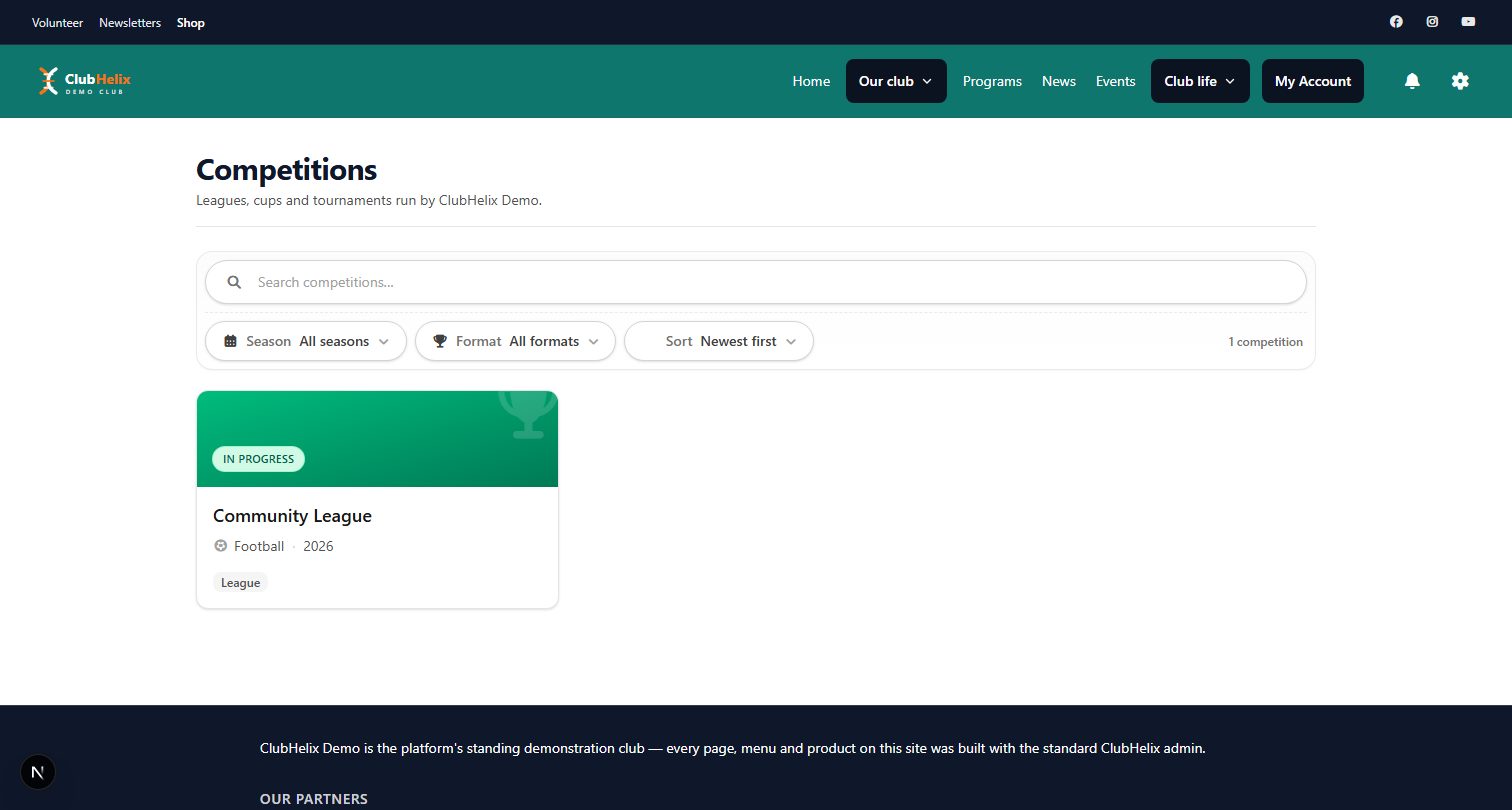
Keeping draws, results and the ladder on a whiteboard works until someone rubs it off. Running your competitions, fixtures and ladders online means every member can check the draw, see who they play next, and watch the ladder update from home — and the comp secretary stops fielding the same phone call forty times a week. Frame scores, highest breaks and honour-board history all live in one place.
Social play deserves structure too. The clubs that thrive protect their social sessions — a morning roll-up for retirees, a beginners' night with coaching, a Friday social with the lights on late. Post these as recurring club events so newcomers can see exactly when they're welcome.

The venue — leases, licensing and keeping the lights on
Cue sports clubs carry venue costs that clubs on public playing fields never see. A few general points every committee should have on its radar:
The lease. Know your term, your renewal options and your make-good obligations. Tables are hard to move — a 12ft slate table takes professional dismantling — so a short, insecure lease is a real business risk. Build the relationship with your landlord or council early, not at renewal time.
Liquor and gaming. Many snooker clubs run a small bar, and licensing rules for member clubs differ by jurisdiction — licence categories, trading hours, member-and-guest requirements and responsible-service obligations all vary.
Club alcohol licences are issued under national law through your local council's district licensing process — talk to the council before starting or changing a bar operation, and factor manager certification into the plan.
This is general information, not legal advice — check the current requirements with the official regulator for your area.
Insurance. Public liability for the room, contents cover for the tables and equipment, and the association's requirements if you affiliate.
Sweat the room's earning power. Empty afternoons are unsold stock. Day-time hire to community groups, corporate nights, and coaching blocks all help the room pay for itself — see how to hire out your clubrooms for ideas that don't disrupt members.
Money and fundraising beyond the table fees
Bar margin and table money rarely cover a re-cloth year on their own. The reliable extras for cue sports clubs: an annual tournament with entry fees and a sponsor on the trophy, reciprocal sponsorship with the local pub or the supplier that stocks the bar, and small grants from local government for equipment or accessibility improvements.
A raffle drawn on finals night remains the dependable earner, but gambling-based fundraising is regulated — check the Department of Internal Affairs rules (dia.govt.nz) before you sell a ticket.
Keep a simple budget with the big lumpy costs — re-clothing, re-rubbering, lease increases — spread across the years they'll land.
Your billiards club website and online presence
Here's the uncomfortable truth: most snooker clubs are invisible. Someone moves to your area, searches "snooker club near me", and finds a decade-old directory listing with a disconnected phone number. A proper billiards club website fixes that with three pages' work: where you are and when you're open, what it costs to play, and how to join.
Beyond the basics, your site can carry the ladder, the comp draw, the events calendar and the club's history — the honour board deserves better than a dusty frame. ClubHelix's snooker and billiards club management software gives you a club website, online membership and payments, table booking, and competition management in one place, run by volunteers without any web skills. There's a free tier to start on — see pricing — so the club can be findable this week, not after the next AGM.
The same platform handles the quiet essentials: email the members about the ladder deadline, take comp entries online, and keep the members register current automatically. If your club is like most, that wins the comp secretary back a few evenings a month — which, in a volunteer club, is the scarcest resource there is. Clubs with a similar indoor, ladder-driven culture — see our companion guide on how to run a darts club — report the same thing: the admin gets lighter the moment it moves online.
Frequently asked questions
How often should a snooker club re-cloth its tables?
It depends entirely on usage — a heavily played club table might need re-clothing every one to two years, while a lightly used table can go much longer. Daily brushing and blocking, regular ironing and keeping covers on will stretch the life of any cloth considerably.
How do snooker clubs make money?
Most combine annual membership subscriptions, per-hour or per-frame table fees, bar margin, competition entry fees and room hire. The strongest clubs also run an annual sponsored tournament and use quiet daytime slots for coaching or community hire.
How does a snooker club ladder work?
A ladder ranks all entrants, and a player may challenge someone a set number of rungs above them — winning the challenge swaps their positions. Clear rules on challenge windows, forfeits and how new entrants join keep it moving all season.
Does a snooker club need a website?
Yes — it's how new players find you. At minimum it should show location, opening hours, fees and a join form; ideally it also carries the ladder, comp draws and events so members use it weekly rather than once.

