
What this guide answers
- When should we hand over — straight after the elections, or at the end of the year?
Neither, ideally: hand over across the gap between them. The strongest pattern is to elect the new committee with four to six weeks of term remaining, then run a shadow period where the incoming committee does the job…
- Who do we have to tell that the committee has changed?
Start with your student association, then the bank, then anyone holding a booking, a sponsorship agreement or an insurance policy in the society's name.
- What do we do if the last committee left us nothing?
It happens constantly and it is recoverable. Start with what is recorded externally rather than with what has been lost: your student association holds your affiliation history and often a copy of your constitution…
- How do we get a social account back from someone who has left?
Ask first, politely and quickly, because most people simply forgot.
- Do we have to give the new committee the member list?
Yes — the new committee runs the society, and the member list belongs to the society rather than to the outgoing secretary.
UK edition. This guide is written for volunteer-run clubs in the UK. Where rules differ — grants, tax, incorporation, safeguarding — follow the UK-specific pointers below or check with your national body.
Your society has 180 members, five people on the committee, and a president who graduates in eleven weeks. None of that is a crisis. What turns it into one is the moment three months later when the incoming treasurer discovers the bank account still lists two signatories who have both left, the domain renewal notice went to a mailbox nobody can open any more, and a printer has just invoiced $340 for a job from last year's ball.
Societies rarely die because the idea ran out. They die because a committee left and took the society's working memory with it — the logins, the supplier who quotes properly, the fact that the big room is bookable from week three, the cash float that lived in somebody's wallet. A year of momentum resets to zero, and the next committee spends an entire term rebuilding what already existed.
Handover is the cheapest insurance a society can buy. Done well it is a file kept all year, one two-hour meeting, and a fortnight where both committees are still in the room. Done badly it is a message in a group chat that reads "pretty sure the socials password is the society name plus 2019". This is the version that works.
Start the handover file in week one, not week forty
The highest-leverage change any committee can make is to stop treating handover as an event in the final month and start treating it as a document maintained from the first meeting.
Create one shared folder — owned by the society, not by a person — with a single document called Handover inside it. At the end of every committee meeting, the secretary spends four minutes adding anything a stranger would not know: the name of the person at the venue who actually answers emails, the printer's real turnaround time, the week the room booking system opens, the reason you stopped running the Thursday event.
This costs almost nothing, and it changes what handover is. Instead of a panicked reconstruction in the last fortnight of the year — when everyone has assessments and half the committee has already checked out — you finish the year with a document that is eighty per cent complete and needs one afternoon of tidying.
Two habits make the file worth keeping:
- Write for someone who has never met you. "Book the room" is useless. "Room bookings open at 9am on the first Monday of the teaching period, through the campus booking site; the big lecture theatre goes in about six minutes, so have the form pre-filled" is a handover.
- Record decisions, not just facts. The most valuable line in any handover file is why the last committee stopped doing something. Without it, the new committee repeats the experiment, loses the same $200, and learns the same lesson twelve months later.
What actually goes missing
Committees rarely lose the obvious things. They lose whatever only one person ever touched. Work through this inventory as a real list, with a name written against every row.
| What | Where it usually lives | Where it should live |
|---|---|---|
| Bank access | Two graduated signatories | Three current signatories plus one non-committee reserve |
| Domain and website | A personal card set to auto-renew | A society-owned account with a shared billing method |
| Social accounts | Created with one person's personal email | Society address as owner, committee members as admins |
| Member list | A spreadsheet in somebody's cloud drive | The society's own member system, access by role |
| Money owed and owing | Nobody's head | A one-page financial position statement |
| Suppliers | The last committee's inbox | The handover file, with names, prices and dates |
| Physical assets | A cupboard whose combination one person knows | An asset register that includes the combination |
| Subscriptions | A personal card, billed monthly | Listed with cost, renewal date and notice period |
The physical asset register is the row people skip and later regret. A society five years old usually owns more than it thinks: a banner, a gazebo, a folding table, a PA speaker, a card reader, a lockable cash tin, a box of branded shirts in three sizes, a trophy, and — in performing societies — costumes and scripts worth several hundred dollars. Write it down with quantities, condition and location. Photograph the cupboard. Note the combination, or where the key lives and who else has one.
Then there is the calendar, which is really a set of expectations other people already hold about you: every recurring booking, every annual event whose date the venue is quietly holding, every renewal, and every deadline your student association has set for the year. If your society has a weekly slot that exists only because the same person renews the booking each year, that slot is one graduation away from vanishing.
Your student association will want something from you too, and its deadline usually falls earlier than committees expect.
Your students' union will have a societies handover process — usually a form naming the new committee, submitted through the SU's societies portal, before funding bids reopen or a stall at the welcome fair is confirmed. Union insurance, room booking rights and access to society funds held centrally commonly stay frozen until it is filed. If a society has grown into a CIO, trustee changes are filed separately. A DBS check belongs to the person, not the post.
Treat that filing date as the real handover deadline. Almost everything else can be fixed late; a missed re-affiliation costs the society its room, its money and its stall at the start-of-year club fair. This is general information rather than legal advice — confirm the current requirements with your student association.
The money nobody mentions
The financial handover has three parts, and only the first is a number.
The position, not just the balance. A bank balance is not a financial position. Write down cash at bank, cash on hand and who is holding it, money committed but not yet spent, money owed to the society, money the society owes but has not been invoiced for, and any restricted funds — money given for one purpose that cannot lawfully be spent on another. A society with $3,100 in the account, an unpaid $1,400 venue bill and $900 of restricted grant money has $800 to work with, not $3,100. Treasurers who miss this spend money that was never theirs.
The invoices that have not arrived yet. This is the most common nasty surprise in student societies, because campus venues, caterers and printers often bill weeks after the event. If the ball was in October and the venue invoice normally lands in December, that belongs in the handover file with an expected amount, or the incoming treasurer inherits a bill they did not budget for and cannot explain to anybody.
Recurring costs on somebody's personal card. A design tool, a scheduling app, a ticketing account, extra cloud storage — individually small, together often $40 to $80 a month, all of it silently on the outgoing publicity officer's card. List every subscription with its cost, its renewal date and whether it is genuinely needed. Handover is the right moment to cancel two of them.
Hand all of that over against a budget the next committee can actually read, with the full year of bank statements attached.
SU grant pots and RAG fundraising accounts are frequently held by the union itself rather than in a society bank account, so the outgoing committee is handing over a balance it never directly controlled — ask the SU what it is actually holding, because societies routinely under-claim. Money awarded for a specific purpose usually returns to the pot at year end if unspent. VAT rarely bites at society scale, but note it if the union handles trading income for you.
Write the answer into the pack even when the answer is "we do not know". An honest unknown is worth far more to the next treasurer than a confident wrong number.
Accounts and logins: transfer them, never share them
The instinct at handover is to compile a list of usernames and passwords and send it to the new committee. Do not. A shared password list is out of date within a month, impossible to revoke, and means a former committee member who falls out with the society still holds the keys.
Move every system to named access that can be granted and taken away:
- Own the identity. Every account the society depends on should be created against a society email address that passes between committees — never a personal or university address that gets deactivated some months after graduation. If a service is registered to an address you will lose, changing that address is the first handover task, not the last.
- Use roles, not logins. Modern systems let you invite people individually and give each one a role. The incoming treasurer gets the treasurer's view, the publicity officer never sees financial records, and removing someone is one click rather than a cascade of password resets.
- Grant early, revoke late. Add the incoming committee the week they are elected, while the outgoing committee is still there to answer questions. Remove the outgoing committee on a set date a few weeks later — not on the night of the meeting, and not never.
- Keep a record of who changed what. An audit trail settles the "who deleted the event?" conversation without anybody having to accuse anybody.
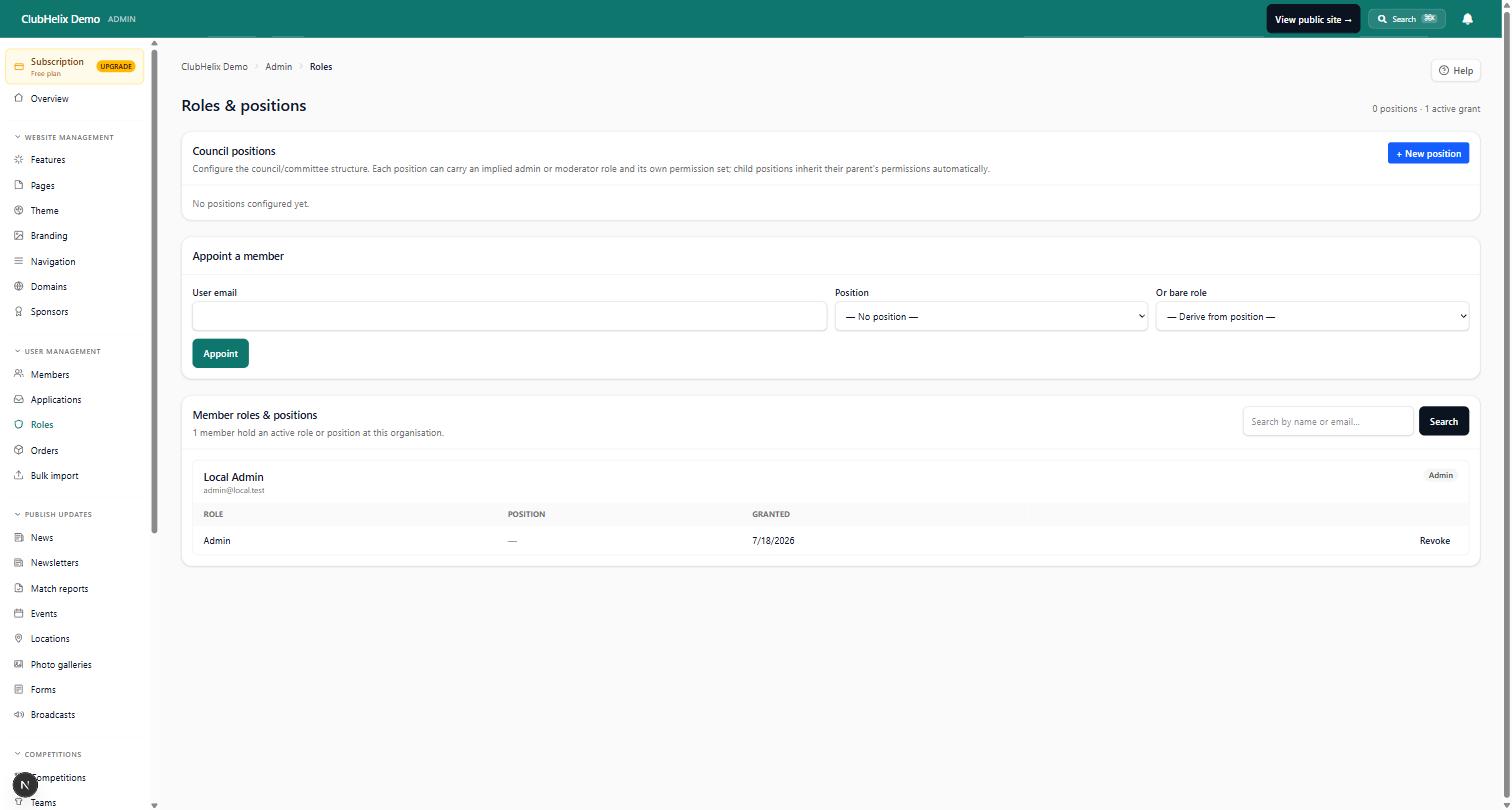
A society running on a platform with roles and permissions instead of a shared login turns handover into a five-minute administrative task: invite five people, assign five roles, remove four. An audit log keeps the record of the year's changes after the people who made them have gone, and backups mean a gap between committees never becomes data loss. If your society is still running on a page somebody built on a personal account, the guide to building a student society website covers how to move it onto something the society owns.
Member records: hand over the list, not a spreadsheet
Your member list is simultaneously the society's most valuable asset and its largest liability. It is what makes next year's recruitment easier than starting from nothing, and it is personal information belonging to hundreds of people who trusted a committee of students with it.
The failure mode is boringly consistent. The list lives as a spreadsheet in one committee member's personal cloud storage, gets emailed round as an attachment at handover, and now exists in nine copies of varying accuracy on nine devices — at least three belonging to people who left the society two years ago.
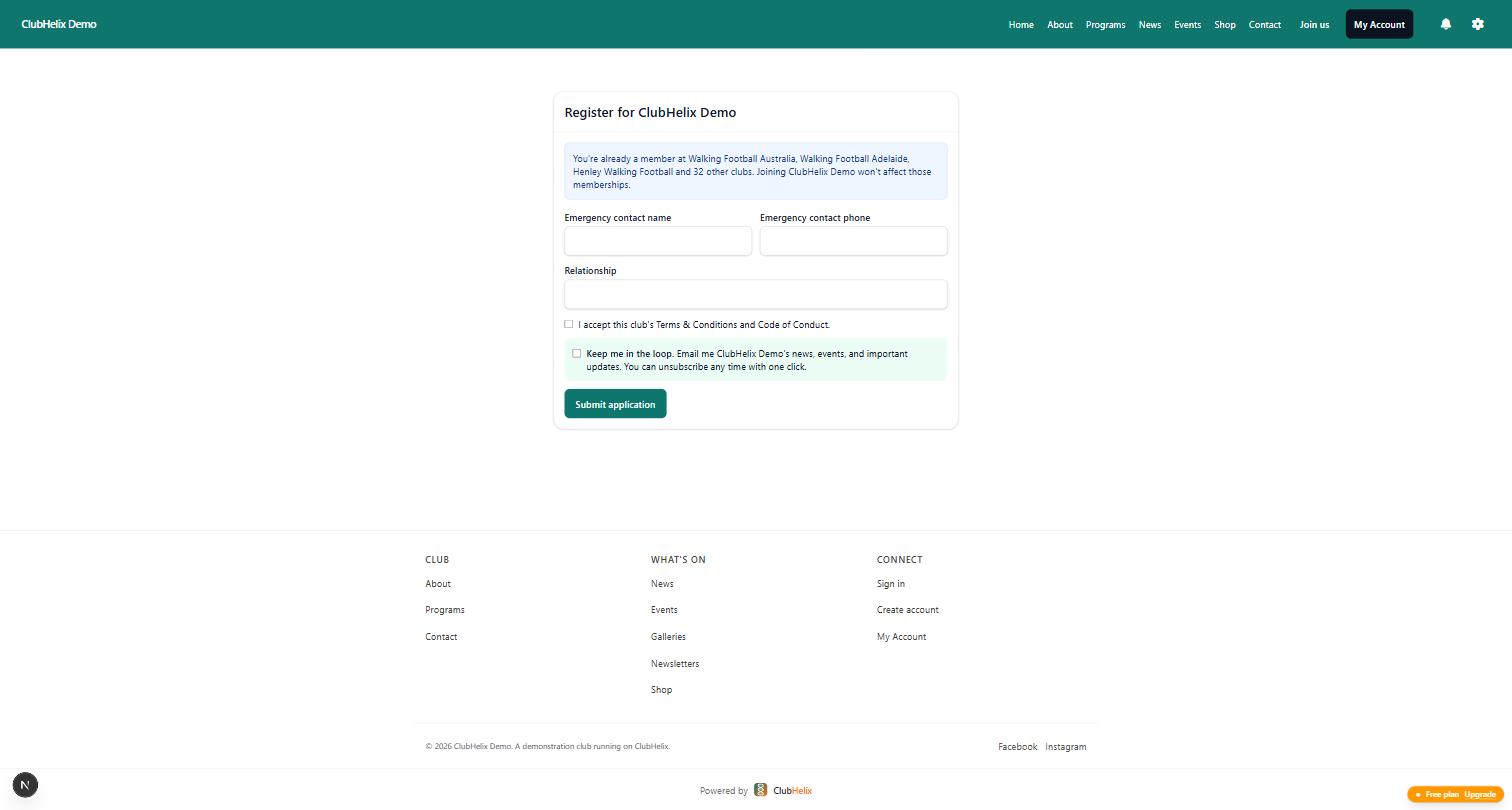
Handle it properly:
- Keep one authoritative copy in a system the society owns, where access is granted by role and can be revoked. Copies are the problem, not the solution.
- Hand over access, not a file. The new secretary gets access to the live record. Nobody emails a spreadsheet containing 400 people's contact details.
- Delete the stray copies. Ask every outgoing committee member to delete their local exports and confirm they have done it. It is an awkward ask that takes ten seconds.
- Know what you are allowed to keep. You collected those details to run a society, not to build a mailing list, and permission to contact members does not follow anyone to a different organisation or a personal project.
- Write down a retention rule. "We keep member records for two years after the last membership expires, then delete them" is enough, provided it is written down and actually followed.
Member records fall under UK GDPR and the Data Protection Act 2018, and a society is not exempt for being small or run by students. You need a lawful basis for what you hold, a retention period you actually apply, and a way for a member to ask what you hold and have it deleted. Most students' unions publish a template privacy notice for societies — use theirs rather than writing your own, and hand the current version over with the records.
None of this is legal advice — check with your student association, which will usually have a policy you are required to follow anyway. There is more detail in the guide to student society member records and privacy.
The two-hour handover meeting
Book it for the fortnight after your committee elections, while both committees are still around and before anyone's exams start. Two hours, both committees in the room, one agenda.
| # | Item | Who | Time |
|---|---|---|---|
| 1 | Where everything lives — the folder, the file, the systems | Outgoing secretary | 10 min |
| 2 | Financial position: balances, float, owed, owing, restricted | Outgoing treasurer | 20 min |
| 3 | Bank signatory change — forms signed in the room | Both treasurers | 10 min |
| 4 | Access transfer: society email, website, socials, member system | Both secretaries | 20 min |
| 5 | The calendar: bookings, annual events, association deadlines | Outgoing president | 15 min |
| 6 | Suppliers, sponsors and contacts, with what you actually paid | Outgoing events lead | 10 min |
| 7 | Assets: the cupboard, the banner, the tin, the combination | All | 10 min |
| 8 | What worked, what failed, what we would not do again | All | 15 min |
| 9 | The incoming committee's first three decisions | Incoming president | 10 min |
Two things separate this meeting from a chat.
Sign the bank forms in the room. Signatory changes stall more often than anything else, because banks want identification, the minutes recording the election, and every new signatory present or verified. Start the process before the meeting, bring the forms with you, and get the outgoing signatories' parts done while they are still in the same city. Allow longer than feels reasonable — chasing a signature from someone who has moved away for work is a two-month problem, and until it clears, the society cannot pay anybody.
Run a 30-minute one-on-one per role afterwards. The group meeting covers the society; the one-on-ones cover the job. Outgoing treasurer to incoming treasurer, publicity to publicity, each pair working through that role's own section of the handover file. If you do only one thing from this guide, do the one-on-ones — that is where knowledge actually moves. The committee roles guide makes a useful shared reference for what each pair should cover.
The handover pack template
Copy this structure into your handover document. Every heading gets a real answer, and every "TBC" is a promise somebody has to keep before the year ends.
[Society name] — handover pack, [year]
1. Identity and access. Society email address and who holds it. Website and where it is hosted. Domain, registrar, renewal date, who pays. Every social account with its owner address. Member system and how access is granted. Anything still tied to a personal address — this is the fix-it list.
2. Money. Bank, account name, current signatories, and the change already lodged. Balance at the handover date. Cash on hand and who holds it. Money owed to us. Invoices expected but not yet received, with amounts. Restricted funds and their conditions. Every recurring subscription with cost and renewal date. Twelve months of statements.
3. Members. How many, how they join, what we charge, when memberships expire. Where records live and who has access. Our retention rule.
4. Calendar. Recurring bookings and how they are renewed. Annual events with their usual dates and attendance. Every deadline the student association has set. Renewal dates for anything that renews.
5. Suppliers and partners. Name, contact person, what we bought, what we paid, whether we would use them again. Sponsors, what was promised them, and when each agreement ends.
6. Assets. Everything the society owns, where it is, its condition, and how to get into the cupboard.
7. The honest section. What worked this year, with the numbers behind it. What failed and why. What we would tell ourselves at the start of the year. The three things we ran out of time for.
8. Names. Every outgoing committee member with an email address they will still read in six months, and their agreement to be asked one question.
The first thirty days
The incoming committee should aim to finish these before teaching resumes: bank signatories changed and confirmed by the bank; the society email address transferred and tested; the domain renewal date confirmed and paid from a society method; all outgoing access removed; the member list checked and one welcome message sent; the first three events dated and rooms requested; and the year's affiliation and funding deadlines written into a shared calendar with reminders. Then open a fresh handover file and add to it after every meeting — because your handover starts now, not in eleven months. The wider committee handover checklist is worth reading alongside this one if your society also has assets, contracts or staff.
Frequently asked questions
When should we hand over — straight after the elections, or at the end of the year?
Neither, ideally: hand over across the gap between them. The strongest pattern is to elect the new committee with four to six weeks of term remaining, then run a shadow period where the incoming committee does the job with the outgoing committee still in the room to answer questions. A society that elects in the final week and hands over by email loses far more than one that elects early and overlaps deliberately. If your rules force a late election, at least hold the handover meeting and the one-on-ones before people scatter.
Who do we have to tell that the committee has changed?
Start with your student association, then the bank, then anyone holding a booking, a sponsorship agreement or an insurance policy in the society's name. The order matters, because most of the others will ask for evidence of the first — usually the minutes recording the election.
If the society has grown into a CIO or a charitable company, trustee changes are filed with the regulator as well as with the union, and the bank will usually want the updated trustee list before it changes signatories.
Whichever applies to you, do it in the same fortnight as the handover meeting. These filings are quick while everyone is still contactable and painful once people have scattered.
What do we do if the last committee left us nothing?
It happens constantly and it is recoverable. Start with what is recorded externally rather than with what has been lost: your student association holds your affiliation history and often a copy of your constitution, the bank holds the account and its signatory record, the domain registrar holds the website, and former members can usually be reached through the society's own public pages. Rebuild in this order — bank, affiliation, member list, social accounts, domain — and write a handover file as you go so nobody has to do this again. The guide to restarting a dormant society sets out the full recovery order.
How do we get a social account back from someone who has left?
Ask first, politely and quickly, because most people simply forgot. A message that says "could you add our society address as an owner and then remove yourself?" resolves the great majority of cases. If that fails, every major platform has a recovery process for accounts belonging to an organisation, though it usually needs evidence that the society exists and that you represent it — your affiliation letter, your rules and the minutes electing you. Do not start a parallel account until you have exhausted that, because splitting your audience across two profiles costs more than the delay, and then fix the root cause by moving ownership to a society address.
Do we have to give the new committee the member list?
Yes — the new committee runs the society, and the member list belongs to the society rather than to the outgoing secretary. What you should not do is hand it over as an emailed spreadsheet: give the incoming committee access to the live record and delete the exports instead. If a member asked for their details not to be used beyond a specific purpose, that restriction travels with the record, so note it in the handover rather than quietly dropping it.
Where ClubHelix fits
Most handover pain is a symptom of a society running on personal accounts. When the website, member records, payments, events and email all live in one system the society owns, handover stops being an archaeological dig and becomes an administrative task: invite the incoming committee, give each person the role their job needs, remove the leavers, and the year's records stay exactly where they were. ClubHelix is built for volunteer committees that turn over every twelve months — see what the year looks like for a secretary or a treasurer, read the wider guide to running a student society, and check what it costs on our pricing page.


