
What this guide answers
- Can we take over a society's name if the old committee has all graduated?
Usually yes, and it is more routine than it feels. If affiliation has lapsed but the record still exists, most student associations will let a new group reactivate it with a fresh committee list, an updated…
- What if the old committee still controls the bank account and will not respond?
Document your attempts, then go around them rather than through them.
- Is it easier to just start a brand new society instead?
Sometimes, and the deciding factor is obligations rather than sentiment.
- Can we email the old member list to announce the relaunch?
Be careful, and prefer personal messages to a mass send. Most of those addresses will be dead student accounts, so a bulk email damages your sending reputation immediately, and consent given years ago to a society that…
- How do we stop it going dormant again in three years?
Design for the twelve-month turnover rather than hoping it does not happen.
New Zealand edition. This guide is written for volunteer-run clubs in New Zealand. Where rules differ — grants, tax, incorporation, safeguarding — follow the New Zealand-specific pointers below or check with your national body.
The society exists in the club directory and nowhere else. Greyed out, marked inactive, last updated three years ago. Its social account's final post is a photo of a quiz night with about forty people in it, dated a March you were still at school for. Someone in your tutorial reckons their older sibling used to run it. And you have decided — for reasons you will interrogate closely in about six weeks — that you are going to bring it back.
The good news is that reviving a dormant society is genuinely easier than founding one. You inherit a name people half-recognise, a constitution that already passed review once, sometimes a bank balance, and occasionally a member list. The bad news is that you also inherit whatever killed it, and it arrives in a fixed order. Committees that get the order wrong spend their first semester arguing with a bank instead of running events.
What follows is the recovery order that works: establish what state the society is actually in, trace the records before you promise anybody anything, deal with the money, assemble a minimum committee, get re-affiliated, rebuild the member list cleanly, and relaunch at the start-of-year club fair. Budget six to ten weeks of part-time work. Most of it is email.
Which of the four states is your society actually in?
"Dormant" is not one condition. It is four, and the difference between them decides whether you are facing an afternoon of admin or founding a new society wearing an old name.
| State | What you will see | What it takes |
|---|---|---|
| Quiet | Still affiliated, renewed on time, a committee exists on paper, nothing has happened for a year | One meeting and one event. Genuinely. |
| Lapsed | Affiliation not renewed for one or two cycles, the file still exists, the name is still held | Re-affiliation forms, a general meeting, a fresh committee list |
| Closed | The record has been closed and removed from the directory, the name released, and any held funds swept back into the general pool | Effectively a new society under a reclaimed name |
| Dissolved | A meeting formally resolved to wind it up and assets were distributed under the constitution's dissolution clause | Start again — and read the dissolution minutes first, because they say why |
You cannot tell which of these you are looking at from the public directory. One email answers it. Send this, from your student address, to whoever administers club affiliation on your campus:
Subject: Reviving [Society name] — records and status request
Hi,
I'm a current student hoping to revive [Society name], which appears inactive in the club directory. Before I recruit anyone I'd like to understand where it stands. Could you please tell me:
- Its affiliation status, and the last year it was affiliated
- Whether the name is still held for it, or has been released
- What is on file — constitution, last committee list, last meeting minutes
- Whether funds are held for it, and whether a bank account is on record
- Whether there are outstanding obligations — unacquitted grants, unpaid invoices, equipment on loan
- The process to reactivate it, and the deadline to affiliate before the club fair
Thanks, [Name], [student number], [course and year]
Point five is the one people leave off, and it is the one that matters. Ask it in writing now, not after you have told two hundred people the society is back.
On most campuses the students' association that affiliates clubs keeps the file, and it is usually better than anything the last committee kept. Expect the constitution as last approved, committee details lodged at each renewal, and a grant history — including club grants funded by the student services levy that were never acquitted. Miss one renewal and a society is normally just unaffiliated: the file survives and the name stays reserved. Miss two or three and the name can be released to a new group, which is worth checking before you print anything.
Three extra questions are worth asking. First, whether the society was ever an incorporated society in its own right — if so, check the register, because the re-registration requirement under the Incorporated Societies Act 2022 has removed a large number of older societies that never got around to it, and a group that assumed it still had a legal identity may not. Second, whether the association holds money for it internally, which is common and far easier to recover than a bank account. Third, whether an unacquitted grant sits against the name, because that is the most common reason a re-affiliation stalls. General information only — confirm the specifics with your students' association.
Trace the paper trail before you promise anything
Once you know the state, go looking for the assets. A dormant society is usually scattered across four places: the affiliation file, a graduate's personal cloud drive, a locked cupboard, and a social account with a password nobody wrote down. Work through this list and record an answer for every line, even when the answer is "gone":
- The constitution. The version on file, not the one in a group chat. It sets the quorum for a general meeting, how vacancies are filled, and what happens to assets on dissolution.
- The last meeting minutes and committee list. These name the people who are still, formally, the office bearers. You will need one of them for the bank.
- The affiliation file. Renewals, grants, and anything outstanding.
- The bank account. Bank, account name, signatories, balance, and whether it has gone dormant.
- Debts and unacquitted grants. An unpaid catering invoice from a formal three years ago does not expire because everybody graduated.
- The digital estate. Society email address, any domain, social accounts, shared drive, logo and poster files — and who controls the recovery inbox and phone number for each.
- Physical assets. Banner, marquee, urn, trestle table, costumes, scripts, gear. Usually a storeroom, and someone in the office knows which one.
- The old member list. Where it is, what it holds, when it was last touched. Do not email it yet.
- Photos. Three years of event photos are worth more to your relaunch than anything else here.
Put all of it in one shared document owned by the society's own account, not by you personally. That document is your first genuine improvement on the committee that let this happen, and it becomes the spine of next year's committee handover. Societies rarely fail because they run bad events; they fail because a good year lived entirely in a graduating president's head.
The money nobody wants to talk about
The bank account is where revivals stall. Typically there is a balance somewhere between $80 and $2,000, the signatories are two people who left years ago, and the bank will not speak to you because you are not one of them.
The sequence that works is boring and reliable. Confirm the account exists and get its name exactly right. Establish the current signatories from the last committee list. Hold a properly constituted general meeting — with notice, with quorum, minuted — that elects a new committee and passes an explicit resolution appointing new signatories and revoking the old ones. Take the signed minutes, the constitution and a letter from your student association confirming the society's status into the branch in person. Expect two visits and about three weeks.
If you genuinely cannot reach any former signatory, say so at the start rather than discovering it at the counter; every bank has a slower process for an unincorporated association whose office bearers have changed without a handover. And if the balance is under about $200, weigh the recovery effort honestly — a fresh account can beat a resurrection, provided nobody is owed money out of the old one.
Most societies here operate as unincorporated clubs under the students' association, which means no separate legal identity and more personal exposure for committee members than they usually realise. That is fine for a group with a $500 float and a quiz night. It stops being fine once you are holding ticket money for a ball, signing a venue contract or paying a coach — at which point becoming an incorporated society is the conventional step, with a registered constitution, officers, and an annual return.
If the dormant society was already an incorporated society, check the register first. The Incorporated Societies Act 2022 required existing societies to re-register by the statutory deadline, and a great many that had stopped meeting simply did not — so the entity you assume you are reviving may have ceased to exist, which changes your job from reactivating a legal body to rebuilding one from scratch. On tax, GST registration only bites once turnover passes the registration threshold, which a normal society will not reach, though a large ball or a big grant moves the numbers faster than committees expect. General information only — check with your students' association or a professional.
Rebuild the committee before you rebuild the calendar
The classic revival failure is one enthusiastic person doing everything for a semester and then graduating, at which point the society is dormant again and the next reviver has one more layer of archaeology to dig through.
Three people is the real minimum: a president who owns the relationship with your student association, a secretary who owns the records, and a treasurer who owns the money and is not the president. Most affiliation rules require those three anyway, and there is a reason beyond compliance — a two-person society is a friendship, and friendships do not hand over.
Recruit for the revival specifically, because it is a genuinely attractive pitch: you are not asking someone to attend meetings, you are asking them to bring back a thing that used to exist. Approach people individually, say what the job is in hours per week, and deliberately recruit at least one person in an earlier year than you. A committee that graduates together is how the society died the first time. Write down what each role actually does, too — our guide to student society committee roles has time commitments you can adapt rather than invent.
Then give every committee member their own login to whatever holds your records, with permissions matched to the role, instead of sharing one account and one password. Shared logins are how societies lose their own accounts: when the treasurer graduates you want to deactivate one person, not change a password five people remember. An audit log also answers "who changed the member list in March", which is the question that ends most committee disputes.
Re-affiliation: the paperwork, in the order they ask for it
Affiliation is what turns a group chat into a society with insurance, a room, a stall and a shot at funding, so treat the application as the priority task rather than the annoying one. Expect to supply, in roughly this order: a constitution matching the current template, a list of committee members with student numbers, a minimum number of signed-up members, minutes of the meeting that elected the committee, a budget or plan for the year, and confirmation that any historical obligation has been closed out.
Two traps catch reviving societies specifically. The first is the constitution: yours was approved under a template that has probably been revised twice since, so ask for the current constitution template and adopt it rather than defending a document from 2018. The second is timing — affiliation windows close, often weeks before the club fair, and missing one costs you a whole recruitment cycle. Get the deadline in writing during your very first email, and work backwards from it. Our full guide to getting a society affiliated covers the renewal cycle in detail.
Expect the students' association to ask for a minimum number of signed members — commonly somewhere between 10 and 30 currently enrolled students — plus the committee list, minutes of your inaugural or general meeting, and an updated constitution on the current template. Public liability cover usually flows through the association's policy once you are affiliated, which is a large part of why affiliation matters, but confirm exactly what it covers before you book anything involving equipment or a venue in your own name.
If your revived society plans anything involving children — a schools outreach program, a holiday clinic, a community open day — the children's worker safety check regime becomes relevant, and it is worth understanding before the activity is advertised rather than the week before, because vetting takes time. Your association will usually tell you where the line sits for its affiliated clubs and may keep a register of cleared volunteers you can use. One timing note: affiliation rounds normally open in the weeks before orientation and close well ahead of Clubs Day, and a late application can leave you waiting for the mid-year round — which costs a reviving society its entire recruitment window. Treat this as general information and confirm the current requirements with your students' association.
Rebuilding the member list without inheriting a data problem
Somewhere there is a spreadsheet with 240 names on it from a society that no longer exists, and the temptation to email all of them is enormous. Resist it for a week, because this decision sets the tone for how your revived society treats its members.
There are three problems with the old list. Most of those people have graduated, so the majority of the addresses are dead student accounts and a mass send will damage your sending reputation from day one — the why club emails go to spam problem in its purest form. The consent they gave was to a society that has not contacted them in three years, which has gone stale in both the legal and the human sense. And the file is probably sitting in a personal cloud account belonging to someone who is no longer a student.
So treat the old list as an archive, not a mailing list. Pick out the few people still enrolled or locally contactable and send them a genuinely personal note — "we're bringing the society back, would you come to the relaunch?" Then build a new list from people who sign up this year knowing what they are joining.
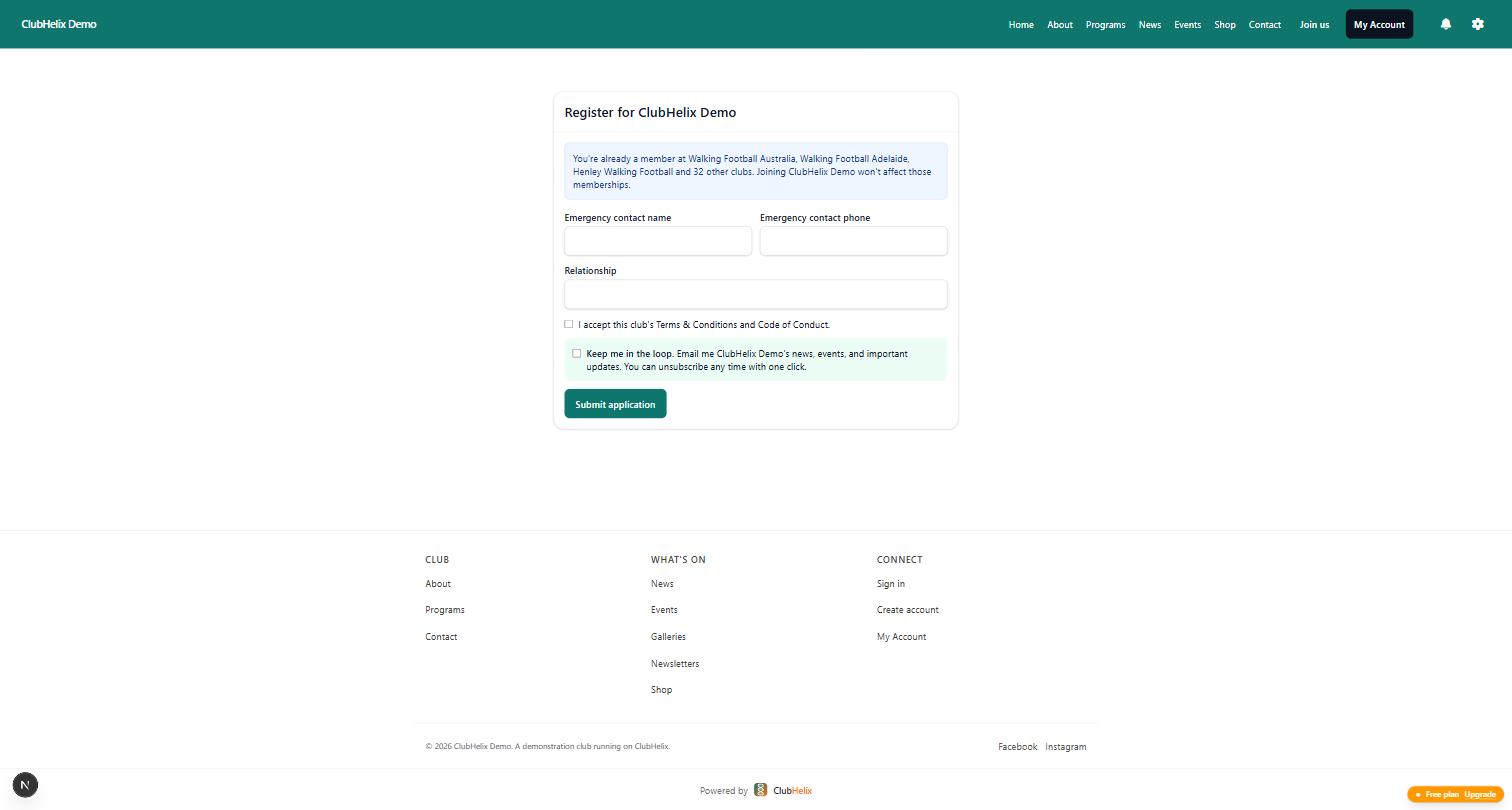
Build that new list somewhere owned by the society rather than by a person. A member register with self-serve sign-up gives you three things a spreadsheet cannot: people enter their own details, so nobody types 90 names off a paper list after the club fair; membership status and payment live in the same record; and it transfers to next year's committee by changing who has access. Record what you need — name, contact, year and course, dietary and access needs, emergency contact if you run trips — and nothing you cannot justify. Our guide to member records and privacy covers retention and who should see what.
The ten-week revival plan
Here is the whole thing as a timeline, working backwards from the start-of-year club fair. Compress it if you must, but do not reorder it — every row depends on the ones above it.
| Week | What happens | Done when |
|---|---|---|
| 1 | Send the status and records email. Find two other people willing to be on the committee. | You know which of the four states you are in |
| 2 | Go through the file in person. Complete the nine-point asset trace. Note every obligation. | One shared document lists everything, including gaps |
| 3 | Draft the updated constitution on the current template. Book a room for a general meeting. | Notice for the meeting goes out |
| 4 | Hold the general meeting: adopt the constitution, elect the committee, resolve on signatories. | Signed minutes exist |
| 5 | Lodge the affiliation application. Start the bank or internal account process. | Application submitted before the deadline |
| 6 | Set up the society's own email, member register and public page. Move nothing to personal accounts. | Every committee member has their own login |
| 7 | Plan three events for the semester, not twelve. Build a simple budget. | Dates booked, break-even known for each |
| 8 | Chase affiliation and the account. Design the stall: banner, sign-up QR code, one giveaway. | Affiliation confirmed in writing |
| 9 | Soft relaunch: one small free event for anyone still connected to the old society. | Photos you can actually use in week 10 |
| 10 | The club fair, then the first real event within nine days of it. | Sign-ups converted while they still remember you |
Week seven is where revivals overreach: three good events beat twelve announced and four delivered, because the cancellations are what people remember. And week ten's nine-day rule matters more than anything else on the list — a sign-up who waits three weeks has already forgotten which stall they visited. Our guide to the club fair stall covers the conversion mechanics.
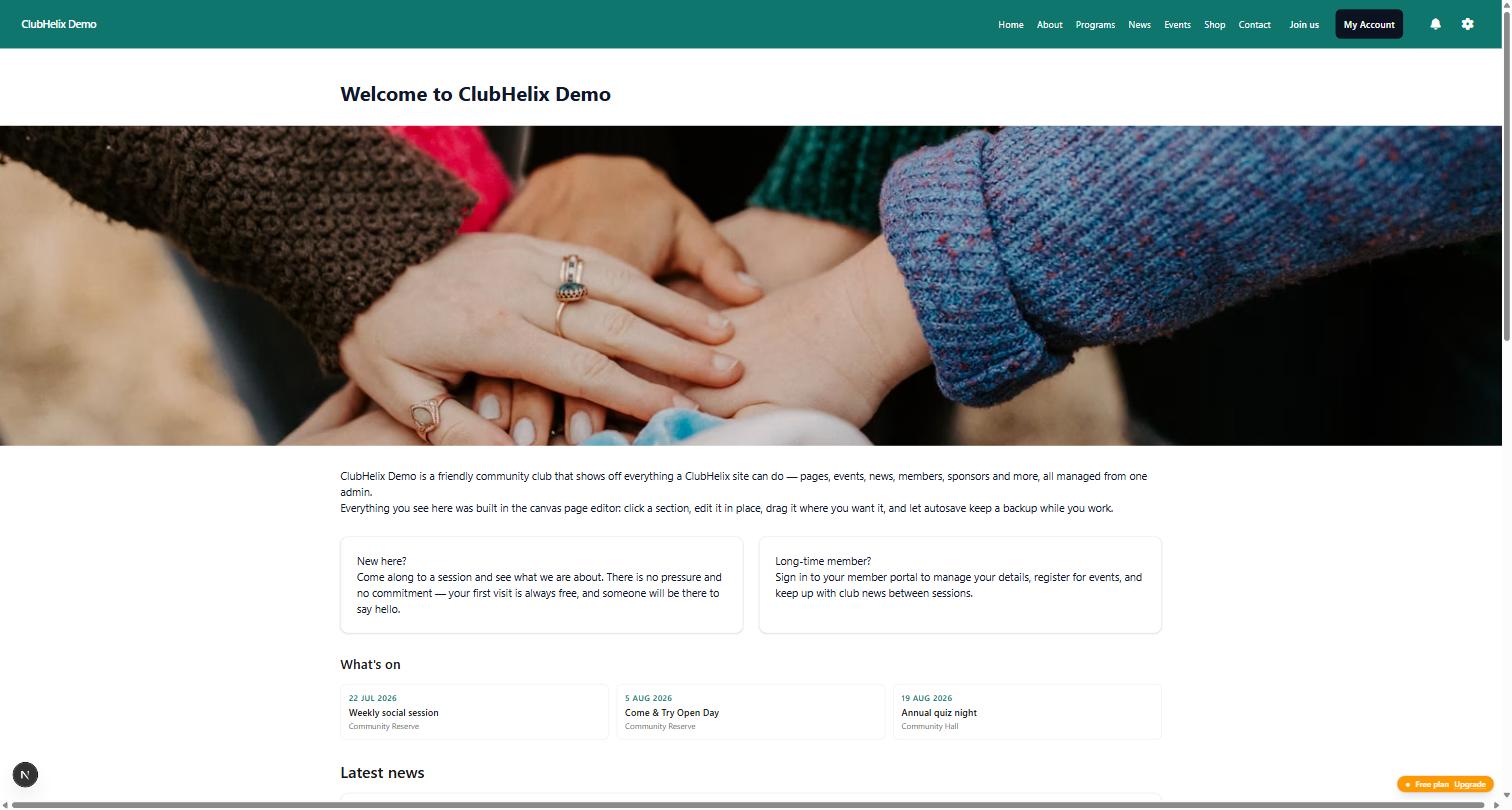
Give the revived society a real home page before the fair, even a simple one. A directory entry on the association's site is a listing, not a home: it cannot take sign-ups, it cannot sell a ticket, and it vanishes the moment affiliation lapses again. Events, a join button and a short "who we are" is a two-hour job with a page editor, and it does more for credibility at a trestle table than any amount of enthusiasm. There are ready-made layouts if you would rather not start from blank, and how to build a student society website walks through the six pages worth having.
Frequently asked questions
Can we take over a society's name if the old committee has all graduated?
Usually yes, and it is more routine than it feels. If affiliation has lapsed but the record still exists, most student associations will let a new group reactivate it with a fresh committee list, an updated constitution and the minimum member count. If the record was closed and the name released, you are founding a new society that happens to reuse the name — fine, but you inherit none of the history or funds. Ask in writing before you announce anything, because "we're back" is much harder to walk back than "we're working on it".
What if the old committee still controls the bank account and will not respond?
Document your attempts, then go around them rather than through them. Hold a properly constituted general meeting that elects a new committee and resolves to appoint new signatories, then take the signed minutes plus a status letter from your student association to the bank. Banks handle this constantly for unincorporated associations whose office bearers have changed; the paperwork route exists precisely because people become uncontactable. If the balance is small and the process stalls, opening a fresh account is a legitimate call — provided nobody is owed money out of the old one.
Is it easier to just start a brand new society instead?
Sometimes, and the deciding factor is obligations rather than sentiment. If the dormant society carries an unacquitted grant, an unpaid invoice or a reputation problem, you may be taking on a liability for the sake of a name. But if it has a usable constitution, a balance, stored equipment and a recognisable name, reviving is far less work than starting from scratch. Write down what the old society actually gives you, and decide from that list rather than from the romance of it.
Can we email the old member list to announce the relaunch?
Be careful, and prefer personal messages to a mass send. Most of those addresses will be dead student accounts, so a bulk email damages your sending reputation immediately, and consent given years ago to a society that then went silent has gone stale in more than one sense. Contact a small number of people individually, and build a new list from people who sign up this year.
Handling personal information here sits under the Privacy Act 2020, which applies to student groups as much as to anyone else, plus your students' association's own data rules — and those are usually the ones that bite first, because affiliated clubs agree to them as a condition of affiliation. The practical test is whether the person would reasonably expect a message from you: someone who joined in 2022 and heard nothing since would not expect a broadcast from strangers using the same name.
There is a second layer worth knowing. The unsolicited electronic messages regime requires consent, accurate sender information and a functioning unsubscribe in every commercial message — and "come to our ticketed relaunch party" is closer to commercial than committees assume. Send from an address that clearly identifies the society, make the unsubscribe obvious, and never bulk-import a list whose origin you cannot explain. When you start fresh, capture consent at sign-up and store it with the member record, so the next committee inherits the evidence and not just the addresses. This is general information rather than legal advice — check with your students' association or a professional if you are unsure.
How do we stop it going dormant again in three years?
Design for the twelve-month turnover rather than hoping it does not happen. Recruit committee members from more than one year group so they never all graduate together, keep every record in an account owned by the society rather than a person, and hold the annual general meeting early enough that the outgoing committee is still around to hand over. Then book a real handover meeting instead of sending a folder link — our handover checklist and AGM and elections guide cover both halves.
We have no money at all. Can we still relaunch?
Yes, and it is the normal starting point. Run two or three genuinely free events first — a games night in a booked room, a walk, a quiz with a donated prize — build a member list, then charge a modest subscription once people know what they are joining. Apply for your association's grant round with real attendance numbers, because a panel that can see forty people turned up in week three treats you very differently to one reading a plan. Our budget template sets out the float and reserve a small society should aim for.
Where ClubHelix fits
Societies usually go dormant for an administrative reason rather than a lack of interest: the records lived on one person's laptop, the login belonged to one person's email, and when that person graduated the society effectively ceased to exist. ClubHelix gives a revived society a home it owns — a public page, a member register with self-serve sign-up and payment, events and RSVPs, and per-person logins with roles, so access transfers instead of being reset. The audit log leaves next year's committee the record the committee before you did not. Plans are on the pricing page: the free tier is sized for getting the site built and the paperwork straight, and you move up once the member list is real — which, if the relaunch works, is the week after the club fair.
Reviving a society is mostly patience and email. Get the records first, the money second and the members third — and this time, leave the next committee a set of keys instead of an archaeology project.


