
What this guide answers
- What is the most profitable fundraiser for a sports club?
Per event, auction-style nights and golf days usually top the gross table — but per volunteer hour, the honest winners at most clubs are a well-run canteen, digital raffles, and an annual trivia night.
- Do we need a permit to run a club raffle?
Small club raffles can generally be run as private or society lotteries within the limits of the Lotteries Act without individual approval — but limits on prize values and how tickets are sold apply.
- How much should a community club aim to raise through fundraising?
A useful rule of thumb: membership fees should cover core running costs, while fundraising and sponsorship fund improvement — equipment upgrades, subsidised programs, facilities.
- How do we fundraise without burning out volunteers?
Run fewer, better fundraisers: one anchor event, a few proven reliables, and always-on digital channels that need no roster.
South Africa edition. This guide is written for volunteer-run clubs in South Africa. Where rules differ — grants, tax, incorporation, safeguarding — follow the South Africa-specific pointers below or check with your national body.
Every club committee eventually has the fundraising meeting: the season's costs are up, the grant didn't land, and someone says "we should do more fundraising" — followed by silence, because nobody can face organising another chocolate drive.
Here's the reframe that makes the meeting productive: fundraising ideas aren't interchangeable. They differ wildly in volunteer effort, return, and what else they do for the club — some raise money and recruit members, some raise money and burn out your best people. The clubs that fundraise well don't do more; they pick a small portfolio of ideas that fit their volunteer capacity, spread them across the calendar, and run the same proven ones every year until they're machines.
This guide is the menu: 30+ ideas, categorised, with honest notes on effort and return — plus the planning framework to choose your portfolio and the follow-through that doubles what any idea raises. (Fundraising's big sibling, sponsorship, gets its own guide: how to get sponsors for a sports club.)
The old reliables (low effort, proven return)
1. The club braai. The classic for a reason: cheap inputs, universal appeal, and a braai at home fixtures or outside a supporting local business on a Saturday puts you in front of the whole community. Keep the menu tiny (boerewors rolls, cold drinks), roster shifts short (two hours), and take card or app payments — fewer and fewer people carry cash.
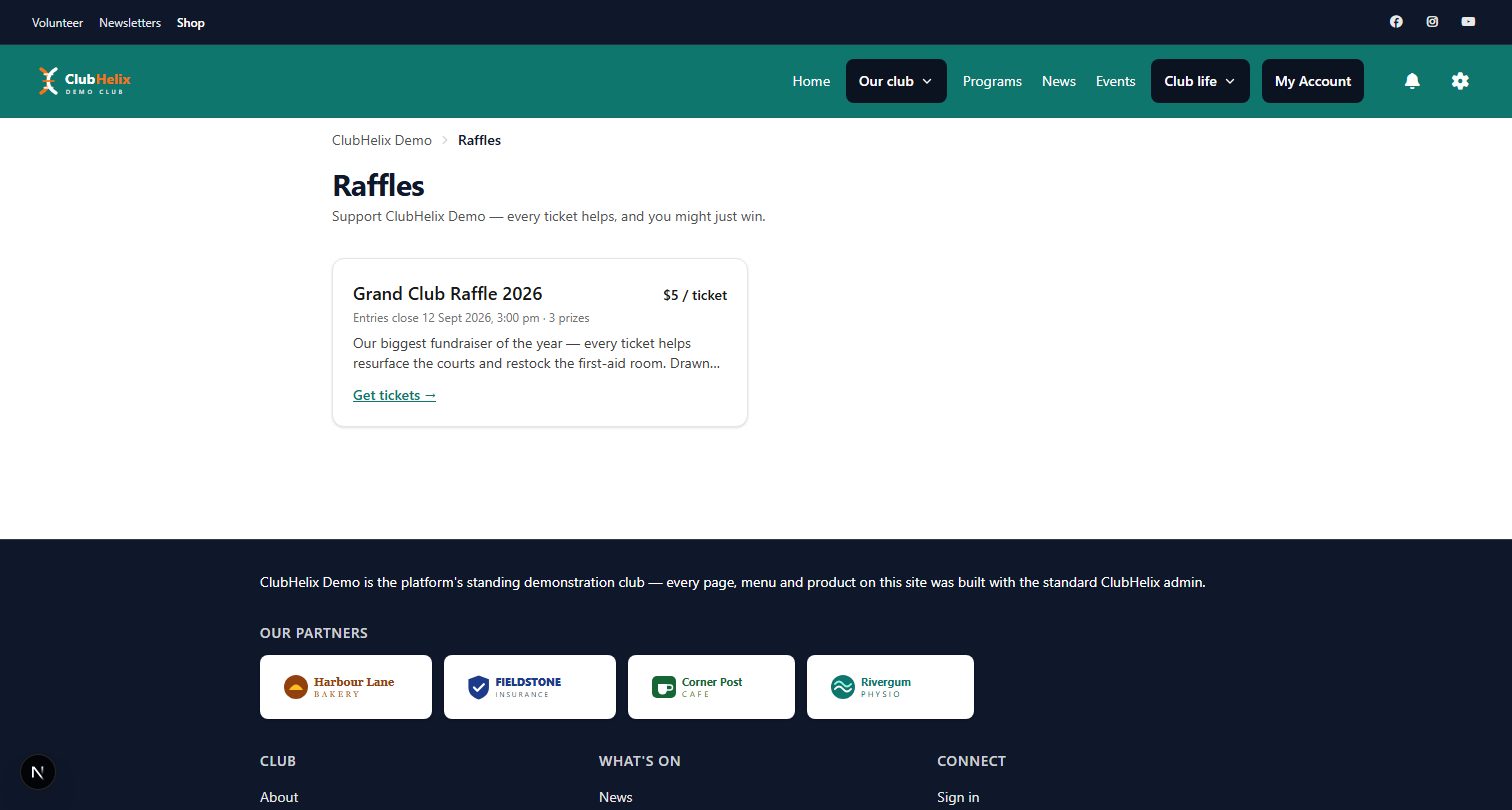
2. The club raffle. The workhorse. Donated or sponsor-provided prizes mean near-pure margin; members sell tickets to their networks, so reach multiplies. The step-change is going digital: online ticket sales with automatic draws mean no books to reconcile, no cash to chase, and members can share a link instead of doorknocking. A purpose-built club raffle tool handles tickets, payments and the draw in one place.
Check the rules for society lotteries before you sell a ticket — fundraising raffles are regulated under the Lotteries Act, and small club raffles can generally be run as a private or society lottery within its limits. Keep clean records of tickets sold and the draw.
Raffle and gambling rules are general information, not legal advice — check your regulator's current requirements before selling tickets.
3. Chocolate and lolly drives. Modest per-family returns but nearly zero organisation. Best for junior clubs with lots of families; set an opt-out so it never feels compulsory.
4. The clubhouse draw and meat raffle. Weekly ritual money at clubs with a bar or clubhouse — a meat hamper or braai-pack raffle pairs naturally with a members' draw that builds Friday-night attendance.
5. Cake stalls and bake sales. Low cost, good margins, great at your own events — presentation days, home-game canteens, come-and-try days.
6. Cans and glass. Buy-back centres pay for aluminium cans and glass, turning post-match empties into steady micro-income. A collection cage at the ground and a monthly run — one volunteer, permanent trickle.
Event fundraisers (medium-high effort, high return + community glue)
7. Trivia night. The best effort-to-return ratio in event fundraising. Revenue stacks: tickets + table games + raffle + silent auction on the night. A fun, slightly ruthless MC matters more than the venue.
8. Presentation night upgrades. You're running it anyway — add a raffle, an auction of the season's framed jersey, and a photo wall, and the night can fund itself and then some.
9. Comedy or bingo night. Ticketed, licensed-venue nights where the venue often takes the food/bar and you take the door and games.
10. Auction and sportsman's nights. A guest speaker, memorabilia, and live + silent auctions. Big returns at clubs with strong business networks; get auction items donated and the night is mostly margin.
11. Golf day. The premium option: teams of four, hole sponsorships (sell each hole to a business — it's sponsorship and fundraising in one), longest drive, dinner after. Serious money, serious organisation — needs a subcommittee and a three-month runway.
12. Fun run / walkathon / swim-a-thon. Participants gather per-lap or flat pledges. Doubles as a come-and-try showcase for your sport.
13. Car wash, bag-packing, and community service days. Juniors + supervision + visibility. Modest money, excellent for team culture and profile.
14. Movie night / open-air cinema. Licensing for a public screening is affordable; a school oval, a hired screen, food stalls, done.
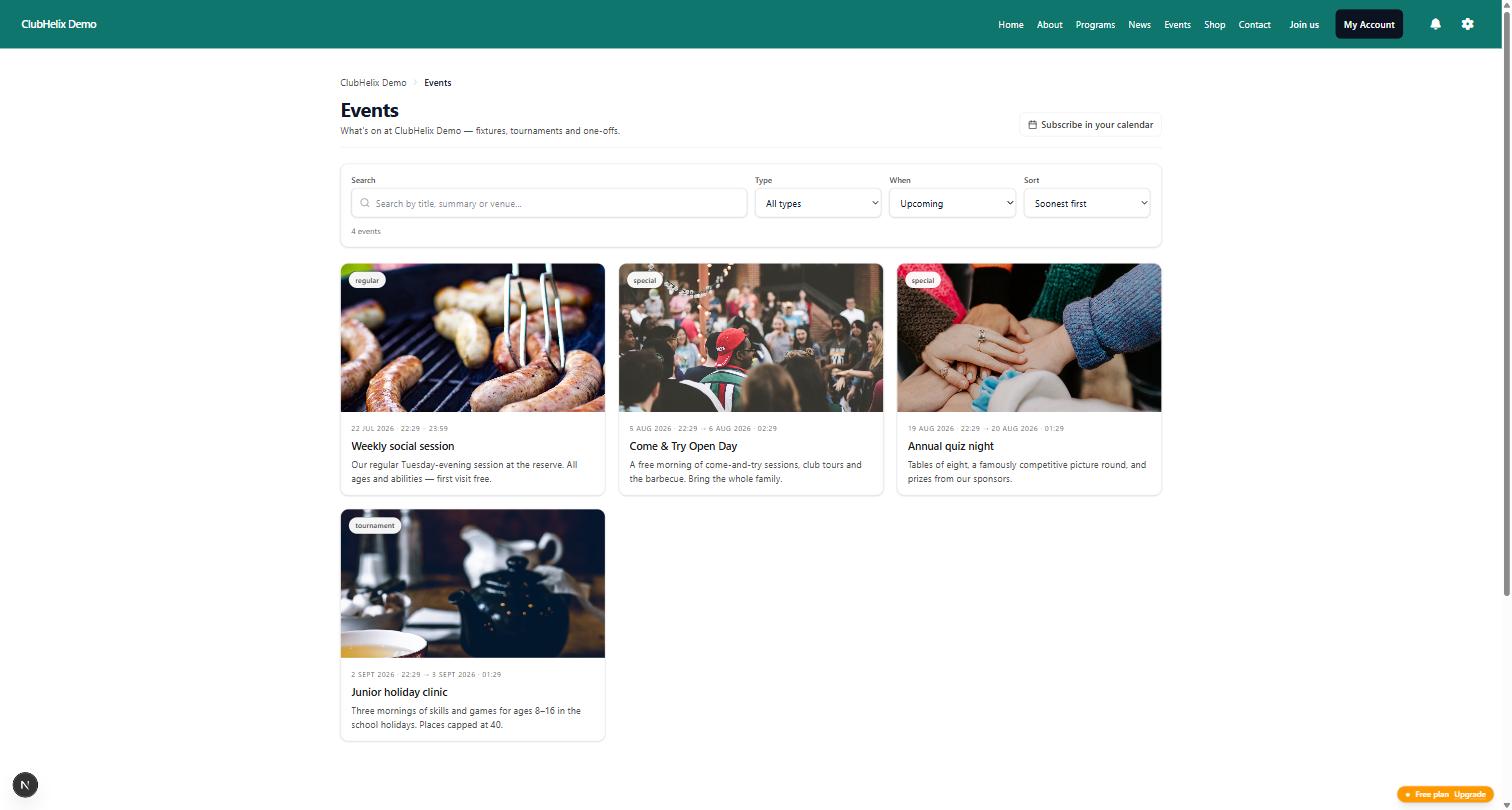
For any ticketed idea, sell tickets online through your club's events system — pre-sales turn "hope people show up" into a known number for catering, and the attendee list is your thank-you list afterwards.
Merchandise and product fundraisers (steady, scalable)
15. Club merchandise. Hoodies, caps, beanies, scarves, drink bottles, supporter polos. Margins are healthy and every sale is walking advertising. Run it through an online club shop with pickup at training — no volunteer holding a garage full of stock, no size-guessing, payments handled.
16. Pre-order drops. Two merch windows a year (season launch, mid-winter beanies-and-scarves) beat a permanently open shop: deadlines drive orders and you only produce what's paid for.
17. Pie drives, cookie dough, cheese and coffee drives. The modern chocolate drive — local producers often do club fundraising programs with 20–40% margins. Online pre-orders, single delivery day at training.
18. Entertainment/discount memberships and local vouchers. Digital books sell via a club link — zero handling, small steady margin.
19. Plant, mulch or firewood drives. Seasonal, regional, and reliably good margins where they fit — club firewood in winter is a country institution.
20. Calendar or team photo products. Junior clubs especially: a professional team-photo day where the photographer shares revenue on family purchases.
Digital fundraisers (low effort, always on)
21. Online donations. The simplest one clubs skip: a donate button on your website with preset amounts and a one-line case ("the price of a junior's match balls for a season"). Alumni, grandparents and local supporters give when it's easy — a proper donations tool with instant receipts makes it a set-and-forget channel.
22. Recurring micro-giving. "Club 100": a hundred supporters each giving a small amount every cycle. Small asks, meaningful annual total, and recurring donations smooth your cashflow.
23. Crowdfunding for a named project. For a concrete goal (new nets, a mower, defibrillator), a campaign with a target, a deadline and updates outperforms generic asking. Specific + visible = fundable.
24. Round-up and loyalty partnerships. Local cafés or the club canteen offering "round up for the juniors" — pennies that add up with zero volunteer effort.
25. Online raffles between big raffles. Smaller monthly digital raffles (voucher prizes from sponsors) keep the channel warm without exhausting anyone.
Community and partnership ideas
26. Grants. Not strictly fundraising, but the highest return-per-hour "idea" on this list.
Start with municipal grants, national lottery sports funding distributions, and corporate social investment programmes at local businesses.
Assign one detail-oriented volunteer as grants officer; a tidy budget and your club's registration paperwork (see our club budget template) is half of every application.
27. Sponsor-matched fundraising. Ask a sponsor to match a specific campaign dollar-for-dollar — doubles the raise, and the sponsor gets a genuinely good story.
28. Canteen (or concession-stand) excellence. Unofficially the biggest fundraiser at many clubs. Treat it like a business: tight menu, coffee done properly (a good machine pays for itself in a season), cashless payments, and a costed price list reviewed yearly.
29. Ground and clubhouse hire. School carnivals, community groups, birthday parties. Existing asset, recurring income.
30. Working-bee sponsorships. A business funds materials, your volunteers supply labour, the ground improves, everyone's on the banner. Money saved is money raised.
31. Bottle-and-bin partnerships, e-waste days, clothing drives. Collection-based fundraisers where a recycler pays per kilo — periodic, easy, green.

Choosing your portfolio (don't run all 31)
A healthy club fundraising calendar is one anchor event + two or three reliables + always-on digital, spread so the same volunteers aren't hit twice in a term:
| Term | Activity |
|---|---|
| Pre-season | Merch drop #1 · registration-day barbecue |
| Early season | Major raffle (digital tickets, drawn mid-season) |
| Mid-season | Trivia night (the anchor) · food pre-order drive |
| Late season | Presentation night with auction · merch drop #2 |
| Always on | Donate button · canteen · container deposits · grants pipeline |
Three portfolio rules:
- Match ideas to your volunteer reality. A golf day with no subcommittee is a cancelled golf day. When in doubt, choose the lower-effort idea and run it twice as well.
- Repeat winners. The second annual trivia night raises more for half the effort — you have the format, the MC, the sponsor contacts and the audience. Novelty is overrated; execution compounds.
- Count the real return. After each fundraiser, minute three numbers: gross, net, and volunteer hours. Net return per volunteer hour is the only honest league table of fundraising ideas — and it will surprise you.
The follow-through that doubles every idea
- Sell everything online that can be sold online. Raffle tickets, event seats, merch, pie-drive pre-orders. Links travel through member networks; cash tins don't. (The same logic that fixes membership fee collection.)
- Tell people what it's for — before and after. "We're raising the money for new junior goals" out-raises "please support the club", and the photo of the goals being installed is next year's campaign material.
- Thank loudly. Volunteers, buyers, donors, the businesses that gave prizes — in the newsletter, on socials, at the ground. Gratitude is the renewals engine of fundraising.
- Mind the compliance basics. Raffle or lottery permits where your rules require them, food-handling rules for stalls, liquor licensing for events, and receipts for donations. None of it is hard; all of it protects the club.
Frequently asked questions
What is the most profitable fundraiser for a sports club?
Per event, auction-style nights and golf days usually top the gross table — but per volunteer hour, the honest winners at most clubs are a well-run canteen, digital raffles, and an annual trivia night. Measure net return per volunteer hour across a season and build your calendar around your club's actual winners rather than the ideas that sound biggest.
Do we need a permit to run a club raffle?
Small club raffles can generally be run as private or society lotteries within the limits of the Lotteries Act without individual approval — but limits on prize values and how tickets are sold apply. Check the current rules before selling tickets, and keep clean records of tickets sold and the draw.
How much should a community club aim to raise through fundraising?
A useful rule of thumb: membership fees should cover core running costs, while fundraising and sponsorship fund improvement — equipment upgrades, subsidised programs, facilities. For many community clubs that means fundraising contributes roughly 10–25% of total income. If fundraisers are needed to pay the insurance bill, revisit your fee settings (see how much should club membership cost) before adding another sausage sizzle.
How do we fundraise without burning out volunteers?
Run fewer, better fundraisers: one anchor event, a few proven reliables, and always-on digital channels that need no roster. Repeat the same events annually so the effort drops each year, keep shifts short with a proper roster, spread activities across teams so no group is hit twice a term, and retire anything whose dollars-per-hour doesn't justify itself. The always-on digital layer — donations, online raffles, the club shop — is the burnout antidote, because it raises money while nobody is standing at a trestle table.
ClubHelix puts the always-on layer in one place: digital raffles, online donations, a club shop and ticketed events — all paid online, all reconciled against your club automatically. See pricing to get started.


