
What this guide answers
- How many people do you need to start a book club?
Four to six is plenty to start — enough for a real discussion even when one or two can't make it.
- How often should a book club meet?
Monthly is the standard rhythm and works for most groups. If your members are time-poor, every six to eight weeks keeps the club alive without the guilt; weekly only suits clubs reading a book across multiple sessions.
- Who pays for the books?
Each member buys or borrows their own copy. Choosing books with good library and audiobook availability keeps the cost near zero, and some bookshops offer a discount if your club buys the monthly pick through them.
- Do we need money or a bank account to run a book club?
Not at the start — most book clubs run with no money changing hands.
New Zealand edition. This guide is written for volunteer-run clubs in New Zealand. Where rules differ — grants, tax, incorporation, safeguarding — follow the New Zealand-specific pointers below or check with your national body.
A book club is one of the easiest community groups to start — no oval to book, no umpires to find, no equipment beyond the book itself. That's also why so many fizzle out after three meetings. The clubs that last are the ones that make a few deliberate decisions early: what you'll read, how you'll choose it, where you'll meet, and how new people find you.
This guide walks through how to start a book club from scratch, the formats that work, and how to grow a living-room gathering into a proper community group with its own name, calendar and website.
Decide what kind of book club you're starting
Before you invite anyone, get clear on the club's personality. A book club built around literary fiction discussed in depth is a very different evening from a casual "wine and whatever you're reading" catch-up — and both are completely valid. Mismatched expectations are the number one reason early members drift away.
Think about three things:
- Depth. Do you want structured discussion with prepared questions, or a social night where the book is a conversation starter?
- Commitment. One book a month is the classic rhythm. Some clubs read a book every two months to keep the pressure off; others split long books across two sessions.
- Audience. Friends-only, workplace, parents at the school, or open to anyone in your suburb? You can start closed and open up later — many great community clubs began exactly that way.
If you're still weighing up whether a book club is the right shape at all, our guide to starting a social club covers the broader options.
Choose a format that keeps people reading
The format is the engine of the club. Here are the ones that reliably work, with the trade-offs:
| Format | How it works | Best for |
|---|---|---|
| Monthly pick | One shared book per month, chosen in advance | Classic discussion clubs |
| Rotating chooser | Members take turns picking the book and hosting | Sharing the load, variety |
| Genre club | Everything is crime, sci-fi, romance, or one national literature | Attracting strangers with a shared taste |
| Theme months | A topic each month ("translated fiction", "debut authors") | Well-read groups who want a challenge |
| Parallel reads | Everyone reads their own book, then shares it | Busy people, mixed tastes, low pressure |
| Author deep-dives | A season on one author's work | Small, committed groups |
The rotating chooser format deserves a special mention: it spreads ownership across the group, which is the single best insurance against the club collapsing when the founder gets busy. Whoever picks the book also leads the discussion and (if you rotate venues) hosts the night.
Whatever you choose, announce the next two or three books ahead of time. People need runway — a month's notice for a 500-page novel is how you end up with four people who finished it and eight who feel guilty.
Find a venue that suits the vibe
Living rooms are where most book clubs start, and they're great for groups of six to ten. Once you grow past that — or open up to people you don't already know — a neutral venue makes new members far more comfortable. Good options:
-
Public libraries. Many have free meeting rooms specifically for community groups, and librarians are natural allies who may promote your club.
-
Cafés and pubs. Ask about a quiet corner or back room on their slow night — most venues will happily reserve a table for a group that shows up monthly and buys coffee or a meal.
-
Bookshops. Some independent bookshops host clubs after hours and offer members a discount on the monthly pick.
-
Community centres and community houses. Low-cost rooms, and being listed in their programme brings walk-ins.
Consistency beats novelty: same venue, same night of the month ("the second Tuesday") is much easier for people to build a habit around than a date that floats.
Picking books people actually finish
A few practical rules that experienced clubs converge on:
- Keep most picks under about 400 pages. Save doorstoppers for a two-month slot over summer.
- Mix it up deliberately. Alternate fiction and non-fiction, new releases and backlist, local and international. A simple rotation stops one taste dominating.
- Check availability first. Before locking in a pick, make sure the library has copies, the paperback is in print, and an audiobook exists — audiobook listeners are full members too.
- Have a shortlist vote. The chooser offers three options and the group votes at the previous meeting. It builds anticipation and shares the blame for the occasional dud.
And accept that some months, half the room won't have finished. A good club treats "I abandoned it at chapter four and here's why" as a legitimate — often hilarious — contribution to the discussion.
Running a great discussion
You don't need a literature degree to run a book club discussion; you need a handful of open questions and the confidence to let silence sit for a moment. A simple structure:
- Round-the-room first impressions — one or two sentences each, no interruptions. This gets every voice in early, including the quiet ones.
- Three or four prepared questions. Most publishers put reading-group questions online; otherwise ask about a character's choice, the ending, or what the author was really up to.
- The score. Many clubs finish with everyone rating the book out of ten. It's a fun ritual, and over time your scores become the club's shared history.
- Next book and housekeeping — five minutes at the end, never the start.
Keep one social rule sacred: spoilers are fine (everyone was supposed to finish it), but pile-ons aren't. Someone loving a book the room hated makes the discussion, not ruins it.
Set a rhythm people can rely on
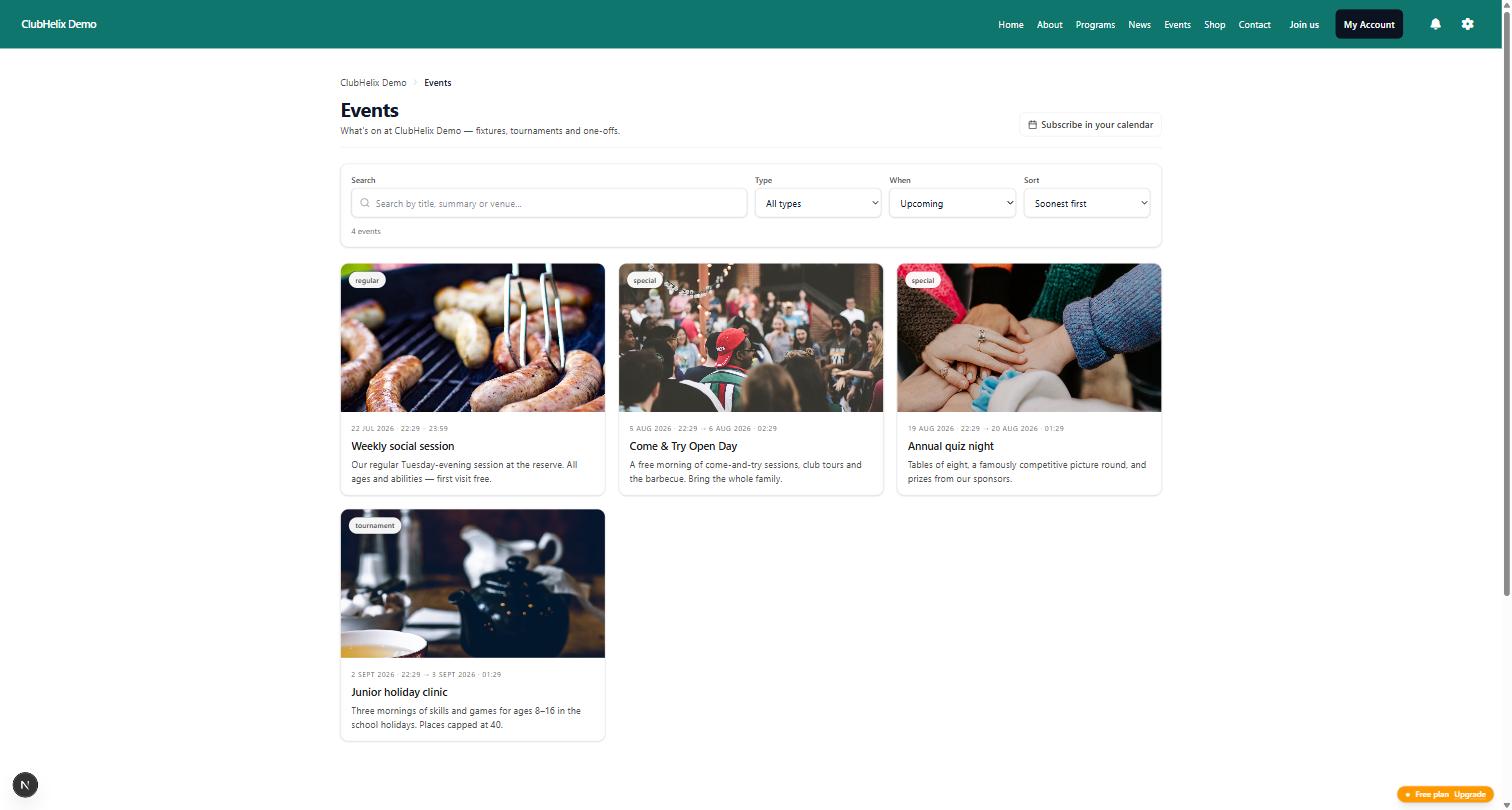
The clubs that survive year three all share one boring superpower: a predictable calendar. Lock in your night, publish the schedule for the next few months, and send a reminder a week out with the venue, time and the book. If your club is more than a group text, put the schedule somewhere everyone can see it — a shared calendar page where members can RSVP to each meeting means the host knows how many chairs to set out, and a short monthly email keeps the book, date and any changes in one place instead of scattered across a chat thread. Our club communication plan guide has a simple template for deciding what goes where.

Growing beyond friends into a community group
At some point a thriving book club faces a fork: stay a private circle, or open the doors. If you open up, a few things change:
- You need a name. Something findable and welcoming — our club name ideas guide can help you brainstorm.
- You need a front door. A simple book club website with your format, venue, upcoming books and a join form does more than any flyer. It's what turns "I heard there's a book club around here" into a new member. With online registration, people can join themselves and you keep a proper member list instead of a mental one.
- You may want structure. Once money is involved — venue hire, a small annual fee, an end-of-year dinner — it's worth a treasurer and a basic set of rules. Plenty of book clubs run for decades as informal groups, though, so only add structure when you feel the need.
- Multiple groups. Popular clubs often split into a Tuesday group and a Thursday group, or add a genre offshoot. A shared website and member list keeps the "one club, several circles" feeling intact.
Growth also changes discovery: get listed on your library's community noticeboard, your council's community directory, and local social media groups. A club that's easy to find grows itself — the same principle behind growing any club's membership.
ClubHelix was built for exactly this transition: it gives hobby and interest groups a proper website with an events calendar, member registration, email newsletters and a private member chat — without needing anyone technical on the committee. There's a free tier that suits most book clubs, and you can see how other interest groups use it on our hobby and interest clubs page.
Frequently asked questions
How many people do you need to start a book club?
Four to six is plenty to start — enough for a real discussion even when one or two can't make it. Most clubs find eight to twelve regulars is the sweet spot; beyond that, discussions splinter and it's worth splitting into two groups.
How often should a book club meet?
Monthly is the standard rhythm and works for most groups. If your members are time-poor, every six to eight weeks keeps the club alive without the guilt; weekly only suits clubs reading a book across multiple sessions.
Who pays for the books?
Each member buys or borrows their own copy. Choosing books with good library and audiobook availability keeps the cost near zero, and some bookshops offer a discount if your club buys the monthly pick through them.
Do we need money or a bank account to run a book club?
Not at the start — most book clubs run with no money changing hands. If you later charge a small annual fee for venue hire or events, appoint a treasurer, keep simple records, and consider a dedicated account once the amounts stop being trivial.

